The 100 Most Influential Muslims - 2026

Sports Persons

Browse Lists by Year:


Imran Khan - selected in the list of  - 2026

Imran Khan

Pakistan

Imran Khan: From Cricketing Icon to Jailed Prime Minister in Pakistan’s Deepening Political Crisis

Imran Khan (born 5 October 1952) is a Pakistani politician, former international cricketer, and philanthropist who served as the 22nd Prime Minister of Pakistan from August 2018 until his removal through a parliamentary no-confidence vote in April 2022. Once celebrated as a national sports icon and reformist outsider, Khan’s political career has been marked by mass popularity, polarising leadership, and a dramatic fall from power that culminated in imprisonment.

Born in Lahore to a well-off Pashtun family, Imran Khan was educated at Aitchison College before studying philosophy, politics, and economics at Keble College, Oxford. He rose to global fame as one of Pakistan’s greatest cricketers, captaining the national team to victory in the 1992 Cricket World Cup. His sporting success made him a household name and laid the foundation for his later political appeal.

After retiring from cricket, Khan turned to philanthropy, founding the Shaukat Khanum Memorial Cancer Hospital & Research Centre in Lahore in 1994 in memory of his mother. The hospital, built largely through public donations, enhanced his reputation as a figure committed to public service. In 1996, he launched the Pakistan Tehreek-e-Insaf (PTI), positioning it as an anti-corruption, reformist alternative to Pakistan’s entrenched political elite.

For more than a decade, PTI remained on the margins of politics. Khan’s breakthrough came in the early 2010s, when his populist rhetoric, opposition to US military involvement in the region, and promise of a “Naya Pakistan” resonated with urban middle-class voters and youth. In the 2018 general elections, PTI emerged as the largest party in parliament, and Khan became prime minister.

As prime minister, Khan pledged to combat corruption, reform governance, and establish an Islamic welfare state inspired by Medina. His government launched social protection initiatives such as the Ehsaas Programme, expanded health insurance schemes, and pursued tax reforms. However, his tenure was also marked by economic instability, rising inflation, strained relations with opposition parties, and criticism over press freedom and civil-military relations. Foreign policy under Khan sought closer ties with China, improved relations with Muslim-majority countries, and a more independent stance toward the United States.

In April 2022, Khan was ousted through a vote of no confidence, becoming the first Pakistani prime minister to be removed in this manner. He alleged a foreign-backed conspiracy behind his removal—claims denied by both Pakistan’s military leadership and the United States. Following his ouster, Khan launched a nationwide protest movement demanding early elections, significantly intensifying political polarisation.

Khan’s legal troubles escalated after his removal from office. He faced multiple cases, including corruption, contempt of court, and charges related to state gifts and classified documents. In 2023 and 2024, he was arrested, convicted in several cases, and imprisoned, effectively sidelining him from active politics. His detention and the crackdown on PTI supporters drew criticism from human rights organisations and deepened Pakistan’s political crisis.

Imran Khan remains one of the most influential and divisive figures in Pakistan’s contemporary history. Supporters view him as a principled leader persecuted for challenging entrenched power structures, while critics argue that his confrontational style weakened democratic institutions. Despite imprisonment, his political legacy and popular appeal continue to shape Pakistan’s volatile political landscape.


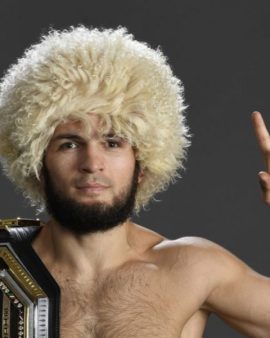
Khabib Nurmagomedov - selected in the list of  - 2026

Khabib Nurmagomedov

Russia

Khabib Nurmagomedov: The Undefeated Champion Who Redefined Mixed Martial Arts

Khabib Abdulmanapovich Nurmagomedov is one of the most dominant and respected figures in the history of mixed martial arts (MMA). A former UFC Lightweight Champion, Khabib is celebrated not only for his unbeaten professional record but also for his discipline, humility, and strong personal values, which set him apart in a sport often defined by spectacle and bravado.

Born on 20 September 1988 in Sildi, a small village in the mountainous region of Dagestan, Russia, Khabib was raised in an environment where wrestling and combat sports were a way of life. He was trained from a young age by his father, Abdulmanap Nurmagomedov, a highly respected coach and decorated combat sports expert. Growing up, Khabib practiced wrestling, judo, and sambo, developing the grappling-heavy style that would later overwhelm opponents at the highest level of MMA.

Khabib began his professional MMA career in 2008, quickly establishing himself as an exceptional talent on the regional circuit. His relentless pressure, superior conditioning, and mastery of takedowns made him nearly unstoppable. In 2012, he signed with the Ultimate Fighting Championship (UFC), where he steadily climbed the lightweight rankings. Unlike many fighters, Khabib relied less on trash talk and more on technical superiority, earning respect for his quiet confidence and sportsmanship.

His crowning achievement came in April 2018, when he defeated Al Iaquinta to win the UFC Lightweight Championship. Khabib successfully defended his title against elite opponents, including Conor McGregor, Dustin Poirier, and Justin Gaethje. His victory over McGregor at UFC 229 remains one of the most watched events in UFC history, highlighting both his athletic dominance and the intense global attention he commanded.

In October 2020, following a submission win over Justin Gaethje, Khabib announced his retirement from professional fighting with a perfect record of 29 wins and 0 losses—a rare achievement in MMA. His decision was deeply personal, honoring a promise made to his mother after the passing of his father earlier that year. Khabib’s retirement was widely praised as a demonstration of principle and family loyalty.

Since stepping away from competition, Nurmagomedov has remained influential in the sport as a coach, mentor, and promoter. He has guided several fighters to championship success and expanded MMA’s popularity in Russia and across the Muslim world. Outside the cage, Khabib is known for his strong faith, discipline, and commitment to ethical conduct, often speaking about humility, respect, and responsibility.

Khabib Nurmagomedov’s legacy extends far beyond titles and statistics. He redefined what it means to be a champion—combining excellence in sport with integrity in character—leaving an enduring mark on MMA and inspiring millions around the globe.


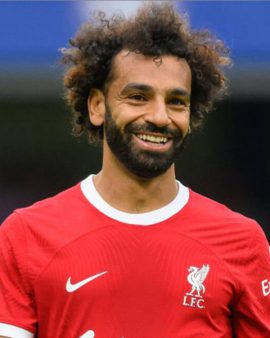
Mohamed Salah - selected in the list of  - 2026

Mohamed Salah

Egypt

Mohamed Salah: Egypt’s Football Icon and One of the World’s Greatest Forwards

Mohamed Salah Hamed Mahrous Ghaly, widely known as Mohamed Salah, is Egypt’s most celebrated footballer and one of the most influential players of his generation. Renowned for his blistering pace, clinical finishing, and relentless work ethic, Salah has risen from humble beginnings in rural Egypt to become a global sporting icon and a source of immense national pride.

Born on 15 June 1992 in Nagrig, a small village in Egypt’s Gharbia Governorate, Salah developed an early passion for football. As a teenager, he undertook long daily journeys to Cairo to train with Arab Contractors, demonstrating the determination and discipline that would define his career. He made his professional debut with the club in 2010, quickly attracting attention with his speed and technical ability.

Salah’s breakthrough on the international stage came with his move to FC Basel in Switzerland in 2012. At Basel, he won consecutive Swiss Super League titles and impressed in European competitions, notably against English clubs. His performances earned him a transfer to Chelsea FC in the English Premier League in 2014. However, limited playing time in England led Salah to rebuild his career through successful spells in Italy with Fiorentina and AS Roma, where he matured into one of Europe’s most dangerous attackers.

In 2017, Salah joined Liverpool FC, a move that transformed both his career and the club’s fortunes. In his debut season, he shattered the Premier League record for most goals in a 38-game season, earning the Golden Boot and finishing third in the Ballon d’Or voting. Under manager Jürgen Klopp, Salah became central to Liverpool’s attacking system, helping the club win the UEFA Champions League (2019), the Premier League title (2020)—their first in 30 years—the FIFA Club World Cup, and multiple domestic trophies.

On the international stage, Mohamed Salah is the talisman of the Egyptian national team. He played a crucial role in Egypt’s run to the Africa Cup of Nations final in 2017 and 2021, and his goals helped Egypt qualify for the 2018 FIFA World Cup, their first appearance in the tournament in 28 years. As national captain, Salah carries the hopes of millions, symbolizing resilience and ambition in Egyptian football.

Beyond the pitch, Salah is admired for his humility, philanthropy, and strong connection to his roots. He has funded schools, hospitals, and charitable initiatives in his hometown of Nagrig, earning admiration across social and religious divides. His public expressions of faith and sportsmanship have also made him a role model for young athletes worldwide.

More than a footballer, Mohamed Salah is a cultural ambassador for Egypt and Africa. His journey from a village in the Nile Delta to the pinnacle of world football stands as a powerful story of perseverance, talent, and global impact.


The 100 Most Influential Muslims - 2026

Copyright © 2024 | All rights reserved. | Website Designed & Maintained by Aash App Developers