The 100 Most Influential Muslims - 2026

Community Leaders

Browse Lists by Year:


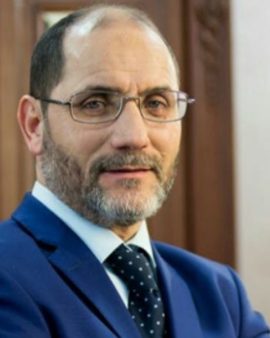
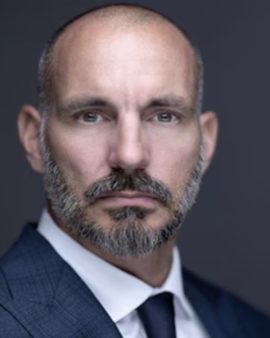
Abderrazak Makri - selected in the list of  - 2026

Abderrazak Makri

Algeria

Abderrazak Makri: The Pragmatist at the Helm of Algeria’s Islamist Reformists

Abderrazak Makri has emerged as one of the most thoughtful and pragmatic Islamist leaders in contemporary North African politics. As the long-time head of Algeria’s Movement of Society for Peace (MSP) (Harakat Mujtama’ as-Silm), Makri has sought to chart a path that blends Islamic values with political realism—advocating reform, participation, and social stability in a country shaped by a complex history of authoritarian rule and civil conflict.

Born in 1960 in the city of Biskra, on the edge of Algeria’s Sahara region, Makri grew up during a period when the newly independent nation was still defining its political and cultural identity. Like many Algerians of his generation, he was deeply influenced by questions of justice, governance, and national dignity. Trained as an academic and educator, Makri developed an early interest in Islamic thought, social reform, and civic responsibility—interests that would later shape his political outlook.

Makri joined the Islamist movement inspired by the late Sheikh Mahfoud Nahnah, the founding father of MSP, who championed a distinctly Algerian model of political Islam. Unlike more confrontational Islamist groups, MSP emphasized gradual reform, nonviolence, and engagement within the political system. This philosophy profoundly shaped Makri, who rose steadily through the party’s ranks, gaining recognition for his intellectual clarity and organizational skills.

In 2013, Abderrazak Makri was elected president of MSP, assuming leadership at a time of internal debate and regional upheaval. The Arab Spring had shaken governments across the Middle East and North Africa, reviving both hopes for democratic reform and fears of instability. In Algeria—still haunted by memories of the bloody civil war of the 1990s—Makri argued consistently for caution, dialogue, and political inclusion rather than radical rupture.

Under his leadership, MSP positioned itself as a reformist Islamist party committed to pluralism and peaceful political competition. Makri steered the movement through shifting alliances, including periods of participation in government coalitions and moments of principled opposition. He defended these choices as necessary to protect social cohesion while pushing incrementally for accountability, good governance, and respect for civil liberties.

Makri’s public persona differs markedly from the fiery image often associated with Islamist leaders. Soft-spoken and analytical, he is known for lengthy essays, policy reflections, and measured speeches rather than populist rhetoric. He has repeatedly emphasized that Islamic politics must respond to real social conditions—youth unemployment, corruption, economic inequality, and the erosion of public trust—rather than abstract slogans.

During Algeria’s 2019 Hirak protest movement, Makri sought to align MSP with popular demands for peaceful change, constitutional reform, and an end to entrenched political practices. While navigating a delicate political landscape, he called for national dialogue and warned against both authoritarian stagnation and reckless confrontation. His stance reinforced his reputation as a bridge-builder within Algeria’s fragmented political scene.

Today, Abderrazak Makri is regarded as one of the leading intellectual voices of moderate political Islam in the Maghreb. Supporters see him as a principled reformer who understands Algeria’s unique history and constraints; critics argue that his pragmatism risks diluting opposition pressure. Yet few dispute his influence.

In a region often defined by extremes, Makri’s leadership of the Movement of Society for Peace reflects an alternative vision—one rooted in patience, participation, and the belief that lasting change is built through institutions, dialogue, and social trust rather than upheaval alone.


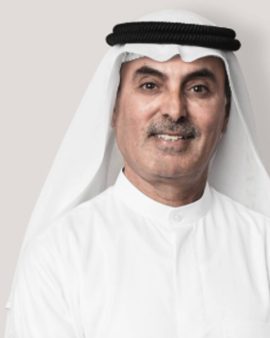
Abdul Aziz Al Ghurair - selected in the list of  - 2026

Abdul Aziz Al Ghurair

United Arab Emirates

Abdul Aziz Al Ghurair: A Legacy of Giving and the Power of Purpose

Abdul Aziz Al Ghurair stands among the most influential philanthropists in the Arab world, a man whose life bridges commerce, public service, and a deep commitment to social uplift. A prominent Emirati businessman and humanitarian, he is best known as the Chairman of the Abdulla Al Ghurair Foundation for Education, one of the largest privately funded educational foundations in the Middle East. Through his work, Al Ghurair has helped redefine philanthropy in the region—not as charity alone, but as a long-term investment in human potential.

Born into one of the United Arab Emirates’ most respected business families, Abdul Aziz Al Ghurair inherited not only entrepreneurial acumen but also a strong ethic of responsibility. The Al Ghurair family has played a formative role in the UAE’s economic development, particularly in banking, industry, and trade. Abdul Aziz himself built a distinguished career in finance, serving for many years as CEO of Mashreq Bank, one of the UAE’s leading financial institutions, and later as Chairman of the Mashreq Group. His leadership helped modernize banking practices in the region while emphasizing prudence, innovation, and trust.

Yet it is philanthropy that has come to define his broader legacy. In 2015, Abdul Aziz Al Ghurair made headlines by dedicating a significant portion of his wealth to establish the Abdulla Al Ghurair Foundation, named in honor of his late father. The foundation’s mission is ambitious and transformative: to empower Arab youth through access to quality education and skills for the future. At a time when the Arab world faces pressing challenges of youth unemployment, skills gaps, and educational inequality, Al Ghurair’s vision addressed the root of the problem—human development.

The foundation focuses on scholarships, innovative learning programs, digital education, and partnerships with global universities and institutions. Its initiatives are designed not merely to provide degrees, but to equip young people with the skills needed to thrive in a rapidly changing global economy. For Al Ghurair, education is not a privilege but a catalyst for dignity, opportunity, and social stability.

Beyond education, Abdul Aziz Al Ghurair has been a strong advocate for institutional philanthropy—encouraging transparency, measurable impact, and sustainability. He has spoken often about the need for Arab philanthropy to move beyond short-term relief toward systemic solutions. His approach reflects a belief that giving should empower individuals to become contributors to society, not dependents.

Al Ghurair has also served his country in public life, including as Speaker of the Federal National Council of the UAE, where he contributed to legislative development and civic engagement. This blend of public service, private enterprise, and philanthropy underscores his belief that leadership carries a moral obligation to serve the wider community.

Despite his stature, Abdul Aziz Al Ghurair is known for humility and restraint. He rarely seeks the spotlight, preferring that the impact of his initiatives speak for itself. Those who work with him describe a leader guided by quiet conviction—someone who believes that true success is measured not by wealth accumulated, but by lives transformed.

In an era when inequality and uncertainty challenge societies worldwide, Abdul Aziz Al Ghurair offers an inspiring model of purpose-driven leadership. His life affirms a simple yet powerful idea: that wealth, when guided by values, can become a force for knowledge, opportunity, and enduring hope for generations to come.


Dr Imtiaz Ismail Sooliman - selected in the list of  - 2026

Dr Imtiaz Ismail Sooliman

South Africa

Dr. Imtiaz Ismail Sooliman: Compassion in Action and the Power of Humanitarian Faith

Dr. Imtiaz Ismail Sooliman stands as one of the most inspiring humanitarian figures of the modern era, a man whose life’s work has been guided by faith, service, and an unshakeable commitment to human dignity. A South African medical doctor by training and a global humanitarian by calling, Dr. Sooliman is best known as the founder and director of Gift of the Givers Foundation, the largest disaster response NGO in Africa and one of the most respected humanitarian organizations in the world.

Born in 1963 in Potchefstroom, South Africa, Dr. Sooliman grew up during the dark years of apartheid—a period that shaped his moral consciousness and sharpened his sensitivity to injustice and suffering. Trained as a medical doctor, he could have pursued a comfortable professional life. Instead, he chose a path defined by sacrifice and service, inspired by the Islamic principle that saving one life is akin to saving all of humanity.

The turning point in his life came in 1992 during the Bosnian war, when he was asked by his spiritual mentor to establish a humanitarian organization that would serve all people, regardless of race, religion, or nationality. From that moment, Gift of the Givers was born—rooted in faith, yet universal in its compassion. What began as a modest initiative soon evolved into a global humanitarian force responding to crises across Africa, the Middle East, Asia, Europe, and the Americas.

Under Dr. Sooliman’s leadership, Gift of the Givers has delivered life-saving aid in some of the world’s most devastating emergencies: famine in Somalia, war in Bosnia and Syria, earthquakes in Turkey and Haiti, floods in Pakistan and South Africa, and humanitarian crises in Gaza, Yemen, and beyond. The organization is known for its rapid response, logistical efficiency, and principled independence—often reaching places where others cannot.

Yet Dr. Sooliman’s vision extends beyond emergency relief. He has consistently emphasized sustainable development, focusing on clean water projects, healthcare, education, food security, and poverty alleviation. Gift of the Givers has installed water systems for millions, built clinics and schools, and empowered communities to rebuild with dignity rather than dependency. For him, true humanitarianism means restoring hope and self-worth alongside physical survival.

Despite international recognition and numerous awards, Dr. Sooliman remains deeply humble and fiercely mission-driven. He is known for his hands-on leadership, frequently visiting disaster zones himself, coordinating operations, and holding his teams to the highest ethical standards. His outspoken advocacy—especially on issues of injustice, occupation, and global inequality—has earned him admiration as well as controversy, but he has never shied away from speaking truth to power.

At the heart of Dr. Sooliman’s work is a profound belief that faith must be lived through action. He often reminds audiences that humanitarian service is not an act of charity, but a responsibility. His leadership reflects moral courage, discipline, and an unwavering refusal to accept indifference in the face of suffering.

Dr. Imtiaz Ismail Sooliman’s life is a testament to what one individual, guided by conscience and compassion, can achieve. In a world fractured by conflict and inequality, he stands as a beacon of hope—proving that humanity, when anchored in values and translated into action, can still prevail.


HH Sheikha Moza bint Nasser Al Missned - selected in the list of  - 2026

HH Sheikha Moza bint Nasser Al Missned

Qatar

HH Sheikha Moza bint Nasser Al Missned: A Visionary Architect of Education, Dignity, and Global Hope

Her Highness Sheikha Moza bint Nasser Al Missned stands as one of the most influential and inspiring women of the modern Muslim world—a leader whose vision has transformed education, social development, and human dignity not only in Qatar, but far beyond its borders. Known for her elegance, intellect, and unwavering commitment to knowledge, Sheikha Moza has reshaped the meaning of leadership by placing human development at the heart of national and global progress.

Born in 1959, Sheikha Moza’s life has been defined by resilience and purpose. Her early experiences instilled in her a deep awareness of justice, identity, and the transformative power of education. She pursued higher studies at Qatar University, graduating with a degree in sociology, a discipline that would later inform her holistic approach to societal development—one that connects education, culture, and opportunity.

As Chairperson of the Qatar Foundation for Education, Science and Community Development, founded in 1995, Sheikha Moza has been the driving force behind one of the most ambitious educational initiatives in the world. Under her leadership, Education City in Doha emerged as a global hub of learning, hosting branch campuses of leading international universities and fostering cutting-edge research. Her vision was simple yet revolutionary: to empower future generations through access to world-class education while remaining deeply rooted in Arab and Islamic values.

Sheikha Moza’s influence extends well beyond Qatar. Through her international advocacy, she has become a global champion for education as a fundamental human right. As a former UNESCO Special Envoy for Basic and Higher Education, she consistently highlighted the plight of marginalized children—particularly those affected by conflict, poverty, and displacement. Her work underscores a powerful belief: that education is the most effective tool against extremism, inequality, and despair.

In addition to education, Sheikha Moza has been a tireless advocate for social justice, family cohesion, and women’s empowerment. She has redefined the narrative around Muslim women, presenting a model of leadership that harmonizes faith, cultural identity, and modernity. Her presence on global platforms—always dignified, confident, and unapologetically authentic—has challenged stereotypes and inspired millions of women across the Muslim world to aspire, lead, and innovate.

Through initiatives such as Silatech, she has addressed youth unemployment by promoting entrepreneurship and economic inclusion across the Arab world. Her focus on youth reflects a forward-looking philosophy: investing in young people is not charity, but a strategic imperative for peace and prosperity.

Despite her global stature, Sheikha Moza is widely admired for her humility and consistency of purpose. She does not pursue influence for its own sake; rather, she uses it to amplify the voices of the vulnerable and to advocate for long-term, sustainable change. Her leadership is marked by patience, foresight, and moral clarity—qualities that have earned her respect across cultures and continents.

HH Sheikha Moza bint Nasser Al Missned represents a rare convergence of vision and action. In an era of uncertainty, she stands as a beacon of hope, demonstrating that true progress is built not merely through wealth or power, but through knowledge, compassion, and the courage to imagine a better future for all.


Sheikh Mohamed bin Zayed Al Nahyan - selected in the list of  - 2026

Sheikh Mohamed bin Zayed Al Nahyan

United Arab Emirates

Sheikh Mohamed bin Zayed Al-Nahyan: The Strategic Visionary Shaping the UAE’s Global Future

Sheikh Mohamed bin Zayed Al-Nahyan, widely known as MBZ, is the President of the United Arab Emirates and Ruler of Abu Dhabi. A central figure in Middle Eastern geopolitics and one of the most influential Arab leaders of the 21st century, he is recognized for his strategic foresight, nation-building initiatives, and a bold vision for transforming the UAE into a global powerhouse. Born on March 11, 1961, in Al Ain, Sheikh Mohamed is the third son of Sheikh Zayed bin Sultan Al-Nahyan, the UAE’s founding father. Growing up under Sheikh Zayed’s guidance instilled in him a deep commitment to service, leadership, and national unity.

Sheikh Mohamed received his early education in the UAE before joining the Royal Military Academy Sandhurst in the United Kingdom, where he graduated in 1979. His military training shaped him into a disciplined leader with a keen sense of security strategy and statecraft. Upon returning home, he served in various military roles, later becoming Chief of Staff and then Deputy Supreme Commander of the UAE Armed Forces. Under his leadership, the UAE military transformed into one of the most capable and modern forces in the region.

For many years before formally assuming the presidency in 2022, Sheikh Mohamed played a pivotal behind-the-scenes role in shaping the UAE’s political and economic direction. As Crown Prince of Abu Dhabi from 2004 to 2022, he was instrumental in diversifying the emirate’s economy, promoting renewable energy, and expanding global partnerships. His emphasis on innovation, education, and long-term planning helped prepare the UAE for a post-oil future.

A hallmark of MBZ’s vision is the transformation of the UAE into a diversified, knowledge-based economy. He has championed major initiatives such as the establishment of Masdar City, the Barakah Nuclear Energy Plant, and world-class universities and research centers. His policies prioritize technology, sustainability, artificial intelligence, space exploration, and human capital development. The UAE’s successful Mars mission, "Hope Probe," reflects his commitment to scientific advancement.

In foreign policy, Sheikh Mohamed is known for his pragmatic and assertive approach. He has strengthened the UAE’s global alliances, expanded diplomatic engagement, and positioned the country as a key player in regional stability. In 2020, under his leadership, the UAE signed the Abraham Accords, normalizing relations with Israel—a historic move that reshaped Middle Eastern geopolitics. His government has also been actively involved in humanitarian efforts, counter-extremism initiatives, and conflict resolution across the region.

Domestically, MBZ is respected for his accessibility, philanthropy, and focus on social welfare. His policies emphasize national cohesion, cultural preservation, and improving citizens’ quality of life. Whether through housing initiatives, education reforms, healthcare advancements, or cultural projects, he has worked to strengthen the UAE’s social fabric.

Today, Sheikh Mohamed bin Zayed Al-Nahyan stands as a symbol of stability, modernization, and forward-thinking leadership in the Arab world. His blend of strategic vision, economic ambition, and global diplomacy continues to shape the UAE’s identity as an innovative, influential, and future-ready nation.


Sheikh Tamim bin Hamad Al Thani - selected in the list of  - 2026

Sheikh Tamim bin Hamad Al Thani

Qatar

Sheikh Tamim bin Hamad Al-Thani: A Modern Gulf Leader Shaping Qatar’s Global Role

Sheikh Tamim bin Hamad Al-Thani, the Emir of Qatar, stands among the most influential leaders in the contemporary Muslim world. Born on June 3, 1980, in Doha, he is the fourth son of Sheikh Hamad bin Khalifa Al-Thani and Sheikha Moza bint Nasser. Educated at the Sherborne School in the United Kingdom and later at the Royal Military Academy Sandhurst, Sheikh Tamim grew up under the influence of a royal household that emphasized leadership, service, and a forward-looking vision for national development.

He assumed the mantle of Emir on June 25, 2013, when his father abdicated—making him the youngest ruling monarch in the Arab world at the time. Since then, Sheikh Tamim has positioned Qatar as a dynamic actor in regional politics, global diplomacy, and economic innovation. His leadership style reflects a blend of pragmatism, strategic diplomacy, and a commitment to national identity rooted in Islamic and Arab values.

One of Sheikh Tamim’s defining priorities has been economic diversification. Recognizing the limitations of relying solely on hydrocarbon wealth, he has accelerated Qatar’s transition toward a knowledge-based and innovation-driven economy. Under his reign, the nation has invested heavily in infrastructure, renewable energy, research, sports, and technology. The successful hosting of the FIFA World Cup 2022 remains a hallmark of this vision, showcasing Qatar’s cultural confidence and its capability to execute large-scale, globally significant projects.

Geopolitically, Sheikh Tamim has guided Qatar through challenging periods, including the 2017–2021 Gulf blockade imposed by neighboring countries. His steady and composed handling of the crisis—marked by diplomatic resilience, global outreach, and economic adaptability—earned him international respect. Qatar not only withstood the blockade but emerged more self-reliant, especially in food security, manufacturing, and alternative trade routes. The Al-Ula Declaration of 2021 that restored relations within the GCC demonstrated his long-term commitment to regional stability and reconciliation.

At the global level, Sheikh Tamim has strengthened Qatar’s role as a mediator in conflicts from Afghanistan to Gaza, leveraging Doha’s diplomatic networks and hosting capabilities. Under his leadership, Qatar continues to advocate for human rights, education, and humanitarian support, working closely with international organizations. The Qatar Foundation, chaired by his mother Sheikha Moza, remains central to this humanitarian and educational outreach, aligning closely with Sheikh Tamim’s developmental vision.

Domestically, he has prioritized youth empowerment, sports, education, and national workforce development. His policies encourage Qatar’s younger generation to contribute to a modern, competitive economy while staying rooted in cultural and religious values. Sheikh Tamim’s emphasis on social cohesion, national identity, and responsible modernization distinguishes Qatar’s path from rapid, disruptive change.

Today, Sheikh Tamim bin Hamad Al-Thani symbolizes a modern Gulf leadership model—confident, strategic, and globally engaged. His decade-long rule has reshaped Qatar’s international stature, making the small Gulf nation an outsized player in diplomacy, energy markets, and global humanitarian efforts. As Qatar navigates a complex regional landscape, Sheikh Tamim remains central to shaping its stable, forward-looking, and influential future.


The 100 Most Influential Muslims - 2026

Copyright © 2024 | All rights reserved. | Website Designed & Maintained by Aash App Developers