Pakistan
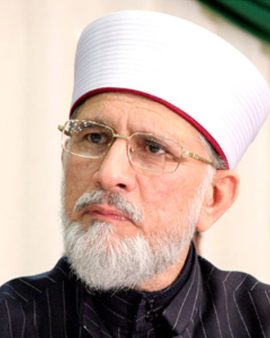
Dr. Tahir-ul-Qadri: Islamic Scholar, Reformer, and Thinker
Dr. Tahir-ul-Qadri is a renowned Islamic scholar, theologian, author, and reformist thinker, widely known for his efforts to promote interfaith harmony, counter religious extremism, and articulate Islam’s compatibility with democracy, human rights, and modern civic life. With a career spanning several decades, he has emerged as one of the most internationally recognized Muslim intellectuals from South Asia.
Born on 19 February 1951 in Jhang, Punjab, Pakistan, Tahir-ul-Qadri received a strong religious and academic foundation from an early age. He pursued higher education in Pakistan, earning a PhD in Islamic Law (Fiqh) from the University of the Punjab, Lahore. His academic training combined classical Islamic sciences—Qur’an, Hadith, jurisprudence, and theology—with modern legal and constitutional studies, shaping his distinctive approach to religious scholarship.
In 1981, Dr. Tahir-ul-Qadri founded Minhaj-ul-Quran International (MQI), a global Islamic organization dedicated to education, social welfare, and spiritual reform. Headquartered in Lahore, MQI has expanded to more than 90 countries, running schools, colleges, research institutes, and welfare programs. Through MQI, Qadri sought to revive Islamic scholarship while countering sectarianism and radical ideologies.
Dr. Qadri gained international prominence for his strong and unequivocal stance against terrorism and violent extremism. In 2010, he issued a comprehensive fatwa against suicide bombings and terrorism, declaring them categorically forbidden (haram) in Islam. The document, running into hundreds of pages, was widely circulated and cited by scholars, governments, and peace activists as a landmark religious rebuttal to extremist narratives.
A prolific writer and speaker, Dr. Tahir-ul-Qadri has authored hundreds of books on Islamic theology, law, spirituality, and contemporary issues. His lectures—delivered in Urdu, Arabic, and English—have reached millions through television, digital media, and large public gatherings. His teachings emphasize love of the Prophet Muhammad (peace be upon him), ethical conduct, social justice, and peaceful coexistence.
In addition to his scholarly work, Dr. Qadri has played an active role in public life and politics. He founded the Pakistan Awami Tehreek (PAT) in 1989, advocating constitutional reform, rule of law, and social justice. Although his political interventions—such as mass protests and calls for systemic reform—have generated controversy, supporters view them as principled efforts to challenge corruption and authoritarianism, while critics question their practical outcomes.
Internationally, Dr. Tahir-ul-Qadri has engaged with Western governments, parliaments, universities, and interfaith forums, presenting Islam as a faith rooted in mercy, knowledge, and pluralism. He has been particularly influential among Muslim communities in Europe and North America, where his work focuses on integration, civic responsibility, and rejection of extremism.
Dr. Tahir-ul-Qadri remains a polarizing yet influential figure—respected by followers as a courageous reformer and scholar, and debated by critics for his political activism. His enduring legacy lies in his intellectual challenge to extremism and his efforts to present Islam as a force for peace, spirituality, and constructive engagement in the modern world.