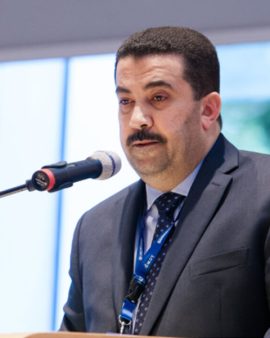
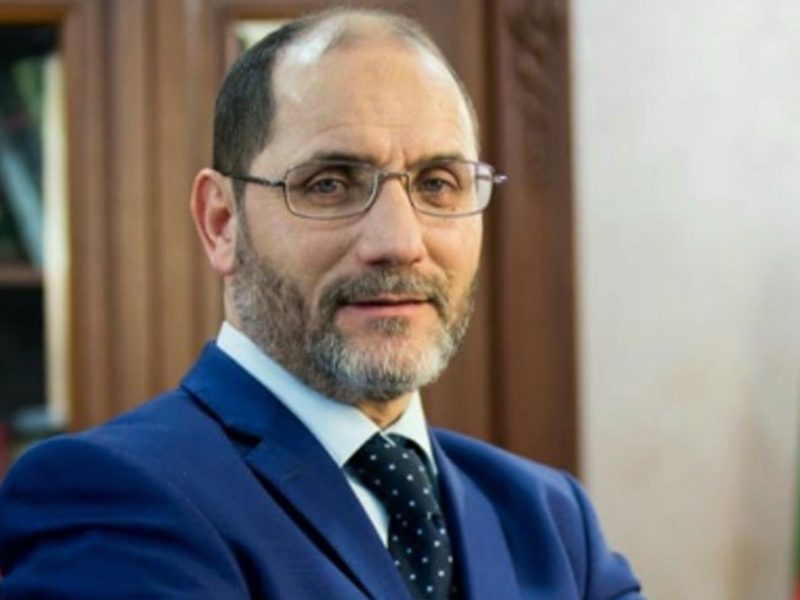

Abderrazak Makri: The Pragmatist at the Helm of Algeria’s Islamist Reformists
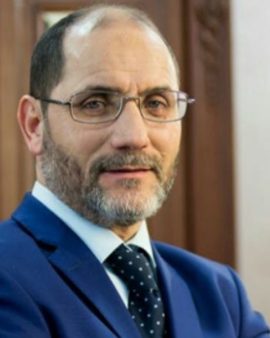
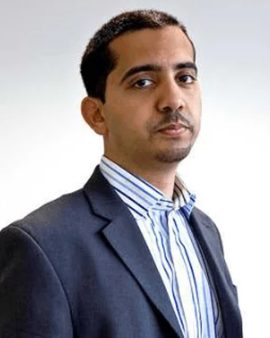
Abderrazak Makri has emerged as one of the most thoughtful and pragmatic Islamist leaders in contemporary North African politics. As the long-time head of Algeria’s Movement of Society for Peace (MSP) (Harakat Mujtama’ as-Silm), Makri has sought to chart a path that blends Islamic values with political realism—advocating reform, participation, and social stability in a country shaped by a complex history of authoritarian rule and civil conflict.
Born in 1960 in the city of Biskra, on the edge of Algeria’s Sahara region, Makri grew up during a period when the newly independent nation was still defining its political and cultural identity. Like many Algerians of his generation, he was deeply influenced by questions of justice, governance, and national dignity. Trained as an academic and educator, Makri developed an early interest in Islamic thought, social reform, and civic responsibility—interests that would later shape his political outlook.
Makri joined the Islamist movement inspired by the late Sheikh Mahfoud Nahnah, the founding father of MSP, who championed a distinctly Algerian model of political Islam. Unlike more confrontational Islamist groups, MSP emphasized gradual reform, nonviolence, and engagement within the political system. This philosophy profoundly shaped Makri, who rose steadily through the party’s ranks, gaining recognition for his intellectual clarity and organizational skills.
In 2013, Abderrazak Makri was elected president of MSP, assuming leadership at a time of internal debate and regional upheaval. The Arab Spring had shaken governments across the Middle East and North Africa, reviving both hopes for democratic reform and fears of instability. In Algeria—still haunted by memories of the bloody civil war of the 1990s—Makri argued consistently for caution, dialogue, and political inclusion rather than radical rupture.
Under his leadership, MSP positioned itself as a reformist Islamist party committed to pluralism and peaceful political competition. Makri steered the movement through shifting alliances, including periods of participation in government coalitions and moments of principled opposition. He defended these choices as necessary to protect social cohesion while pushing incrementally for accountability, good governance, and respect for civil liberties.
Makri’s public persona differs markedly from the fiery image often associated with Islamist leaders. Soft-spoken and analytical, he is known for lengthy essays, policy reflections, and measured speeches rather than populist rhetoric. He has repeatedly emphasized that Islamic politics must respond to real social conditions—youth unemployment, corruption, economic inequality, and the erosion of public trust—rather than abstract slogans.
During Algeria’s 2019 Hirak protest movement, Makri sought to align MSP with popular demands for peaceful change, constitutional reform, and an end to entrenched political practices. While navigating a delicate political landscape, he called for national dialogue and warned against both authoritarian stagnation and reckless confrontation. His stance reinforced his reputation as a bridge-builder within Algeria’s fragmented political scene.
Today, Abderrazak Makri is regarded as one of the leading intellectual voices of moderate political Islam in the Maghreb. Supporters see him as a principled reformer who understands Algeria’s unique history and constraints; critics argue that his pragmatism risks diluting opposition pressure. Yet few dispute his influence.
In a region often defined by extremes, Makri’s leadership of the Movement of Society for Peace reflects an alternative vision—one rooted in patience, participation, and the belief that lasting change is built through institutions, dialogue, and social trust rather than upheaval alone.