The 100 Most Influential Muslims - 2026

Academicians

Browse Lists by Year:


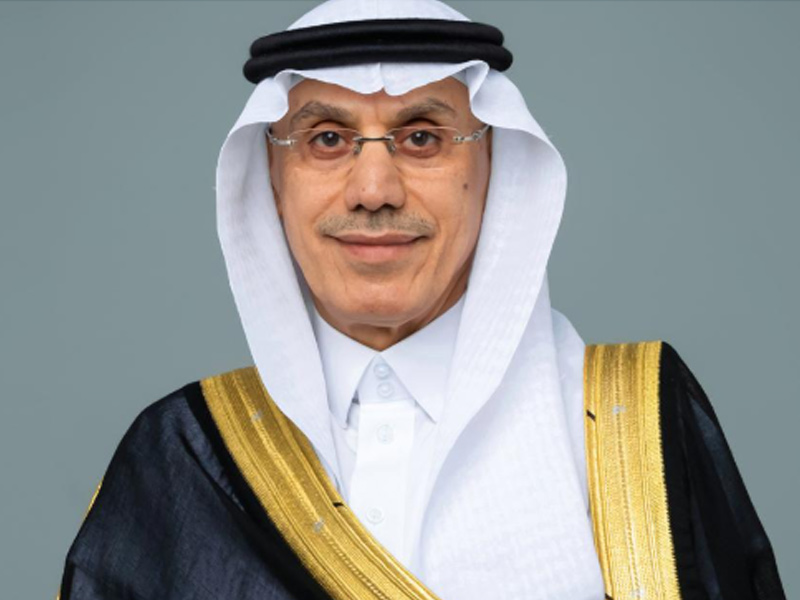
Dr Muhammad Sulaiman Al Jasser - selected in the list of  - 2026

Dr Muhammad Sulaiman Al Jasser

Saudi Arabia

Dr. Muhammad Sulaiman Al Jasser: Steering Development Finance with Vision and Discipline

Dr. Muhammad Sulaiman Al Jasser stands among the most respected economic policymakers in the Muslim world, a technocrat whose career bridges national governance and multilateral development. As Chairman and President of the Islamic Development Bank (IsDB) Group, headquartered in Jeddah, he has brought intellectual rigor, fiscal discipline, and a reformist outlook to one of the world’s leading development finance institutions serving Muslim-majority countries.

Born in Saudi Arabia, Dr. Al Jasser’s professional journey reflects a lifelong engagement with economics, public policy, and institutional reform. He earned advanced degrees in economics in the United States, equipping him with a strong analytical foundation that would later define his leadership style. Early in his career, he served in various policy and advisory roles within Saudi Arabia, gaining firsthand experience in macroeconomic management, monetary policy, and public finance.

Dr. Al Jasser rose to national prominence during his tenure as Governor of the Saudi Arabian Monetary Authority (SAMA), the Kingdom’s central bank, where he played a critical role in strengthening financial stability, modernizing regulatory frameworks, and navigating global economic turbulence. He later served as Saudi Arabia’s Minister of Finance, a position in which he was widely regarded for his prudence, clarity of thought, and commitment to long-term fiscal sustainability. These roles established his reputation as a steady hand in moments of uncertainty—an attribute that would prove invaluable in his later multilateral leadership.

In 2021, Dr. Al Jasser was appointed President of the Islamic Development Bank Group, effectively becoming the institution’s chief executive and leading figure. The IsDB, founded in 1975, is a multilateral development bank dedicated to fostering economic development and social progress in its 57 member countries, in accordance with the principles of Islamic finance. Under Dr. Al Jasser’s leadership, the Bank has sought to sharpen its development impact while modernizing its operations to meet contemporary global challenges.

At the helm of the IsDB, Dr. Al Jasser has emphasized results-driven development, innovation, and partnerships. He has championed initiatives focused on poverty alleviation, infrastructure, health, education, food security, and climate resilience—areas of urgent need across the Global South. At the same time, he has pushed for stronger governance, financial sustainability, and accountability within the institution, reinforcing its credibility in international financial markets.

A defining feature of Dr. Al Jasser’s leadership is his belief that development finance must be both ethical and effective. He has consistently highlighted the unique value of Islamic finance as a tool for inclusive growth—one that links finance to real economic activity, risk-sharing, and social responsibility. Under his guidance, the IsDB has expanded innovative instruments that blend Islamic finance with global development best practices.

Colleagues and observers describe Dr. Al Jasser as calm, methodical, and intellectually demanding—a leader who values data, dialogue, and institutional strength over rhetoric. He is not a populist figure, but his influence is profound, shaping policies that affect millions of lives across member countries.

In an era marked by economic shocks, climate stress, and widening inequality, Dr. Muhammad Sulaiman Al Jasser’s stewardship of the Islamic Development Bank represents continuity with purpose. His career embodies the idea that sound economics, ethical finance, and disciplined leadership can work together to advance shared prosperity—making him a central figure in the evolving story of development in the Muslim world.

Ilham Tohti - selected in the list of  - 2026

Ilham Tohti

China

Ilham Tohti: Uyghur Economist, Scholar, and Voice for Dialogue and Human Rights

Ilham Tohti is a highly respected Uyghur economist, academic, and public intellectual from the Xinjiang Uyghur Autonomous Region of China. Born on 25 October 1969 in Artush (Artux), Xinjiang, he became internationally known not only for his scholarly work but also for his courageous advocacy on behalf of the Uyghur ethnic minority and his commitment to peaceful dialogue and understanding between ethnic groups in China. 

Tohti’s academic journey began with traditional higher education in China. He earned degrees in economics from Northeast Normal University and then from the Minzu University of China (formerly Central Nationalities University) in Beijing. After completing his studies, he joined the faculty of Minzu University, where he taught economics and conducted research on issues affecting ethnic minorities, particularly the socio economic conditions and relations between Uyghurs and Han Chinese.

Throughout the 1990s and early 2000s, Tohti became known as one of the few influential Uyghur voices engaging seriously with China’s ethnic policies. Rather than advocate separatism, he consistently emphasized the need for mutual understanding, legal rights, and respectful coexistence between Uighurs and the Han majority. His academic writings and public lectures focused on economic disparities, cultural differences, and the importance of implementing China’s own regional autonomy laws to protect minority rights.

In 2006, Tohti founded Uyghur Online, a Chinese language website designed to foster dialogue and understanding between Uyghurs and Han Chinese by presenting researched commentary on ethnic issues and social conditions. The platform became widely read but was repeatedly shut down by Chinese authorities, who accused it of links to “extremists.” 

Tohti’s growing prominence and critical engagement with government policies led to increasing scrutiny by authorities. He was first detained temporarily in 2009 after ethnic riots in Ürümqi, and then again in January 2014. In September 2014, following a two day trial widely condemned by international rights groups, he was convicted on charges of “separatism” and sentenced to life imprisonment, along with the freezing of his assets. Many human rights organizations have denounced the trial as unfair and politically motivated. 

Despite his imprisonment, Tohti’s work has been recognized globally. He has received multiple major human rights awards, including the PEN/Barbara Goldsmith Freedom to Write Award (2014), the Martin Ennals Award for Human Rights Defenders (2016), and the Sakharov Prize for Freedom of Thought from the European Parliament (2019). These honors reflect his steadfast commitment to nonviolent dialogue and human rights, even under extreme repression. 

Tohti remains a symbol of peaceful resistance and intellectual courage. His life and work highlight the broader struggles of the Uyghur people within China’s political landscape, and he continues to be a focal point for international calls for justice, autonomy, and respect for human rights in Xinjiang.


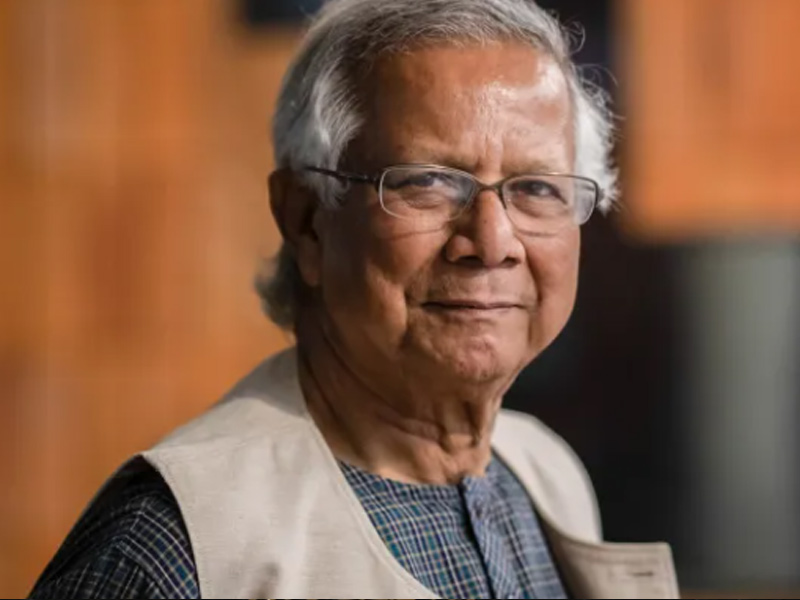
Muhammad Yunus - selected in the list of  - 2026

Muhammad Yunus

Bangladesh

Muhammad Yunus: Economist, Nobel Laureate, and Steward of Bangladesh’s Democratic Transition

Muhammad Yunus (born 28 June 1940) is a Bangladeshi economist, social entrepreneur, and Nobel Peace Prize laureate who assumed office as Interim Prime Minister of Bangladesh in 2024 amid a period of profound political transition. Internationally renowned as the pioneer of microfinance and the founder of Grameen Bank, Yunus is widely regarded as one of the most influential development thinkers of the modern era.

Born in Chittagong (now Chattogram), then part of British India, Yunus grew up in a middle-class family and was exposed early to the ideals of social justice and public service. He studied economics at Dhaka University before pursuing higher education in the United States, earning a PhD in economics from Vanderbilt University. He later taught economics at Middle Tennessee State University before returning to Bangladesh shortly after the country’s independence in 1971.

Yunus’s global prominence emerged during the 1974 famine in Bangladesh, when he began experimenting with small, collateral-free loans to impoverished villagers, particularly women. This initiative evolved into the Grameen Bank, formally established in 1983, which revolutionised access to credit for the rural poor. The Grameen model challenged conventional banking norms by demonstrating that the poor were reliable borrowers and that microcredit could serve as a powerful tool for poverty alleviation and women’s empowerment.

In 2006, Yunus and Grameen Bank were jointly awarded the Nobel Peace Prize for their efforts to create economic and social development from below. Over the decades, his ideas influenced global development policy, inspiring microfinance institutions across Asia, Africa, and Latin America. Yunus also promoted the concept of “social business”, enterprises designed to solve social problems without profit maximisation, further shaping debates on ethical capitalism.

Despite his international acclaim, Yunus’s relationship with Bangladeshi politics has been complex and often contentious. In 2007, he briefly considered forming a political party during a military-backed caretaker government but later withdrew. Under successive elected governments, particularly that of Sheikh Hasina, Yunus faced legal and regulatory challenges, including disputes over Grameen Bank’s governance and multiple court cases, which his supporters described as politically motivated.

Yunus was appointed Interim Prime Minister following widespread unrest and a breakdown of political consensus, as Bangladesh sought a neutral and credible figure to oversee a transitional phase. His appointment was widely welcomed both domestically and internationally, given his reputation for integrity, non-partisanship, and commitment to democratic norms.

As interim prime minister, Yunus’s mandate has focused on restoring political stability, overseeing administrative reforms, ensuring free and fair elections, and rebuilding public trust in state institutions. He has emphasised the rule of law, protection of civil liberties, and inclusive governance, while steering clear of long-term policy commitments beyond the transition period. Economically, his approach has prioritised stabilisation, social protection, and engagement with international partners.

Muhammad Yunus’s legacy extends far beyond his interim political role. Celebrated as a visionary economist and moral voice of development, he remains a symbol of innovation rooted in human dignity. His stewardship during Bangladesh’s transitional moment has added a new chapter to a career defined by global impact, reformist ideals, and a lifelong commitment to empowering the marginalised.


The 100 Most Influential Muslims - 2026

Copyright © 2024 | All rights reserved. | Website Designed & Maintained by Aash App Developers