The 100 Most Influential Muslims - 2026

Religious Leaders

Browse Lists by Year:


Abderrazak Makri - selected in the list of  - 2026

Abderrazak Makri

Algeria

Abderrazak Makri: The Pragmatist at the Helm of Algeria’s Islamist Reformists

Abderrazak Makri has emerged as one of the most thoughtful and pragmatic Islamist leaders in contemporary North African politics. As the long-time head of Algeria’s Movement of Society for Peace (MSP) (Harakat Mujtama’ as-Silm), Makri has sought to chart a path that blends Islamic values with political realism—advocating reform, participation, and social stability in a country shaped by a complex history of authoritarian rule and civil conflict.

Born in 1960 in the city of Biskra, on the edge of Algeria’s Sahara region, Makri grew up during a period when the newly independent nation was still defining its political and cultural identity. Like many Algerians of his generation, he was deeply influenced by questions of justice, governance, and national dignity. Trained as an academic and educator, Makri developed an early interest in Islamic thought, social reform, and civic responsibility—interests that would later shape his political outlook.

Makri joined the Islamist movement inspired by the late Sheikh Mahfoud Nahnah, the founding father of MSP, who championed a distinctly Algerian model of political Islam. Unlike more confrontational Islamist groups, MSP emphasized gradual reform, nonviolence, and engagement within the political system. This philosophy profoundly shaped Makri, who rose steadily through the party’s ranks, gaining recognition for his intellectual clarity and organizational skills.

In 2013, Abderrazak Makri was elected president of MSP, assuming leadership at a time of internal debate and regional upheaval. The Arab Spring had shaken governments across the Middle East and North Africa, reviving both hopes for democratic reform and fears of instability. In Algeria—still haunted by memories of the bloody civil war of the 1990s—Makri argued consistently for caution, dialogue, and political inclusion rather than radical rupture.

Under his leadership, MSP positioned itself as a reformist Islamist party committed to pluralism and peaceful political competition. Makri steered the movement through shifting alliances, including periods of participation in government coalitions and moments of principled opposition. He defended these choices as necessary to protect social cohesion while pushing incrementally for accountability, good governance, and respect for civil liberties.

Makri’s public persona differs markedly from the fiery image often associated with Islamist leaders. Soft-spoken and analytical, he is known for lengthy essays, policy reflections, and measured speeches rather than populist rhetoric. He has repeatedly emphasized that Islamic politics must respond to real social conditions—youth unemployment, corruption, economic inequality, and the erosion of public trust—rather than abstract slogans.

During Algeria’s 2019 Hirak protest movement, Makri sought to align MSP with popular demands for peaceful change, constitutional reform, and an end to entrenched political practices. While navigating a delicate political landscape, he called for national dialogue and warned against both authoritarian stagnation and reckless confrontation. His stance reinforced his reputation as a bridge-builder within Algeria’s fragmented political scene.

Today, Abderrazak Makri is regarded as one of the leading intellectual voices of moderate political Islam in the Maghreb. Supporters see him as a principled reformer who understands Algeria’s unique history and constraints; critics argue that his pragmatism risks diluting opposition pressure. Yet few dispute his influence.

In a region often defined by extremes, Makri’s leadership of the Movement of Society for Peace reflects an alternative vision—one rooted in patience, participation, and the belief that lasting change is built through institutions, dialogue, and social trust rather than upheaval alone.


Almuzzammil Yusuf - selected in the list of  - 2026

Almuzzammil Yusuf

Indonesia

Almuzzammil Yusuf: Principled Politics and Faith-Driven Leadership in Indonesia

Almuzzammil Yusuf stands among the most respected Islamist political figures in Indonesia, known for his calm intellect, moral clarity, and enduring commitment to democratic engagement rooted in Islamic values. A senior leader and widely recognized head figure of the Prosperous Justice Party (Partai Keadilan Sejahtera – PKS), Indonesia’s leading Islamist political party, Almuzzammil has played a central role in shaping the party’s ideological direction and national presence in the world’s largest Muslim-majority democracy.

Born into a society defined by diversity—of cultures, faiths, and political traditions—Almuzzammil Yusuf’s political journey reflects Indonesia’s own democratic evolution. Trained in Islamic thought and public affairs, he emerged from the tarbiyah movement that gave rise to PKS, a movement that emphasizes moral discipline, social responsibility, and service-oriented leadership. From the outset, his vision of politics was not about power alone, but about reforming society through integrity, justice, and ethical governance.

PKS occupies a unique position in Indonesian politics. Unlike revolutionary Islamist movements elsewhere, the party has consistently worked within Indonesia’s constitutional framework, championing democracy, anti-corruption reforms, and social welfare while drawing inspiration from Islamic principles. Almuzzammil Yusuf has been one of the key architects of this approach. As a strategist, parliamentarian, and party ideologue, he helped articulate PKS’s message as one of “clean governance” (politik bersih), appealing to voters seeking moral credibility in public life.

Almuzzammil’s leadership style is marked by intellectual rigor and quiet resolve. He is widely regarded as a thinker-politician—someone who believes that ideas, values, and institutions matter as much as electoral success. In parliamentary debates and public discourse, he has consistently emphasized constitutionalism, national unity, and the compatibility of Islam with democracy and pluralism. His speeches often stress that Islamic politics must uplift society as a whole, not divide it.

Under his guidance and influence, PKS has expanded its grassroots base, particularly among urban professionals, students, and faith-conscious middle-class voters. The party’s focus on social services, disaster relief, education, and community welfare has reinforced its reputation as a movement deeply embedded in everyday Indonesian life. Almuzzammil has repeatedly argued that political credibility is earned through service—by standing with people in times of hardship and offering practical solutions grounded in ethical values.

In a political environment often marked by transactional alliances and shifting loyalties, Almuzzammil Yusuf has advocated consistency and moral accountability. He has spoken openly about corruption, inequality, and the erosion of public trust, urging leaders to return to the foundational ideals of justice (keadilan), trustworthiness (amanah), and consultation (shura). For him, Islamic politics is not about imposing faith, but about embodying its highest ethical standards.

Beyond party politics, Almuzzammil Yusuf is seen as a bridge between religious conviction and civic responsibility. He represents a generation of Islamist leaders who reject extremism while refusing to abandon faith as a source of moral guidance. His influence extends beyond PKS, contributing to broader debates about the role of religion in public life across Southeast Asia.

In an era of global uncertainty and political cynicism, Almuzzammil Yusuf’s leadership offers an alternative narrative—one that affirms democracy, honors faith, and insists that power must always serve the common good. Through patience, principle, and perseverance, he continues to inspire those who believe that ethical politics is not only possible, but necessary.


Ayatollah Sayyid Ali Hussein Al Sistani - selected in the list of  - 2026

Ayatollah Sayyid Ali Hussein Al Sistani

Iraq

Grand Ayatollah Sayyid Ali Hussein Al-Sistani: The Quiet Moral Authority Shaping Iraq’s Destiny

Grand Ayatollah Sayyid Ali Hussein Al-Sistani is the most influential Shiʿa religious authority in Iraq and one of the most respected clerics in the Muslim world. Known for his quietist theology, moral authority, and decisive interventions at critical historical moments, Al-Sistani has shaped post-2003 Iraq more profoundly than any political leader—despite never holding public office or seeking power.

Born on 4 August 1930 in Mashhad, Iran, into a family of distinguished religious scholars originally from Iraq, Ali Al-Sistani received early religious training before moving to Qom and later to Najaf, the heart of Shiʿa learning. In Najaf, he studied under some of the greatest scholars of the 20th century, including Grand Ayatollah Abul-Qasim Al-Khoei, whom he later succeeded as the leading marjaʿ (source of emulation) in Iraq following Al-Khoei’s death in 1992.

As a marjaʿ al-taqlid, Al-Sistani commands the religious allegiance of millions of Shiʿa Muslims across Iraq, Iran, South Asia, the Gulf, and the global diaspora. His influence rests not on institutional authority or political office, but on scholarly credibility, ethical consistency, and widespread trust. He is known for a life of austerity, rarely appearing in public and communicating largely through written statements issued from his modest residence in Najaf.

Al-Sistani adheres to the Najaf school of Shiʿa thought, which traditionally advocates political restraint by religious scholars, in contrast to Iran’s doctrine of Wilayat-e-Faqih (Guardianship of the Jurist). He has consistently opposed clerical rule, arguing that legitimacy must come from the will of the people rather than direct governance by religious authorities. This position has made him a unique moral counterweight to both authoritarianism and sectarian extremism.

Following the 2003 US-led invasion of Iraq, Al-Sistani emerged as the single most stabilising figure in the country. He insisted that Iraq’s political future be decided through free elections, rejecting imposed governance structures. His insistence on a constitution written by elected representatives laid the foundation for Iraq’s post-Saddam political process. At critical junctures, his calls for restraint prevented large-scale sectarian violence, even as the country descended into chaos.

In 2014, Al-Sistani issued a historic fatwa calling for national mobilisation against the so-called Islamic State (ISIS) after the group captured large swathes of Iraqi territory. The ruling helped galvanise resistance and played a decisive role in halting ISIS’s advance. Notably, he framed the call as a defence of the nation and all its citizens—Shiʿa, Sunni, Christian, and others—rather than a sectarian appeal.

Beyond politics and security, Al-Sistani has consistently advocated for human rights, minority protection, rule of law, and social justice. His meeting with Pope Francis in 2021 symbolised his commitment to interfaith coexistence and moral dialogue, earning global admiration.

Often described as the “silent authority,” Grand Ayatollah Ali Al-Sistani represents a rare model of leadership—one rooted in moral legitimacy rather than coercive power. His legacy lies in demonstrating how religious authority, when exercised with restraint and principle, can guide a fractured society toward dignity, coexistence, and political responsibility.


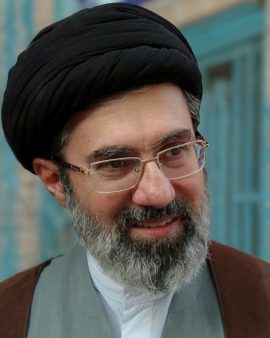
Grand Ayatollah Hajj Sayyid Ali Khamenei - selected in the list of  - 2026

Grand Ayatollah Hajj Sayyid Ali Khamenei

Iran

Grand Ayatollah Hajj Sayyid Ali Khamenei: The Ideologue and Guardian of Iran’s Islamic Revolution

Grand Ayatollah Hajj Sayyid Ali Khamenei, the Supreme Leader of the Islamic Republic of Iran, stands as one of the most consequential political and religious figures in the contemporary Muslim world. Born on July 17, 1939, in Mashhad, a historic center of Shia scholarship, he was raised in a deeply religious family. His father, Ayatollah Javad Hosseini Khamenei, was a respected cleric known for his modest lifestyle, discipline, and scholarship. From an early age, Sayyid Ali Khamenei immersed himself in Islamic sciences, studying in the seminaries of Mashhad, Najaf, and Qom under prominent scholars including Ayatollah Borujerdi, Imam Khomeini, and Allama Tabataba’i.

A committed activist even as a young cleric, Khamenei took part in the resistance against the Pahlavi monarchy. He was imprisoned and tortured multiple times for delivering sermons against tyranny, Western domination, and cultural alienation. His association with Imam Khomeini marked him as one of the influential pillars of the revolutionary movement that culminated in the 1979 Islamic Revolution.

Following the revolution, Khamenei played major roles in shaping the new Islamic Republic. He served as Tehran’s Friday prayer leader, a member of parliament, the secretary of defense during the early years of the Iran–Iraq War, and later as the President of Iran from 1981 to 1989. His presidency coincided with one of the most challenging periods for the nation—war, reconstruction, and the consolidation of the revolutionary state. Known for his disciplined work ethic, firm principles, and intellectual rigor, he worked closely with Ayatollah Khomeini to ensure the stability and continuity of the Islamic system.

After the passing of Imam Khomeini in 1989, Sayyid Ali Khamenei was elected the Supreme Leader, becoming the highest authority in Iran’s political and religious hierarchy. As Supreme Leader, he is responsible for guiding the country’s strategic direction, overseeing defense, foreign policy, and the functioning of key state institutions. Over the past three decades, he has positioned Iran as a regional powerhouse, balancing ideological steadfastness with geopolitical pragmatism.

Under his leadership, Iran has expanded its influence across West Asia, supporting resistance movements and maintaining a foreign policy centered on independence from Western hegemony. Domestically, he has emphasized self-sufficiency, cultural identity, technological progress, and Islamic ethics. Ayatollah Khamenei has been a strong advocate of scientific advancement, particularly in fields like nuclear energy, medicine, and military technology, encouraging Iranian youth to innovate despite sanctions and isolation.

Beyond politics, he is also known for his intellectual contributions. A scholar of Qur’anic exegesis, Islamic jurisprudence, literature, and philosophy, he has authored numerous works and delivered hundreds of lectures. His deep interest in poetry and culture reflects a softer dimension of his personality, often overshadowed by geopolitical narratives.

Today, Grand Ayatollah Khamenei remains a pivotal figure in shaping the ideological, political, and strategic trajectory of the Islamic Republic. For supporters, he represents steadfast resistance, Islamic authenticity, and national dignity. His leadership continues to influence not only Iran but also the broader dynamics of the Muslim world.


Gus Yahya Cholil Staquf - selected in the list of  - 2026

Gus Yahya Cholil Staquf

Indonesia

Gus Yahya Cholil Staquf: Reformist Islamic Leader and Chairman of Nahdlatul Ulama

Kyai Haji Yahya Cholil Staquf (born 16 February 1966), widely known as Gus Yahya, is a prominent Indonesian Islamic cleric, intellectual, and political figure who currently serves as Chairman of the Executive Council of Nahdlatul Ulama (NU), the largest Muslim organization in Indonesia and one of the most influential Islamic bodies in the world. He assumed this position in December 2021 after winning a closely watched leadership contest at the 34th NU Conference (Muktamar NU) held at Lampung University, Bandar Lampung. In that election, Gus Yahya defeated the incumbent chairman Said Aqil Siradj, securing 337 votes to Siradj’s 210, marking a significant leadership transition within NU.

Gus Yahya’s rise to national prominence has been shaped by a long engagement with both religious institutions and state affairs. Between 1999 and 2001, he served as spokesperson to President Abdurrahman Wahid (Gus Dur), Indonesia’s first democratically elected president and a towering figure within NU. This role placed Yahya at the heart of Indonesia’s post–New Order political transition and exposed him to high-level policymaking and international diplomacy. In recognition of his experience and standing, President Joko Widodo appointed him on 31 May 2018 as a member of the Presidential Advisory Council, replacing the late Hasyim Muzadi.

Politically, Yahya was previously associated with the National Awakening Party (PKB), a party closely linked to NU. He was at one time widely predicted to become Minister of Religious Affairs in the Onward Indonesia Cabinet. Ultimately, however, President Jokowi appointed his younger brother, Yaqut Cholil Qoumas, to that influential post—making the Cholil family one of the most prominent clerical-political families in contemporary Indonesia.

Beyond formal politics, Gus Yahya has been active in grassroots and intellectual community initiatives. In 2009, he founded the “Community of Terong Gosong”, an informal discussion forum and civic platform, and later served as chairman of its supervisory board. The community reflects his interest in open dialogue, cultural critique, and social engagement beyond traditional religious spaces.

Born in Leteh village, Rembang, Central Java, Gus Yahya is the eldest son of Muhammad Cholil Bisri, a respected Islamic scholar and former Deputy Speaker of the People’s Consultative Assembly. His educational background combines traditional Islamic learning and modern social sciences. He studied at Madrasah Al-Munawwir Krapyak in Yogyakarta, one of Indonesia’s leading pesantren, and later enrolled in sociology at Gadjah Mada University, although he did not complete his degree. During this period, he was active in the Muslim Students’ Association (HMI) and NU, laying the foundation for his future leadership.

Within NU, Yahya steadily rose through the ranks, serving as Katib Aam (General Secretary of the Supreme Council) from 2015 to 2021 before being elected chairman. He has also authored several books, including The Terong Gosong (2011), Terong Gosong Reloaded (2016), and PBNU: Perjuangan Besar Nahdlatul Ulama (2020), which reflect his thinking on religion, organization, and society.

Gus Yahya has not been without controversy. His 2018 visit to Israel as a guest of the American Jewish Committee sparked widespread debate in Indonesia, where public support for Palestine is strong and diplomatic ties with Israel do not exist. Critics warned of potential unrest, while supporters argued for dialogue and engagement. The episode underscored Gus Yahya’s reputation as a bold and unconventional leader, willing to challenge taboos in pursuit of what he views as NU’s broader moral and global mission.


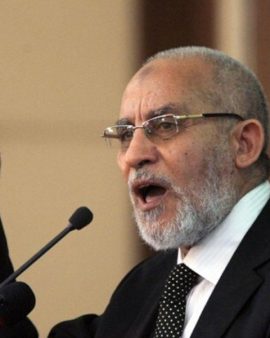
Mohamed Badie - selected in the list of  - 2026

Mohamed Badie

Egypt

Mohamed Badie: The Quiet Academic Who Rose to Lead the Muslim Brotherhood

Mohamed Badie stands as one of the most consequential yet understated figures in the modern history of Egypt’s Islamist movement. As the eighth General Guide (Supreme Guide) of the Muslim Brotherhood, Badie assumed leadership during one of the most turbulent chapters in Egypt’s political life—guiding the organization through revolution, brief political ascendance, and severe repression.

Born in 1943 in Mahalla al-Kubra, a major industrial city in Egypt’s Nile Delta, Mohamed Badie was shaped early by discipline, study, and faith. Unlike many charismatic political leaders, Badie’s formative identity was academic. He pursued veterinary medicine, earning a doctorate and later becoming a professor of pathology. For years, he worked quietly in academia, cultivating a reputation as a serious scholar rather than a public firebrand. This background would later define his leadership style—measured, doctrinal, and rooted in institutional continuity.

Badie joined the Muslim Brotherhood in his youth, during a period when the organization faced periodic repression under successive Egyptian governments. Rising steadily through its ranks, he became known internally for his organizational skills, ideological consistency, and loyalty to the Brotherhood’s founding principles of Islamic reform, social justice, and gradual societal change. In 2010, following the death of his predecessor Mohamed Mahdi Akef, Badie was elected as the Brotherhood’s Supreme Guide—a role combining spiritual authority, political direction, and organizational stewardship.

His tenure soon coincided with historic upheaval. The 2011 Egyptian revolution, which toppled President Hosni Mubarak, propelled the Muslim Brotherhood from decades of semi-clandestine opposition into the political mainstream. Under Badie’s guidance, the Brotherhood endorsed political participation through its Freedom and Justice Party, culminating in the election of Mohamed Morsi as Egypt’s first civilian and Islamist president in 2012.

For supporters, this period marked the realization of a long-suppressed political vision. For critics, it raised fears of ideological dominance and exclusion. Badie himself remained largely behind the scenes, rarely appearing in public, but issuing statements that emphasized legitimacy, constitutional order, and the Brotherhood’s interpretation of Islamic governance.

The movement’s ascent proved short-lived. In July 2013, Egypt’s military ousted President Morsi following mass protests, triggering a sweeping crackdown on the Brotherhood. Badie was arrested later that year and subsequently faced multiple trials, receiving several death sentences and life terms—many of which were later overturned or commuted, amid widespread international criticism of Egypt’s judicial process.

Since his imprisonment, Badie has become a symbol of the Brotherhood’s dramatic reversal of fortunes. To followers, he represents steadfastness under persecution and the enduring resilience of an ideological movement. To opponents, he remains associated with a period they view as destabilizing and divisive. His continued detention underscores the broader dismantling of the Brotherhood as a legal political force in Egypt.

Mohamed Badie’s leadership was never defined by charisma or populist appeal. Instead, his influence lies in his embodiment of institutional Islamism—disciplined, hierarchical, and deeply ideological. In Egypt’s modern political narrative, he occupies a paradoxical space: an academic who led a mass movement, a quiet figure at the center of national upheaval, and a Supreme Guide whose tenure coincided with both the Brotherhood’s greatest political breakthrough and its most severe repression.


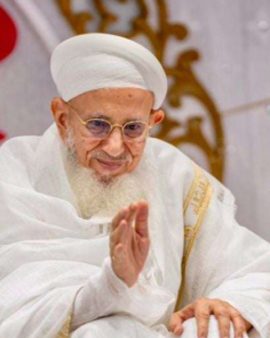
Mufazzal Saifuddin - selected in the list of  - 2026

Mufazzal Saifuddin

India

Mufazzal Saifuddin: Spiritual Leader of the Dawoodi Bohras and Custodian of a Global Community

Syedna Mufazzal Saifuddin, born 20 August 1946 in India, is the 53rd Dai al-Mutlaq (spiritual leader) of the Dawoodi Bohra community, one of the largest sub-sects of the Tayyibi branch of Ismaili Shia Islam. Revered as both a religious guide and a custodian of social and cultural development, Syedna Mufazzal Saifuddin has dedicated his life to preserving the spiritual heritage of his community while fostering global education, social welfare, and ethical leadership.

Born into a lineage of spiritual leadership, Mufazzal Saifuddin is the son of the 52nd Dai, Syedna Mohammed Burhanuddin, and grew up immersed in the religious, educational, and administrative life of the Dawoodi Bohras. From an early age, he received rigorous training in Islamic theology, jurisprudence (fiqh), Arabic language, and Quranic studies, as well as the practical aspects of community administration. This unique upbringing prepared him to assume the responsibilities of leading a transnational community with millions of followers across India, the Middle East, Africa, Europe, and North America.

He assumed the office of Dai al-Mutlaq in 2014 following the passing of his father, a succession that was met with both widespread celebration and legal challenges. Despite disputes, Mufazzal Saifuddin’s leadership has been characterized by stability, administrative efficiency, and continuity of his father’s vision. Under his guidance, the community has continued to emphasize spiritual development alongside worldly education and civic responsibility.

A hallmark of Syedna Mufazzal Saifuddin’s leadership is his focus on education and knowledge dissemination. He has championed modern schooling alongside traditional religious instruction, ensuring that Bohra youth are well-versed in secular subjects while maintaining a strong foundation in faith. Many institutions, including schools, colleges, and libraries, have flourished under his patronage, reflecting his belief in the transformative power of knowledge.

Social welfare is another pillar of his guidance. He has spearheaded initiatives in healthcare, disaster relief, and community development, particularly targeting underserved populations. During natural disasters and public health crises, the Dawoodi Bohra community, under his leadership, has been quick to provide aid, medical assistance, and logistical support, reflecting the emphasis on social responsibility ingrained in the faith.

Syedna Mufazzal Saifuddin also places significant emphasis on cultural preservation and religious heritage. He has overseen the restoration of historic mosques, shrines, and community centers, ensuring that architectural and spiritual heritage is maintained for future generations. His guidance stresses ethical conduct, humility, and the pursuit of justice, encouraging followers to balance spiritual devotion with social engagement.

Internationally, Mufazzal Saifuddin represents a model of modern religious leadership: combining spiritual authority with pragmatic administration and global outreach. He engages with other Muslim leaders, interfaith organizations, and global institutions to promote understanding, tolerance, and the ethical application of faith in public life.

Through decades of spiritual guidance, social initiatives, and community building, Syedna Mufazzal Saifuddin has solidified his role as both a religious leader and a visionary custodian of the Dawoodi Bohra community. His life reflects a commitment to preserving tradition while addressing contemporary challenges, embodying an Islamic leadership that harmonizes faith, knowledge, and service.


Mufti Menk - selected in the list of  - 2026

Mufti Menk

Zimbabwe

Mufti Menk: Faith, Compassion, and a Global Digital Minbar

Mufti Ismail Menk—widely known as Mufti Menk—is among the most influential Islamic preachers of the 21st century, a scholar whose reach extends far beyond mosque pulpits into the vast digital public square. With millions of followers across social media platforms, he has emerged as a global voice of faith defined by compassion, accessibility, and moral clarity in a fast-changing world.

Born in Zimbabwe to a family of scholars, Mufti Menk pursued Islamic education from an early age. He studied Shariah in Madinah, graduating with a specialization that grounded him firmly in classical Islamic scholarship. Yet what distinguishes him is not only his learning, but his ability to translate timeless teachings into language that resonates with contemporary audiences—especially young people navigating questions of faith, identity, and purpose.

Mufti Menk’s rise coincided with the growth of digital media, which he embraced as a tool for da‘wah (inviting towards good). His short talks, reminders, and reflections—often delivered with warmth, humor, and emotional intelligence—have made Islamic teachings approachable rather than intimidating. Whether addressing relationships, mental well-being, social justice, or personal accountability, his message consistently emphasizes mercy over judgment and hope over fear.

Beyond preaching, Mufti Menk is a powerful social influencer who uses his platform responsibly. He speaks out on humanitarian crises, encourages charitable action, and advocates ethical conduct in both private and public life. His ability to balance moral conviction with empathy has earned him respect across cultures and faith traditions. He is frequently invited to speak at international conferences, universities, and community events across Africa, Asia, Europe, and North America.

Crucially, Mufti Menk avoids the polemics that often divide religious discourse. He urges unity within the Muslim community and cautions against sectarianism, arrogance, and self-righteousness. His emphasis on self-improvement—fix yourself before fixing others—has become a defining feature of his teaching style. In an age of outrage and online hostility, his calm and measured tone offers a refreshing counter-narrative.

Mufti Menk’s influence lies not in controversy, but in connection. He understands that modern believers seek authenticity, relevance, and reassurance—and he meets them where they are, without diluting core values. By blending traditional scholarship with contemporary communication, he has redefined what it means to be a preacher in the digital age.

At heart, Mufti Menk’s mission is simple yet profound: to remind people of God’s mercy, inspire ethical living, and make faith a source of comfort rather than fear. In doing so, he has become not just a preacher, but a trusted companion on the spiritual journeys of millions around the world.


Prince Rahim Aga Khan - selected in the list of  - 2026

Prince Rahim Aga Khan

Switzerland

Prince Rahim Aga Khan: Global Leader of Development, Diplomacy, and Ismaili Muslim Institutions

Prince Rahim Al-Hussaini Aga Khan is a prominent global figure known for his leadership in international development, humanitarian work, and the governance of Ismaili Muslim institutions. As the eldest son of the late Prince Karim Aga Khan IV, the 49th Imam of the Shia Ismaili Muslims, Prince Rahim has long been prepared for responsibilities that combine spiritual stewardship, ethical leadership, and global public service.

Born on 12 October 1971 in Geneva, Switzerland, Prince Rahim grew up in a multicultural environment that shaped his international outlook. He was educated in Europe and the United States, earning a degree in comparative literature from Brown University. His academic background, though rooted in the humanities, was complemented by professional training in finance and management, equipping him to engage effectively with complex global institutions and development challenges.

From an early stage, Prince Rahim became deeply involved in the work of the Aga Khan Development Network (AKDN), one of the world’s largest private development organizations. Operating in more than 30 countries across Asia, Africa, and the Middle East, the AKDN works in fields ranging from health, education, and rural development to architecture, culture, and economic development. Prince Rahim has played a central role in shaping the network’s strategy, with particular emphasis on poverty alleviation, climate resilience, food security, and sustainable economic growth.

He has served in senior leadership roles within the AKDN, including oversight of agencies dealing with environmental protection, rural transformation, and institutional governance. Known for his analytical and forward-looking approach, Prince Rahim has focused on strengthening local institutions, promoting ethical entrepreneurship, and ensuring that development initiatives are culturally grounded and environmentally sustainable.

Within the Ismaili Muslim community, Prince Rahim has held key responsibilities related to social governance, education, and youth development. He has represented the Imamat at major international forums and has engaged extensively with governments, multilateral organizations, and civil society leaders. His work reflects the Ismaili tradition’s emphasis on the harmony of faith and reason, service to humanity, and loyalty to the countries in which Ismailis live.

Prince Rahim is also recognized for his advocacy on global challenges such as climate change and demographic transition. He has spoken frequently about the need for long-term planning, ethical leadership, and cross-cultural cooperation to address rising inequality and environmental stress—issues that disproportionately affect vulnerable communities.

Despite his high-profile lineage, Prince Rahim maintains a low-key public persona, preferring institution-building over personal prominence. Those who work closely with him describe him as methodical, thoughtful, and deeply committed to the values of service and responsibility.

As a leader shaped by global experience and a strong ethical tradition, Prince Rahim Aga Khan represents continuity and renewal within the Ismaili Imamat’s long-standing commitment to improving quality of life and fostering pluralism. His work continues to influence development practice and inter-civilizational dialogue in an increasingly interconnected and challenged world.


Ramzan Kadyrov - selected in the list of  - 2026

Ramzan Kadyrov

Russia

Ramzan Kadyrov: Chechnya’s Powerful Strongman and a Controversial Pillar of Kremlin Rule

Ramzan Akhmatovich Kadyrov is one of the most controversial and powerful regional leaders in the Russian Federation. As the Head of the Chechen Republic since 2007, he has ruled the predominantly Muslim North Caucasus region with an iron grip, combining fierce loyalty to the Kremlin with a personalized system of power rooted in security forces, patronage, and traditional authority. To supporters, he is the man who restored stability after years of devastating war; to critics, he represents authoritarianism, repression, and grave human rights abuses.

Born on 5 October 1976 in Tsentoroy (now Akhmat-Yurt), Chechnya, Ramzan Kadyrov is the son of Akhmad Kadyrov, a former separatist cleric who later allied with Moscow during the Second Chechen War. Akhmad Kadyrov became Chechnya’s president in 2003 but was assassinated in 2004. Following his father’s death, Ramzan rapidly emerged as the dominant figure in Chechnya, consolidating power through loyal militias that were later incorporated into official security structures.

In 2007, Russian President Vladimir Putin formally appointed Ramzan Kadyrov as Head of the Chechen Republic. Since then, Kadyrov has exercised near-total control over the region, maintaining order through an extensive security apparatus often referred to as the “Kadyrovtsy.” Under his rule, Chechnya has seen large-scale reconstruction after years of war, with Grozny rebuilt into a modern capital featuring mosques, high-rises, and infrastructure projects that symbolize post-war recovery.

Kadyrov presents himself as a defender of Islam, Chechen tradition, and moral conservatism. He has promoted public expressions of Islamic identity, including mosque construction and religious observance, while enforcing strict social norms. However, critics argue that his version of Islam is instrumentalized to reinforce personal authority rather than genuine religious autonomy.

Internationally, Ramzan Kadyrov is known for his unwavering loyalty to Vladimir Putin, often portraying himself as a foot soldier of the Russian president. This loyalty has afforded him extraordinary autonomy within Chechnya, effectively allowing him to rule with minimal federal interference. His forces have also been deployed beyond Chechnya, including participation in Russian military operations in Ukraine, further extending his influence within Russia’s security ecosystem.

At the same time, Kadyrov has been accused by international human rights organizations of widespread abuses, including enforced disappearances, torture, extrajudicial killings, and persecution of political opponents, journalists, and LGBTQ individuals. These allegations have led to international sanctions and have made him a symbol of impunity for rights advocates.

Despite this, Kadyrov maintains a strong domestic power base. Through patronage networks, tribal loyalties, and state-backed religious legitimacy, he has suppressed armed insurgency and prevented a return to large-scale conflict. For many Chechens exhausted by decades of violence, stability—even under authoritarian rule—has been seen as preferable to chaos.

Ramzan Kadyrov remains a central figure in Russia’s regional power structure: a strongman whose authority rests on loyalty, force, and fear, and whose future is closely tied to that of the Kremlin itself. His rule continues to shape Chechnya’s identity and stands as a stark example of how post-conflict stability can come at the cost of political freedom and human rights.


Sahil Adeem - selected in the list of  - 2026

Sahil Adeem

Pakistan

Sahil Adeem – Profile of a Contemporary Islamic Speaker and Public Figure

Sahil Adeem (born 10 October 1984) is a Pakistani public speaker, behavioral psychologist, consultant, and preacher known for his dynamic style of delivering religious and motivational content, particularly to youth audiences across social media and public forums. Born to the late Adeem Hashmi, a respected Urdu poet and writer, Sahil has attracted widespread attention — both admiration and debate — for his unconventional approach to discussing religion, society, and personal development. MM News+1

Adeem’s educational path is somewhat debated in public sources, but he is widely described as having studied psychology abroad, including at Ryerson University in Toronto, Canada, and possibly also having connections to academic institutions in the United States. His grounding in psychology shapes much of his public speaking, which often blends religious themes with insights into human behavior, identity, and personal purpose. News Guru

Professionally, Sahil Adeem is the founder and CEO of Source Code, a training and consulting organization focused on personal development, strategic thinking, and behavioral coaching. Through Source Code, he has worked with individuals and corporate teams in diverse regions, including Pakistan, Canada, the United States, Dubai, and Denmark. His professional work spans strategy consulting, leadership training, and mentoring across various sectors, reflecting his interest in both spiritual and worldly growth. MM News+1

Adeem first rose to prominence around 2016, delivering speeches at institutions like SZABIST and later expanding his reach through digital platforms such as YouTube, podcasts, and social media. He quickly became known for addressing themes such as Muslim identity, critical thinking, societal challenges, and the integration of Islamic principles with contemporary life. Many of his talks aim to inspire young Muslims to question assumptions, broaden their perspective, and live purpose driven lives according to their faith. BOL Entertainment

However, his outspoken style and unorthodox interpretations have also made him a controversial figure. In 2022, Sahil Adeem was reportedly banned from speaking at public universities in Pakistan due to the content of his lectures and his refusal to issue an apology to authorities seeking to moderate his rhetoric. The ban was widely discussed on social media, sparking debates about freedom of speech, religious discourse, and the role of motivational or religious speakers in public life. MM News+1

Beyond institutional controversies, Adeem’s public statements have sometimes drawn criticism from both religious scholars and commentators. Some followers praise his efforts to challenge narrow interpretations of religion and encourage intellectual engagement among young Muslims, while critics argue that his views can be speculative or lack grounding in traditional scholarship. Discussions around his commentary on topics like religious narratives, science, and society have been polarizing, leading to a lively discourse online. News Guru

Despite the controversies, Sahil Adeem continues to maintain a strong media presence, with significant followings on platforms like X (formerly Twitter) and YouTube where clips of his discussions frequently circulate. His influence extends to podcasts and public events where he addresses issues of faith, identity, and modern challenges facing the global Muslim community. TwStalker

In summary, Sahil Adeem is a complex and prominent contemporary figure whose work sits at the intersection of psychology, religion, motivation, and social commentary. His ability to engage audiences through accessible language and multimedia platforms has made him a significant voice among younger Muslims, even as debates about his style and substance continue.


Shah Rahim al Hussaini Aga Khan V - selected in the list of  - 2026

Shah Rahim al Hussaini Aga Khan V

Switzerland

Shah Rahim al-Hussaini (Aga Khan V): Spiritual Leader of the Ismaili Muslims and Advocate of Global Development

Shah Rahim al-Hussaini, widely known as Aga Khan V, is the 49th hereditary Imam of the Shia Ismaili Muslims, succeeding his father in the centuries-old lineage that traces directly to Prophet Muhammad (peace be upon him) through Hazrat Ali and Hazrat Fatima. As spiritual leader of a global community spread across more than 30 countries, Aga Khan V carries forward a legacy that combines religious guidance with a strong commitment to human development, pluralism, and ethical leadership.

Born on 12 October 1971 in Geneva, Switzerland, Shah Rahim al-Hussaini is the eldest son of Prince Karim Aga Khan IV, one of the most influential Muslim leaders of the modern era. From an early age, he was prepared for leadership within the Ismaili tradition, which emphasizes intellect, social responsibility, and engagement with the modern world. His upbringing exposed him to a wide range of cultures and global institutions, reflecting the international character of the Ismaili community.

Prince Rahim received his higher education at Brown University in the United States, where he studied Comparative Literature. His academic background, combined with extensive exposure to international development work, helped shape his worldview—one that stresses dialogue between civilizations, ethical governance, and inclusive growth. Fluent in several languages, he represents a generation of Muslim leadership deeply conversant with both tradition and contemporary global challenges.

Before assuming the role of Aga Khan V, Shah Rahim played a significant role within the Aga Khan Development Network (AKDN), one of the world’s largest private development organizations. He served on the boards of several AKDN agencies, focusing particularly on economic development, infrastructure, environmental sustainability, and financial inclusion. His work included oversight of development finance institutions and initiatives aimed at improving livelihoods in Asia, Africa, and the Middle East.

As Aga Khan V, Shah Rahim al-Hussaini assumes spiritual responsibility for guiding the Ismaili community in matters of faith, ethics, and social conduct. The Ismaili Imamat places strong emphasis on balancing religious life with worldly responsibility, encouraging education, gender equity, civic engagement, and respect for diversity. Like his predecessors, Aga Khan V is expected to continue promoting an interpretation of Islam that values intellect, compassion, and pluralism.

Internationally, the Aga Khan is not only a religious figure but also a moral voice on issues such as development, cultural preservation, climate resilience, and peaceful coexistence. The institutions founded under the Imamat—ranging from universities and hospitals to cultural restoration projects—have benefited millions of people regardless of faith or background. Observers expect Aga Khan V to further modernize these efforts while remaining rooted in the ethical principles of the Ismaili tradition.

Shah Rahim al-Hussaini’s leadership marks a generational transition for the Ismaili Imamat. As Aga Khan V, he stands at the intersection of faith and global responsibility, tasked with guiding his community through the complexities of the 21st century while continuing a legacy of service, enlightenment, and human dignity.


Sheikh Al Habib Umar bin Hafiz - selected in the list of  - 2026

Sheikh Al Habib Umar bin Hafiz

Yemen

Sheikh Al-Habib Umar bin Hafiz: A Beacon of Islamic Scholarship and Spiritual Revival from Tarim

Sheikh Al-Habib Umar bin Hafiz is one of the most respected contemporary Islamic scholars, spiritual guides, and educators in the Muslim world. Based in Tarim, Yemen—an ancient center of Islamic learning—he is widely known as the founder of Dar Al-Mustafa for Islamic Studies, an institution that has played a pivotal role in reviving traditional Sunni scholarship and spiritual ethics in the modern age.

Born in 1963 in Tarim, Hadramawt, into a renowned family of scholars tracing their lineage to the Prophet Muhammad (peace be upon him), Habib Umar was immersed in religious learning from an early age. His upbringing was profoundly shaped by his father, Habib Muhammad bin Salim bin Hafiz, a prominent scholar and preacher who was martyred in 1972 during Yemen’s socialist period. This loss deeply influenced Habib Umar’s spiritual outlook, instilling in him patience, resilience, and a lifelong commitment to peaceful religious revival.

Habib Umar pursued his Islamic education under eminent scholars of Hadramawt and later in other parts of Yemen. His studies encompassed Qur’an, Hadith, Islamic jurisprudence (fiqh), theology (aqeedah), Arabic language, and spiritual purification (tazkiyah). Over time, he emerged as a leading authority of the Shafi‘i school of jurisprudence and Ash‘ari theology, while emphasizing the inner dimensions of faith through tasawwuf firmly rooted in Qur’an and Sunnah.

In 1996, he founded Dar Al-Mustafa in Tarim with the aim of nurturing scholars who combine sound knowledge, upright character, and service to humanity. The institution attracts students from across the world—South and Southeast Asia, Africa, Europe, and the West—many of whom return to their countries as educators, imams, and community leaders. Dar Al-Mustafa is known not only for academic rigor but also for its strong emphasis on spiritual discipline, ethics, and love for the Prophet Muhammad (peace be upon him).

Sheikh Habib Umar is also a prolific author and teacher. His works and lectures address themes such as prophetic character, social harmony, da‘wah with wisdom, and responding to modern challenges without compromising Islamic principles. His message consistently stresses mercy, moderation, and unity, rejecting extremism and violence in all forms. He advocates reform through self-purification, knowledge, and compassionate engagement with society.

Internationally, Habib Umar is a highly sought-after speaker, delivering lectures and conducting retreats across the Middle East, South Asia, Southeast Asia, Europe, and North America. He has played an influential role in fostering inter-Muslim harmony and strengthening traditional Islamic scholarship in minority contexts.

In an era marked by conflict and moral uncertainty, Sheikh Al-Habib Umar bin Hafiz stands as a symbol of continuity between classical Islamic tradition and contemporary realities—calling Muslims back to knowledge, character, and the prophetic path of mercy and service.


Sheikh Muhammad Ilyas Attar Qadiri - selected in the list of  - 2026

Sheikh Muhammad Ilyas Attar Qadiri

Pakistan

Sheikh Muhammad Ilyas Attar Qadiri: Founder of the Dawat-e-Islami Movement

Sheikh Muhammad Ilyas Attar Qadiri is a prominent Islamic scholar, preacher, and spiritual guide, best known as the founder of the Dawat-e-Islami movement, one of the largest non-political Sunni religious organizations in the contemporary Muslim world. Revered for his emphasis on personal reform, adherence to the Sunnah, and peaceful propagation of Islam, he has profoundly influenced religious life among millions of Muslims across South Asia and beyond.

Born on July 26, 1950, in Karachi, Pakistan, Sheikh Muhammad Ilyas Attar Qadiri grew up in a deeply religious environment shaped by the Barelvi Sunni tradition. From an early age, he demonstrated a strong inclination toward religious learning and spiritual discipline. Although his formal education was limited, he pursued Islamic knowledge through self-study and by learning from established scholars, developing a deep attachment to classical Sunni teachings, Sufism, and devotion to the Prophet Muhammad (peace be upon him).

In 1981, Sheikh Ilyas Attar founded Dawat-e-Islami in Karachi with the objective of reforming individual character and society through peaceful preaching and spiritual guidance. The movement focuses on reviving Islamic practices in daily life, encouraging prayer, moral conduct, and love for the Prophet, while consciously avoiding political involvement or sectarian confrontation. Over the decades, Dawat-e-Islami has grown into a global movement active in more than 180 countries.

Central to Dawat-e-Islami’s mission is the promotion of Islah-e-Aamal (self-reform) and the cultivation of Islamic ethics. The organization conducts weekly ijtima‘at (gatherings), study circles, and madani qafilas (preaching caravans) that travel to towns and villages, inviting people toward prayer, repentance, and moral transformation. Its message emphasizes humility, non-violence, respect for others, and strict adherence to Islamic principles.

Sheikh Muhammad Ilyas Attar Qadiri is also a prolific author. He has written or compiled hundreds of books and booklets in Urdu and other languages, addressing topics such as Islamic jurisprudence, spiritual purification, etiquette, and love of the Prophet. His most famous work, Faizan-e-Sunnat, is widely read and serves as a foundational text for Dawat-e-Islami followers worldwide.

Under his guidance, Dawat-e-Islami has established numerous religious institutions, including madrasas, Jamia-tul-Madinah seminaries, and Dar-ul-Madinah schools that integrate Islamic education with modern subjects. The movement also operates Madani Channel, a global Islamic television network broadcasting religious programs, sermons, and educational content in multiple languages.

Known for his distinctive green turban and simple lifestyle, Sheikh Ilyas Attar embodies humility and devotion. Despite his vast following, he maintains a low public profile and avoids political controversy, reinforcing Dawat-e-Islami’s apolitical character.

Sheikh Muhammad Ilyas Attar Qadiri’s enduring legacy lies in his success at inspiring spiritual renewal through peaceful means. As the founder of Dawat-e-Islami, he has fostered a global movement dedicated to moral reform, religious education, and the propagation of a compassionate, Sunnah-centered Islam in the modern world.


Yahya Cholil Staquf - selected in the list of  - 2026

Yahya Cholil Staquf

Indonesia

Yahya Cholil Staquf: Chairman of Nahdlatul Ulama and a Global Voice of Moderate Islam

Yahya Cholil Staquf, widely known as Gus Yahya, is one of Indonesia’s most prominent Islamic scholars and intellectual leaders, currently serving as the Chairman (Rais ‘Aam/Chairman of the Executive Board) of Nahdlatul Ulama (NU), the world’s largest Muslim organization. Under his leadership, NU has strengthened its role not only as a religious body but also as a global advocate of moderate, inclusive, and humanitarian Islam.

Born on 16 February 1966 in Rembang, Central Java, Yahya Cholil Staquf comes from a respected family of Islamic scholars. He is the son of KH Cholil Bisri, a renowned cleric, poet, and former member of Indonesia’s parliament. Growing up in a traditional pesantren (Islamic boarding school) environment, Gus Yahya was immersed early in classical Islamic learning, Qur’anic studies, jurisprudence (fiqh), and Islamic ethics, while also being exposed to modern political and social thought.

His educational journey took place largely within Indonesia’s pesantren tradition, where NU’s ethos of Ahlussunnah wal Jama’ah—emphasizing balance, tolerance, and respect for local culture—shaped his worldview. Over time, Gus Yahya emerged as a thoughtful scholar with a rare ability to bridge traditional Islamic scholarship and contemporary global challenges.

Yahya Cholil Staquf rose to national prominence through his active involvement in NU’s leadership and his contributions as a writer, public intellectual, and policy thinker. Before becoming Chairman, he served in several strategic roles within NU, including as General Secretary of the NU Executive Board (PBNU). He also worked closely with Indonesia’s political leadership and served as a presidential speechwriter during the administration of President Abdurrahman Wahid (Gus Dur), NU’s former chairman and Indonesia’s fourth president.

Elected as Chairman of Nahdlatul Ulama in December 2021, Gus Yahya assumed leadership at a time of rising global polarization, religious extremism, and identity-based conflicts. His tenure has been marked by a strong emphasis on NU’s concept of “Islam Nusantara”, which promotes Islam as a source of compassion (rahmah), social harmony, and coexistence in plural societies. He has consistently argued that outdated religious interpretations must be re-examined to address modern realities, especially in relation to democracy, human rights, and global peace.

Internationally, Yahya Cholil Staquf is recognized for his bold engagement in interfaith and geopolitical dialogues. He has represented NU at global forums in Europe, the Middle East, and the United States, articulating a vision of Islam that rejects violence and theological exclusivism. His efforts to foster dialogue with Jewish, Christian, and other religious leaders have drawn both praise and controversy, reflecting his willingness to challenge taboos in pursuit of long-term peace and understanding.

As Chairman of Nahdlatul Ulama, Yahya Cholil Staquf continues to shape the discourse of contemporary Islam, positioning NU as a moral force committed to moderation, social justice, and global harmony. His leadership underscores Indonesia’s unique contribution to the Muslim world—an Islam deeply rooted in tradition, yet fully engaged with the demands of the modern age.


The 100 Most Influential Muslims - 2026

Copyright © 2024 | All rights reserved. | Website Designed & Maintained by Aash App Developers