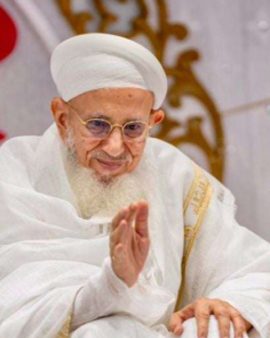
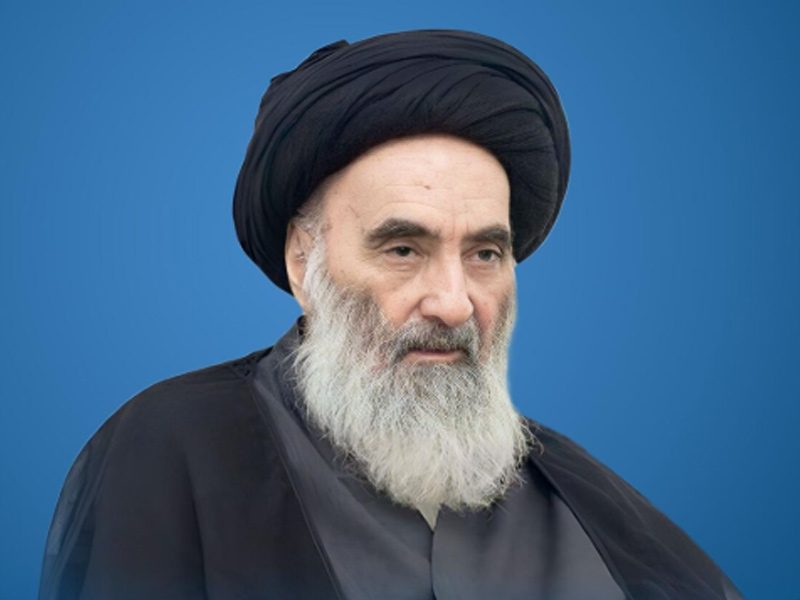

Grand Ayatollah Sayyid Ali Hussein Al-Sistani: The Quiet Moral Authority Shaping Iraq’s Destiny
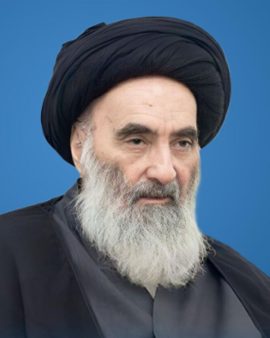
Grand Ayatollah Sayyid Ali Hussein Al-Sistani is the most influential Shiʿa religious authority in Iraq and one of the most respected clerics in the Muslim world. Known for his quietist theology, moral authority, and decisive interventions at critical historical moments, Al-Sistani has shaped post-2003 Iraq more profoundly than any political leader—despite never holding public office or seeking power.
Born on 4 August 1930 in Mashhad, Iran, into a family of distinguished religious scholars originally from Iraq, Ali Al-Sistani received early religious training before moving to Qom and later to Najaf, the heart of Shiʿa learning. In Najaf, he studied under some of the greatest scholars of the 20th century, including Grand Ayatollah Abul-Qasim Al-Khoei, whom he later succeeded as the leading marjaʿ (source of emulation) in Iraq following Al-Khoei’s death in 1992.
As a marjaʿ al-taqlid, Al-Sistani commands the religious allegiance of millions of Shiʿa Muslims across Iraq, Iran, South Asia, the Gulf, and the global diaspora. His influence rests not on institutional authority or political office, but on scholarly credibility, ethical consistency, and widespread trust. He is known for a life of austerity, rarely appearing in public and communicating largely through written statements issued from his modest residence in Najaf.
Al-Sistani adheres to the Najaf school of Shiʿa thought, which traditionally advocates political restraint by religious scholars, in contrast to Iran’s doctrine of Wilayat-e-Faqih (Guardianship of the Jurist). He has consistently opposed clerical rule, arguing that legitimacy must come from the will of the people rather than direct governance by religious authorities. This position has made him a unique moral counterweight to both authoritarianism and sectarian extremism.
Following the 2003 US-led invasion of Iraq, Al-Sistani emerged as the single most stabilising figure in the country. He insisted that Iraq’s political future be decided through free elections, rejecting imposed governance structures. His insistence on a constitution written by elected representatives laid the foundation for Iraq’s post-Saddam political process. At critical junctures, his calls for restraint prevented large-scale sectarian violence, even as the country descended into chaos.
In 2014, Al-Sistani issued a historic fatwa calling for national mobilisation against the so-called Islamic State (ISIS) after the group captured large swathes of Iraqi territory. The ruling helped galvanise resistance and played a decisive role in halting ISIS’s advance. Notably, he framed the call as a defence of the nation and all its citizens—Shiʿa, Sunni, Christian, and others—rather than a sectarian appeal.
Beyond politics and security, Al-Sistani has consistently advocated for human rights, minority protection, rule of law, and social justice. His meeting with Pope Francis in 2021 symbolised his commitment to interfaith coexistence and moral dialogue, earning global admiration.
Often described as the “silent authority,” Grand Ayatollah Ali Al-Sistani represents a rare model of leadership—one rooted in moral legitimacy rather than coercive power. His legacy lies in demonstrating how religious authority, when exercised with restraint and principle, can guide a fractured society toward dignity, coexistence, and political responsibility.