
Mohamed Badie: The Quiet Academic Who Rose to Lead the Muslim Brotherhood
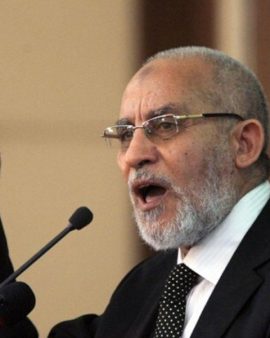
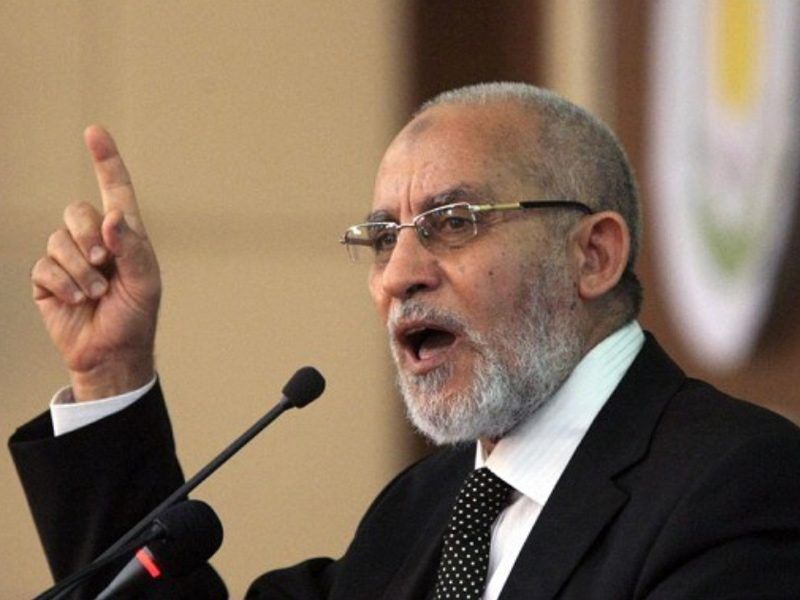
Mohamed Badie stands as one of the most consequential yet understated figures in the modern history of Egypt’s Islamist movement. As the eighth General Guide (Supreme Guide) of the Muslim Brotherhood, Badie assumed leadership during one of the most turbulent chapters in Egypt’s political life—guiding the organization through revolution, brief political ascendance, and severe repression.
Born in 1943 in Mahalla al-Kubra, a major industrial city in Egypt’s Nile Delta, Mohamed Badie was shaped early by discipline, study, and faith. Unlike many charismatic political leaders, Badie’s formative identity was academic. He pursued veterinary medicine, earning a doctorate and later becoming a professor of pathology. For years, he worked quietly in academia, cultivating a reputation as a serious scholar rather than a public firebrand. This background would later define his leadership style—measured, doctrinal, and rooted in institutional continuity.
Badie joined the Muslim Brotherhood in his youth, during a period when the organization faced periodic repression under successive Egyptian governments. Rising steadily through its ranks, he became known internally for his organizational skills, ideological consistency, and loyalty to the Brotherhood’s founding principles of Islamic reform, social justice, and gradual societal change. In 2010, following the death of his predecessor Mohamed Mahdi Akef, Badie was elected as the Brotherhood’s Supreme Guide—a role combining spiritual authority, political direction, and organizational stewardship.
His tenure soon coincided with historic upheaval. The 2011 Egyptian revolution, which toppled President Hosni Mubarak, propelled the Muslim Brotherhood from decades of semi-clandestine opposition into the political mainstream. Under Badie’s guidance, the Brotherhood endorsed political participation through its Freedom and Justice Party, culminating in the election of Mohamed Morsi as Egypt’s first civilian and Islamist president in 2012.
For supporters, this period marked the realization of a long-suppressed political vision. For critics, it raised fears of ideological dominance and exclusion. Badie himself remained largely behind the scenes, rarely appearing in public, but issuing statements that emphasized legitimacy, constitutional order, and the Brotherhood’s interpretation of Islamic governance.
The movement’s ascent proved short-lived. In July 2013, Egypt’s military ousted President Morsi following mass protests, triggering a sweeping crackdown on the Brotherhood. Badie was arrested later that year and subsequently faced multiple trials, receiving several death sentences and life terms—many of which were later overturned or commuted, amid widespread international criticism of Egypt’s judicial process.
Since his imprisonment, Badie has become a symbol of the Brotherhood’s dramatic reversal of fortunes. To followers, he represents steadfastness under persecution and the enduring resilience of an ideological movement. To opponents, he remains associated with a period they view as destabilizing and divisive. His continued detention underscores the broader dismantling of the Brotherhood as a legal political force in Egypt.
Mohamed Badie’s leadership was never defined by charisma or populist appeal. Instead, his influence lies in his embodiment of institutional Islamism—disciplined, hierarchical, and deeply ideological. In Egypt’s modern political narrative, he occupies a paradoxical space: an academic who led a mass movement, a quiet figure at the center of national upheaval, and a Supreme Guide whose tenure coincided with both the Brotherhood’s greatest political breakthrough and its most severe repression.