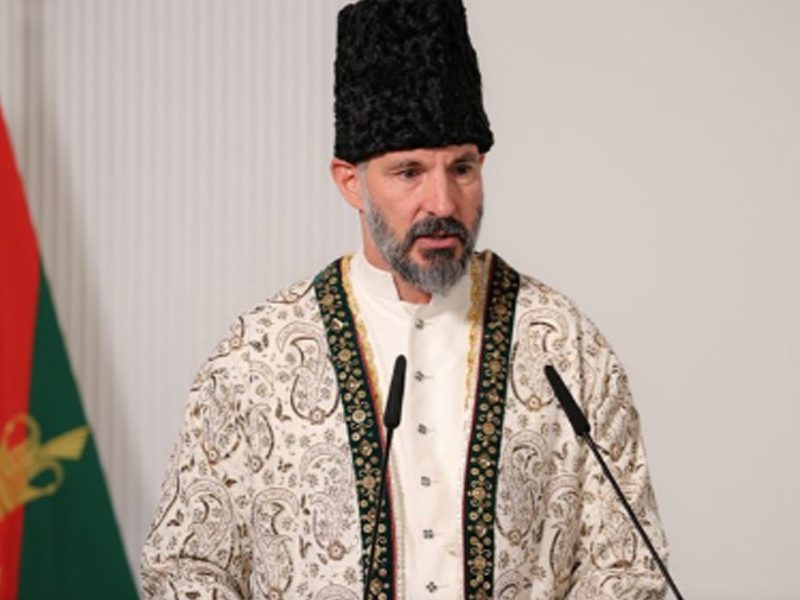

Prince Rahim Aga Khan: Global Leader of Development, Diplomacy, and Ismaili Muslim Institutions
Prince Rahim Al-Hussaini Aga Khan is a prominent global figure known for his leadership in international development, humanitarian work, and the governance of Ismaili Muslim institutions. As the eldest son of the late Prince Karim Aga Khan IV, the 49th Imam of the Shia Ismaili Muslims, Prince Rahim has long been prepared for responsibilities that combine spiritual stewardship, ethical leadership, and global public service.
Born on 12 October 1971 in Geneva, Switzerland, Prince Rahim grew up in a multicultural environment that shaped his international outlook. He was educated in Europe and the United States, earning a degree in comparative literature from Brown University. His academic background, though rooted in the humanities, was complemented by professional training in finance and management, equipping him to engage effectively with complex global institutions and development challenges.
From an early stage, Prince Rahim became deeply involved in the work of the Aga Khan Development Network (AKDN), one of the world’s largest private development organizations. Operating in more than 30 countries across Asia, Africa, and the Middle East, the AKDN works in fields ranging from health, education, and rural development to architecture, culture, and economic development. Prince Rahim has played a central role in shaping the network’s strategy, with particular emphasis on poverty alleviation, climate resilience, food security, and sustainable economic growth.
He has served in senior leadership roles within the AKDN, including oversight of agencies dealing with environmental protection, rural transformation, and institutional governance. Known for his analytical and forward-looking approach, Prince Rahim has focused on strengthening local institutions, promoting ethical entrepreneurship, and ensuring that development initiatives are culturally grounded and environmentally sustainable.
Within the Ismaili Muslim community, Prince Rahim has held key responsibilities related to social governance, education, and youth development. He has represented the Imamat at major international forums and has engaged extensively with governments, multilateral organizations, and civil society leaders. His work reflects the Ismaili tradition’s emphasis on the harmony of faith and reason, service to humanity, and loyalty to the countries in which Ismailis live.
Prince Rahim is also recognized for his advocacy on global challenges such as climate change and demographic transition. He has spoken frequently about the need for long-term planning, ethical leadership, and cross-cultural cooperation to address rising inequality and environmental stress—issues that disproportionately affect vulnerable communities.
Despite his high-profile lineage, Prince Rahim maintains a low-key public persona, preferring institution-building over personal prominence. Those who work closely with him describe him as methodical, thoughtful, and deeply committed to the values of service and responsibility.
As a leader shaped by global experience and a strong ethical tradition, Prince Rahim Aga Khan represents continuity and renewal within the Ismaili Imamat’s long-standing commitment to improving quality of life and fostering pluralism. His work continues to influence development practice and inter-civilizational dialogue in an increasingly interconnected and challenged world.