The 100 Most Influential Muslims - 2026

Changemakers

Browse Lists by Year:


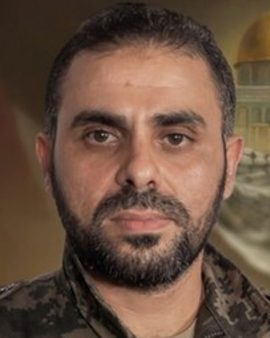
Abu Obaida - selected in the list of  - 2026

Abu Obaida

Gaza Strip

Abu Obaida: The Masked Voice of the Qassam Brigades

Huthayfa Samir Abdallah al-Kahlout (Arabic: حذيفة سمير عبد الله الكحلوت; 11 February 1985 – 30 August 2025), widely known by the nom de guerre Abu Obaida (Arabic: أبو عبيدة), was a Palestinian militant figure who served for nearly two decades as the chief spokesperson of the Al-Qassam Brigades, the military wing of Hamas. From 2007 until his death in 2025, he became one of the most recognizable—and controversial—faces of Hamas’s military communications, often described as the central architect of the group’s media messaging.

Born in Gaza in 1985, al-Kahlout’s family history reflected the broader Palestinian displacement narrative. His family originally hailed from Ni’ilya, near present-day Ashkelon, and were displaced during the 1948 Palestine War. This background, frequently invoked in Palestinian political discourse, formed part of the context in which Abu Obaida later framed his rhetoric about resistance and occupation.

Abu Obaida first emerged publicly in the early 2000s, appearing at press briefings and representing the Qassam Brigades to regional and international media. Following Israel’s disengagement from Gaza in 2005, he was formally appointed as the group’s spokesperson. By at least 2007, according to U.S. assessments, he had become the consistent public voice of the organization’s military wing. He was known for maintaining strict anonymity, always appearing masked and wearing a red keffiyeh, a visual signature that reinforced both mystique and message discipline. Attempts by Israeli media to reveal his identity were denied by the Qassam Brigades, though U.S. authorities later identified him as al-Kahlout and imposed sanctions in 2024.

Throughout his career, Abu Obaida delivered statements at key moments of escalation. He announced the capture of Israeli soldier Gilad Shalit in 2006 and later commented on other high-profile cases involving Israeli captives. During successive Gaza conflicts—particularly in 2014, 2021, and after October 2023—his speeches combined military claims, warnings to Israel, and political messaging aimed at both Palestinian and regional audiences. His rhetoric often emphasized deterrence, rejected what he described as “red lines,” and framed armed resistance as a response to Israeli actions.

Abu Obaida also played a visible role in negotiations and signaling around prisoner exchanges, repeatedly asserting that future deals would be contingent on specific Palestinian demands. During ceasefire discussions and anniversaries of major operations, he criticized Israeli leadership, particularly Prime Minister Benjamin Netanyahu, accusing Israel of prolonging war and failing to secure the return of captives.

Analysts of his public statements noted that Abu Obaida functioned not merely as a spokesman but as a mobilizer, blending religious language, nationalist themes, and strategic threats. Academic analysis of his rhetoric characterized it as justifying armed struggle against what he termed “Zionist occupation,” while also situating the conflict within a broader regional and international framework.

On 30 August 2025, Abu Obaida was killed in an Israeli airstrike on an apartment building in Gaza City’s Rimal neighborhood. The strike resulted in multiple civilian deaths, including children. Israeli officials confirmed his killing shortly afterward, and Hamas later acknowledged his death, announcing a successor who would assume his nom de guerre.

In death, as in life, Abu Obaida remained a polarizing figure—viewed by supporters as a steadfast voice of resistance, and by critics as a propagandist for an armed organization designated as terrorist by several states. His legacy lies chiefly in how modern militant movements use media, symbolism, and controlled messaging to shape narratives in protracted conflict.


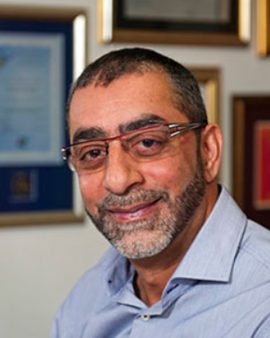
Dr Imtiaz Ismail Sooliman - selected in the list of  - 2026

Dr Imtiaz Ismail Sooliman

South Africa

Dr. Imtiaz Ismail Sooliman: Compassion in Action and the Power of Humanitarian Faith

Dr. Imtiaz Ismail Sooliman stands as one of the most inspiring humanitarian figures of the modern era, a man whose life’s work has been guided by faith, service, and an unshakeable commitment to human dignity. A South African medical doctor by training and a global humanitarian by calling, Dr. Sooliman is best known as the founder and director of Gift of the Givers Foundation, the largest disaster response NGO in Africa and one of the most respected humanitarian organizations in the world.

Born in 1963 in Potchefstroom, South Africa, Dr. Sooliman grew up during the dark years of apartheid—a period that shaped his moral consciousness and sharpened his sensitivity to injustice and suffering. Trained as a medical doctor, he could have pursued a comfortable professional life. Instead, he chose a path defined by sacrifice and service, inspired by the Islamic principle that saving one life is akin to saving all of humanity.

The turning point in his life came in 1992 during the Bosnian war, when he was asked by his spiritual mentor to establish a humanitarian organization that would serve all people, regardless of race, religion, or nationality. From that moment, Gift of the Givers was born—rooted in faith, yet universal in its compassion. What began as a modest initiative soon evolved into a global humanitarian force responding to crises across Africa, the Middle East, Asia, Europe, and the Americas.

Under Dr. Sooliman’s leadership, Gift of the Givers has delivered life-saving aid in some of the world’s most devastating emergencies: famine in Somalia, war in Bosnia and Syria, earthquakes in Turkey and Haiti, floods in Pakistan and South Africa, and humanitarian crises in Gaza, Yemen, and beyond. The organization is known for its rapid response, logistical efficiency, and principled independence—often reaching places where others cannot.

Yet Dr. Sooliman’s vision extends beyond emergency relief. He has consistently emphasized sustainable development, focusing on clean water projects, healthcare, education, food security, and poverty alleviation. Gift of the Givers has installed water systems for millions, built clinics and schools, and empowered communities to rebuild with dignity rather than dependency. For him, true humanitarianism means restoring hope and self-worth alongside physical survival.

Despite international recognition and numerous awards, Dr. Sooliman remains deeply humble and fiercely mission-driven. He is known for his hands-on leadership, frequently visiting disaster zones himself, coordinating operations, and holding his teams to the highest ethical standards. His outspoken advocacy—especially on issues of injustice, occupation, and global inequality—has earned him admiration as well as controversy, but he has never shied away from speaking truth to power.

At the heart of Dr. Sooliman’s work is a profound belief that faith must be lived through action. He often reminds audiences that humanitarian service is not an act of charity, but a responsibility. His leadership reflects moral courage, discipline, and an unwavering refusal to accept indifference in the face of suffering.

Dr. Imtiaz Ismail Sooliman’s life is a testament to what one individual, guided by conscience and compassion, can achieve. In a world fractured by conflict and inequality, he stands as a beacon of hope—proving that humanity, when anchored in values and translated into action, can still prevail.


Dr Muhammad Sulaiman Al Jasser - selected in the list of  - 2026

Dr Muhammad Sulaiman Al Jasser

Saudi Arabia

Dr. Muhammad Sulaiman Al Jasser: Steering Development Finance with Vision and Discipline

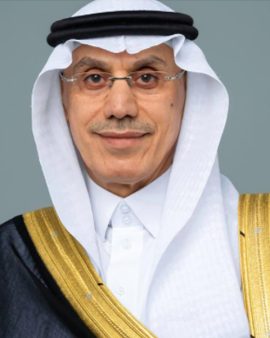
Dr. Muhammad Sulaiman Al Jasser stands among the most respected economic policymakers in the Muslim world, a technocrat whose career bridges national governance and multilateral development. As Chairman and President of the Islamic Development Bank (IsDB) Group, headquartered in Jeddah, he has brought intellectual rigor, fiscal discipline, and a reformist outlook to one of the world’s leading development finance institutions serving Muslim-majority countries.

Born in Saudi Arabia, Dr. Al Jasser’s professional journey reflects a lifelong engagement with economics, public policy, and institutional reform. He earned advanced degrees in economics in the United States, equipping him with a strong analytical foundation that would later define his leadership style. Early in his career, he served in various policy and advisory roles within Saudi Arabia, gaining firsthand experience in macroeconomic management, monetary policy, and public finance.

Dr. Al Jasser rose to national prominence during his tenure as Governor of the Saudi Arabian Monetary Authority (SAMA), the Kingdom’s central bank, where he played a critical role in strengthening financial stability, modernizing regulatory frameworks, and navigating global economic turbulence. He later served as Saudi Arabia’s Minister of Finance, a position in which he was widely regarded for his prudence, clarity of thought, and commitment to long-term fiscal sustainability. These roles established his reputation as a steady hand in moments of uncertainty—an attribute that would prove invaluable in his later multilateral leadership.

In 2021, Dr. Al Jasser was appointed President of the Islamic Development Bank Group, effectively becoming the institution’s chief executive and leading figure. The IsDB, founded in 1975, is a multilateral development bank dedicated to fostering economic development and social progress in its 57 member countries, in accordance with the principles of Islamic finance. Under Dr. Al Jasser’s leadership, the Bank has sought to sharpen its development impact while modernizing its operations to meet contemporary global challenges.

At the helm of the IsDB, Dr. Al Jasser has emphasized results-driven development, innovation, and partnerships. He has championed initiatives focused on poverty alleviation, infrastructure, health, education, food security, and climate resilience—areas of urgent need across the Global South. At the same time, he has pushed for stronger governance, financial sustainability, and accountability within the institution, reinforcing its credibility in international financial markets.

A defining feature of Dr. Al Jasser’s leadership is his belief that development finance must be both ethical and effective. He has consistently highlighted the unique value of Islamic finance as a tool for inclusive growth—one that links finance to real economic activity, risk-sharing, and social responsibility. Under his guidance, the IsDB has expanded innovative instruments that blend Islamic finance with global development best practices.

Colleagues and observers describe Dr. Al Jasser as calm, methodical, and intellectually demanding—a leader who values data, dialogue, and institutional strength over rhetoric. He is not a populist figure, but his influence is profound, shaping policies that affect millions of lives across member countries.

In an era marked by economic shocks, climate stress, and widening inequality, Dr. Muhammad Sulaiman Al Jasser’s stewardship of the Islamic Development Bank represents continuity with purpose. His career embodies the idea that sound economics, ethical finance, and disciplined leadership can work together to advance shared prosperity—making him a central figure in the evolving story of development in the Muslim world.


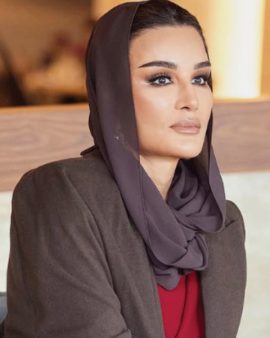
HH Sheikha Moza bint Nasser Al Missned - selected in the list of  - 2026

HH Sheikha Moza bint Nasser Al Missned

Qatar

HH Sheikha Moza bint Nasser Al Missned: A Visionary Architect of Education, Dignity, and Global Hope

Her Highness Sheikha Moza bint Nasser Al Missned stands as one of the most influential and inspiring women of the modern Muslim world—a leader whose vision has transformed education, social development, and human dignity not only in Qatar, but far beyond its borders. Known for her elegance, intellect, and unwavering commitment to knowledge, Sheikha Moza has reshaped the meaning of leadership by placing human development at the heart of national and global progress.

Born in 1959, Sheikha Moza’s life has been defined by resilience and purpose. Her early experiences instilled in her a deep awareness of justice, identity, and the transformative power of education. She pursued higher studies at Qatar University, graduating with a degree in sociology, a discipline that would later inform her holistic approach to societal development—one that connects education, culture, and opportunity.

As Chairperson of the Qatar Foundation for Education, Science and Community Development, founded in 1995, Sheikha Moza has been the driving force behind one of the most ambitious educational initiatives in the world. Under her leadership, Education City in Doha emerged as a global hub of learning, hosting branch campuses of leading international universities and fostering cutting-edge research. Her vision was simple yet revolutionary: to empower future generations through access to world-class education while remaining deeply rooted in Arab and Islamic values.

Sheikha Moza’s influence extends well beyond Qatar. Through her international advocacy, she has become a global champion for education as a fundamental human right. As a former UNESCO Special Envoy for Basic and Higher Education, she consistently highlighted the plight of marginalized children—particularly those affected by conflict, poverty, and displacement. Her work underscores a powerful belief: that education is the most effective tool against extremism, inequality, and despair.

In addition to education, Sheikha Moza has been a tireless advocate for social justice, family cohesion, and women’s empowerment. She has redefined the narrative around Muslim women, presenting a model of leadership that harmonizes faith, cultural identity, and modernity. Her presence on global platforms—always dignified, confident, and unapologetically authentic—has challenged stereotypes and inspired millions of women across the Muslim world to aspire, lead, and innovate.

Through initiatives such as Silatech, she has addressed youth unemployment by promoting entrepreneurship and economic inclusion across the Arab world. Her focus on youth reflects a forward-looking philosophy: investing in young people is not charity, but a strategic imperative for peace and prosperity.

Despite her global stature, Sheikha Moza is widely admired for her humility and consistency of purpose. She does not pursue influence for its own sake; rather, she uses it to amplify the voices of the vulnerable and to advocate for long-term, sustainable change. Her leadership is marked by patience, foresight, and moral clarity—qualities that have earned her respect across cultures and continents.

HH Sheikha Moza bint Nasser Al Missned represents a rare convergence of vision and action. In an era of uncertainty, she stands as a beacon of hope, demonstrating that true progress is built not merely through wealth or power, but through knowledge, compassion, and the courage to imagine a better future for all.


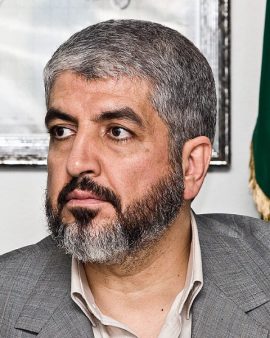
Khaled Mashal - selected in the list of  - 2026

Khaled Mashal

Gaza Strip

Khaled Mashal (also spelled Khaled Meshaal) is one of the most prominent and enduring leaders of the Palestinian Islamist movement Hamas, and a central figure in Palestinian politics for more than three decades. Known for his political acumen, international outreach, and survival through years of exile and conflict, Mashal has played a decisive role in shaping Hamas from a clandestine resistance organisation into a key actor in Palestinian national life and regional geopolitics.

Born in 1956 in Silwad, a village near Ramallah in the occupied West Bank, Mashal’s early life was shaped by displacement. Following the 1967 Arab–Israeli war, his family moved to Kuwait, where he grew up and received his education. He later earned a degree in physics from Kuwait University. During his student years, Mashal became deeply involved in Islamic activism, joining the Muslim Brotherhood, the ideological current from which Hamas would later emerge.

Mashal was among the founding figures of Hamas when it was established in 1987 during the First Intifada. Unlike many Hamas leaders who operated primarily inside Gaza or the West Bank, Mashal emerged as a key political strategist in exile. His rise within the organisation accelerated after the assassination of Hamas founder Sheikh Ahmed Yassin in 2004, when Mashal was elected Chairman of Hamas’s Political Bureau, effectively becoming the movement’s top political leader.

His leadership gained global attention in 1997, when Israel’s intelligence agency, Mossad, attempted to assassinate him in Amman, Jordan, by poisoning. The failed operation, which nearly cost Mashal his life, led to a diplomatic crisis between Israel and Jordan and ultimately resulted in Israel being forced to provide the antidote that saved him. The incident significantly elevated Mashal’s stature within the Palestinian resistance and across the Arab world.

As head of Hamas’s political bureau, Mashal operated largely from Damascus until the outbreak of the Syrian civil war in 2011, after which he relocated, spending time in Qatar and other regional capitals. He became the movement’s principal international voice, engaging with regional governments and articulating Hamas’s positions on resistance, negotiations, and Palestinian unity. While maintaining Hamas’s ideological commitment to armed resistance, Mashal also demonstrated political flexibility, at times signalling openness to long-term truces and reconciliation with rival Palestinian factions, particularly Fatah.

Mashal stepped down as political bureau chief in 2017, succeeded by Ismail Haniyeh, but he remained an influential figure within Hamas. In 2021, he was elected head of the movement’s diaspora leadership, underscoring his continued importance in shaping Hamas’s external relations and strategic vision.

Often described as pragmatic yet ideologically steadfast, Khaled Mashal occupies a complex place in Middle Eastern politics. To supporters, he is a symbol of Palestinian resistance, resilience, and political survival. To critics, particularly Israel and its allies, he represents the leadership of a movement designated as a terrorist organisation. Regardless of perspective, Mashal’s political longevity, survival through assassination attempts, and role in steering Hamas through changing regional dynamics have secured his place as one of the most influential Palestinian leaders of the modern era.


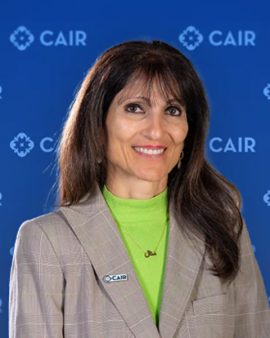
Manal Fakhoury - selected in the list of  - 2026

Manal Fakhoury

United States

Dr. Manal Fakhoury: A Steady Voice for Civil Rights and Conscience at CAIR

Dr. Manal Fakhoury’s leadership as President of the Board of the Council on American-Islamic Relations (CAIR) reflects a career-long commitment to principled service, ethical governance, and the protection of civil liberties in the United States. At a time when American Muslims face heightened scrutiny and systemic challenges, her stewardship brings clarity, compassion, and resolve to one of the nation’s most prominent Muslim civil rights organizations.

Founded in 1994, CAIR is the largest Muslim civil rights and advocacy organization in the U.S., dedicated to protecting constitutional rights, promoting a positive understanding of Islam, and empowering American Muslims to fully participate in civic life. As President of the Board, Dr. Fakhoury plays a pivotal role in guiding CAIR’s national vision—ensuring organizational integrity, strengthening governance, and supporting strategic initiatives that defend justice and human dignity for all.

Dr. Fakhoury’s leadership style is marked by balance: firm in principle, collaborative in practice. As a board president, she works closely with CAIR’s executive leadership and regional chapters to uphold transparency, accountability, and mission alignment. Her role is not merely administrative; it is deeply moral. She helps steward an institution that stands at the intersection of civil rights law, public education, media engagement, and grassroots mobilization—often in moments of national crisis.

A respected professional and community leader, Dr. Fakhoury brings to CAIR a perspective shaped by service, scholarship, and lived experience. Her approach emphasizes thoughtful deliberation and inclusive decision-making, values that resonate strongly within CAIR’s culture and with the communities it serves. Colleagues describe her as measured yet courageous—someone who listens carefully, asks difficult questions, and insists that advocacy remain grounded in ethical clarity.

Under her board leadership, CAIR continues to expand its impact: defending individuals facing discrimination, challenging unconstitutional policies, training the next generation of Muslim civic leaders, and building coalitions across faith and racial lines. Dr. Fakhoury has consistently underscored that CAIR’s work is not only about Muslims, but about safeguarding the civil liberties that define American democracy itself. In this vision, the fight against Islamophobia is inseparable from the broader struggle against racism, authoritarianism, and injustice.

Equally important to her leadership is an emphasis on dignity and empathy. Dr. Fakhoury has been a strong advocate for centering human stories—of families affected by hate crimes, students confronting bias, and communities seeking safety and belonging. She believes that effective advocacy must speak both to the law and to the conscience of the nation.

As CAIR navigates an increasingly polarized political landscape, Dr. Manal Fakhoury’s presidency of the board offers steady guidance and moral reassurance. Her leadership affirms that institutions matter—but only when they are led with integrity, courage, and an unwavering commitment to justice. In helping steer CAIR’s mission forward, she stands as a reminder that principled governance can be a powerful force for social good, strengthening not only American Muslims, but the democratic fabric of the country itself.


Muhammad Yunus - selected in the list of  - 2026

Muhammad Yunus

Bangladesh

Muhammad Yunus: Economist, Nobel Laureate, and Steward of Bangladesh’s Democratic Transition

Muhammad Yunus (born 28 June 1940) is a Bangladeshi economist, social entrepreneur, and Nobel Peace Prize laureate who assumed office as Interim Prime Minister of Bangladesh in 2024 amid a period of profound political transition. Internationally renowned as the pioneer of microfinance and the founder of Grameen Bank, Yunus is widely regarded as one of the most influential development thinkers of the modern era.

Born in Chittagong (now Chattogram), then part of British India, Yunus grew up in a middle-class family and was exposed early to the ideals of social justice and public service. He studied economics at Dhaka University before pursuing higher education in the United States, earning a PhD in economics from Vanderbilt University. He later taught economics at Middle Tennessee State University before returning to Bangladesh shortly after the country’s independence in 1971.

Yunus’s global prominence emerged during the 1974 famine in Bangladesh, when he began experimenting with small, collateral-free loans to impoverished villagers, particularly women. This initiative evolved into the Grameen Bank, formally established in 1983, which revolutionised access to credit for the rural poor. The Grameen model challenged conventional banking norms by demonstrating that the poor were reliable borrowers and that microcredit could serve as a powerful tool for poverty alleviation and women’s empowerment.

In 2006, Yunus and Grameen Bank were jointly awarded the Nobel Peace Prize for their efforts to create economic and social development from below. Over the decades, his ideas influenced global development policy, inspiring microfinance institutions across Asia, Africa, and Latin America. Yunus also promoted the concept of “social business”, enterprises designed to solve social problems without profit maximisation, further shaping debates on ethical capitalism.

Despite his international acclaim, Yunus’s relationship with Bangladeshi politics has been complex and often contentious. In 2007, he briefly considered forming a political party during a military-backed caretaker government but later withdrew. Under successive elected governments, particularly that of Sheikh Hasina, Yunus faced legal and regulatory challenges, including disputes over Grameen Bank’s governance and multiple court cases, which his supporters described as politically motivated.

Yunus was appointed Interim Prime Minister following widespread unrest and a breakdown of political consensus, as Bangladesh sought a neutral and credible figure to oversee a transitional phase. His appointment was widely welcomed both domestically and internationally, given his reputation for integrity, non-partisanship, and commitment to democratic norms.

As interim prime minister, Yunus’s mandate has focused on restoring political stability, overseeing administrative reforms, ensuring free and fair elections, and rebuilding public trust in state institutions. He has emphasised the rule of law, protection of civil liberties, and inclusive governance, while steering clear of long-term policy commitments beyond the transition period. Economically, his approach has prioritised stabilisation, social protection, and engagement with international partners.

Muhammad Yunus’s legacy extends far beyond his interim political role. Celebrated as a visionary economist and moral voice of development, he remains a symbol of innovation rooted in human dignity. His stewardship during Bangladesh’s transitional moment has added a new chapter to a career defined by global impact, reformist ideals, and a lifelong commitment to empowering the marginalised.


Rebiya Kadeer - selected in the list of  - 2026

Rebiya Kadeer

China

Rebiya Kadeer: From Self-Made Millionaire to Global Voice for Uyghur Rights

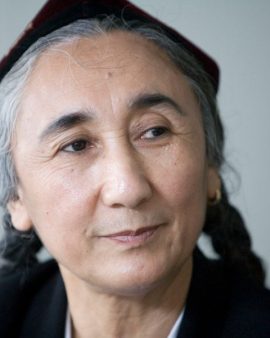
Rebiya Kadeer (Uyghur: رابىيە قادىر; Chinese: 热比娅·卡德尔), born on 15 November 1946 in Altay City, Xinjiang, is one of the most remarkable and controversial figures to emerge from modern China. A self-made businesswoman who rose from poverty to immense wealth, Kadeer later transformed into a prominent political activist and international advocate for Uyghur human rights. Her life journey bridges entrepreneurship, philanthropy, political engagement, imprisonment, and global advocacy, making her a symbol of both resilience and resistance.

Born into a modest Uyghur family, Rebiya Kadeer experienced hardship early in life. Economic necessity pushed her into marriage at a young age, and for years she lived as a housewife raising six children. Despite limited formal education, she demonstrated extraordinary determination and business acumen. During the later years of the Cultural Revolution, she began sewing and selling clothes discreetly to supplement her family’s income—an act that brought official suspicion but also marked the beginning of her entrepreneurial path.

After her divorce, Kadeer’s fortunes changed dramatically. In 1976, she opened a small laundry business, which grew steadily. Following her remarriage in 1981 and relocation to Ürümqi, she entered cross-border trade after the collapse of the Soviet Union. Trading with Russia and Central Asia, Kadeer built a vast commercial empire. By the 1990s, she had become one of the wealthiest individuals in China, with assets estimated at over 200 million yuan. She founded Akida Industry and Trade Co., owning major commercial properties such as the Akida Trade Center and Kadeer Trade Center in Ürümqi. Her success earned her the nickname “the millionairess” and placed her among China’s richest entrepreneurs of her time.

Beyond business, Kadeer was deeply involved in philanthropy. She launched the 1,000 Mothers Movement, a foundation aimed at empowering Uyghur women through small businesses and supporting orphaned and underprivileged children. Her social work, combined with her business success, brought her official recognition. She served as a member of the 8th Chinese People’s Political Consultative Conference, held leadership roles in women entrepreneurs’ associations, and represented China at the 1995 UN Fourth World Conference on Women in Beijing. For a time, she was also a member of the Chinese Communist Party.

Her relationship with the state deteriorated sharply in the late 1990s. After her husband, Sidik Haji Rouzi, moved to the United States and became a broadcaster critical of Chinese policies, Kadeer increasingly spoke out against ethnic discrimination. In 1999, she was arrested and later sentenced to prison on charges of leaking state secrets. Her imprisonment drew international attention, turning her into a cause célèbre among human rights organizations and Western governments.

Released on medical grounds in 2005, Kadeer was allowed to leave China and settled in the United States. In exile, her role expanded globally. She became President of the World Uyghur Congress (2006–2017) and the Uyghur American Association, emerging as the most prominent international spokesperson for Uyghur rights. She was nominated multiple times for the Nobel Peace Prize and met world leaders, including U.S. President George W. Bush.

Today, Rebiya Kadeer remains a towering figure in Uyghur history—a woman whose life reflects an extraordinary transformation from a self-made business magnate within China to an enduring symbol of dissent and advocacy on the world stage.


Saad Kazmi - selected in the list of  - 2026

Saad Kazmi

United States

Saad Kazmi: A Grassroots Leader Guiding ICNA into a New Era

Saad Kazmi’s election as President of the Islamic Circle of North America (ICNA) marks both continuity and renewal for one of the most influential Muslim organizations in the United States. Rooted in grassroots activism and guided by faith, Kazmi steps into leadership at a moment when American Muslims are navigating complex social, political, and moral challenges—while also building institutions that serve the wider society with compassion and purpose.

ICNA, a North American Islamic grassroots umbrella organization, has long sought to propagate Islam and promote the Islamic way of life among American Muslims. Over more than five decades, it has evolved into the largest Muslim organization in the U.S., recognized for its principled engagement, community service, and emphasis on justice, morality, and God-consciousness. Kazmi’s leadership journey is deeply aligned with this mission.

A pharmacist by profession, Saad Kazmi brings to ICNA a blend of professional discipline, community service, and family-centered values. Residing in Murphy, Texas, he is a proud father of four, a role he often cites as grounding his leadership in empathy, patience, and responsibility. For Kazmi, leadership is not merely organizational—it is personal, shaped by everyday commitments to family, community, and faith.

His election followed a fair and transparent process conducted through ICNA’s electronic voting system, ensuring broad participation across the organization’s diverse membership. The election itself was historic: 80.4 percent of ICNA’s general assembly took part, a remarkable level of engagement that reflects the organization’s deep-rooted tradition of shura—consultative governance. This participatory ethos has been a hallmark of ICNA for over 50 years, with presidents elected for a maximum of two consecutive two-year terms. Kazmi’s mandate, therefore, begins with a strong vote of confidence and a clear sense of collective ownership.

The trust placed in Kazmi also reflects ICNA’s steady growth and expanding impact. Under its umbrella operate several flagship initiatives that touch millions of lives: ICNA Relief’s humanitarian work; Why Islam and Gain Peace’s outreach and public education; Helping Hands’ global aid; Young Muslims’ youth development; Embrace’s support for converts; and the Council of Social Justice’s advocacy for equity and human dignity. Kazmi inherits a robust institutional ecosystem—one that requires strategic vision, moral clarity, and collaborative leadership.

As President, Kazmi is expected to build upon this foundation while guiding ICNA through an “exciting new chapter.” His leadership underscores unity within the organization at a time when cohesion and principled engagement are essential. Colleagues describe him as methodical yet approachable, deeply committed to ICNA’s mission of building a society rooted in faith, compassion, and justice.

Kazmi’s ascent also comes with gratitude for the path laid by his predecessor. ICNA has acknowledged the exemplary leadership of outgoing President Dr. Mohsin Ansari, whose dedication and tireless service strengthened the organization and elevated its standing nationwide. Kazmi’s presidency is thus framed not as a departure, but as a continuation—honoring past leadership while charting future possibilities.

Looking ahead, Saad Kazmi’s presidency embodies the aspirations of a community that believes in collective leadership, moral purpose, and service beyond self. With his professional background, grassroots sensibility, and deep commitment to ICNA’s values, he stands poised to guide the organization toward even greater impact—serving not only American Muslims, but the broader society they are an integral part of. With his professional integrity, grassroots sensibility, and unwavering commitment to ICNA’s core values, Saad Kazmi is well-positioned to guide the organization toward even greater impact—strengthening American Muslim civic life while contributing meaningfully to a more just, compassionate, and morally grounded society for all.


Syed Mokhtar Albukhary - selected in the list of  - 2026

Syed Mokhtar Albukhary

Malaysia

Syed Mokhtar Albukhary: Malaysia’s Discreet Business Powerhouse and Global Philanthropist

Syed Mokhtar Shah bin Syed Nor Albukhary (born 12 December 1951) is one of Malaysia’s most influential business tycoons and philanthropists. Ranked by Forbes as the 11th richest individual in Malaysia in 2025, he is estimated to have a net worth of US$2.2 billion. Known for maintaining a low public profile despite his vast economic reach, Syed Mokhtar exerts influence across some of Malaysia’s most strategic sectors, including food security, infrastructure, energy, manufacturing, media, and telecommunications.

Through flagship holdings such as MMC Corporation and DRB-HICOM, Syed Mokhtar is widely regarded as a dominant figure in Malaysia’s rice, sugar, ports, postal services, and power generation industries. He owns Proton, the national car company, and has major interests in engineering, construction, property development, plantations, and logistics. He is also the largest shareholder in Media Prima, Malaysia’s biggest media conglomerate, and controls Media Mulia Sdn Bhd, publisher of Utusan Malaysia, the country’s oldest Malay-language daily newspaper. Alongside his business empire, he is the founder and principal benefactor of the Albukhary Foundation, an internationally active charitable organization.

Born in Kampung Hutan Keriang, Alor Setar, Kedah, Syed Mokhtar is the third child of Syed Nor and Sharifah Nor. His family traces its ancestry to the Hadramawt region of Yemen. As a child, he spent several years in Johor Bahru before returning to Kedah, where he attended St. Michael’s Secondary School. While still a student, he became involved in his father’s cattle business. A devastating outbreak of foot-and-mouth disease ruined the family enterprise, forcing Syed Mokhtar to abandon his studies just months before completing Secondary Five due to financial hardship. Using his modest savings, he began venturing into business independently.

His entrepreneurial breakthrough came in the 1970s through rice transportation and trading. After securing a rice trading licence for Shah Enterprise Sdn Bhd, he obtained supply contracts with key government-linked agencies such as FELDA, MARA, Pernas Edar, and Sergam Bhd. These dealings not only laid the foundation of his wealth but also connected him with figures who later rose to political prominence, including former prime minister Muhyiddin Yassin.

By the 1990s, Syed Mokhtar had expanded into manufacturing, shipping, plantations, and property, and became a major participant in privatisation initiatives under Prime Minister Mahathir Mohamad. In 2001, he acquired a significant stake in MMC Corporation and took over Pernas International Holdings, later renamed Tradewinds Corporation. Through this vehicle, he controls Tradewinds Plantations and Padiberas Nasional Bhd, which holds a monopoly in Malaysia’s rice industry.

His business fortunes fluctuated in the mid-2000s due to cancelled mega-projects and heavy debt exposure, particularly linked to Malakoff Bhd. However, key contracts—including rail infrastructure projects—eventually restored momentum. Under Prime Minister Najib Razak, his companies secured major defence and automotive deals, and by 2014 DRB-HICOM became the sole owner of Proton, alongside partnerships with multiple global automotive brands. His influence later extended into media, 5G telecommunications via ALTEL, and international automotive investments such as Lotus Cars.

Despite controversies and political scrutiny, Syed Mokhtar is equally renowned for his philanthropy. Since the 1970s, he has devoted vast resources to education, culture, refugees, and humanitarian relief. The Albukhary Foundation, Islamic Arts Museum Malaysia, Albukhary Scholarship Programme, and Albukhary International University stand as enduring legacies of his belief in compassion, education, and inclusive development. By 2013, his charitable contributions had exceeded US$500 million, earning him recognition as a Forbes Asia Hero of Philanthropy.


The 100 Most Influential Muslims - 2026

Copyright © 2024 | All rights reserved. | Website Designed & Maintained by Aash App Developers