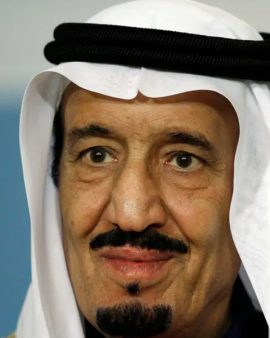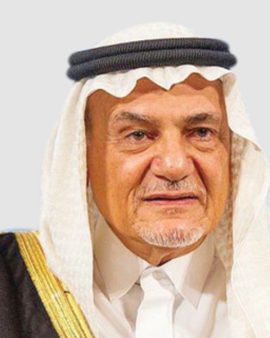
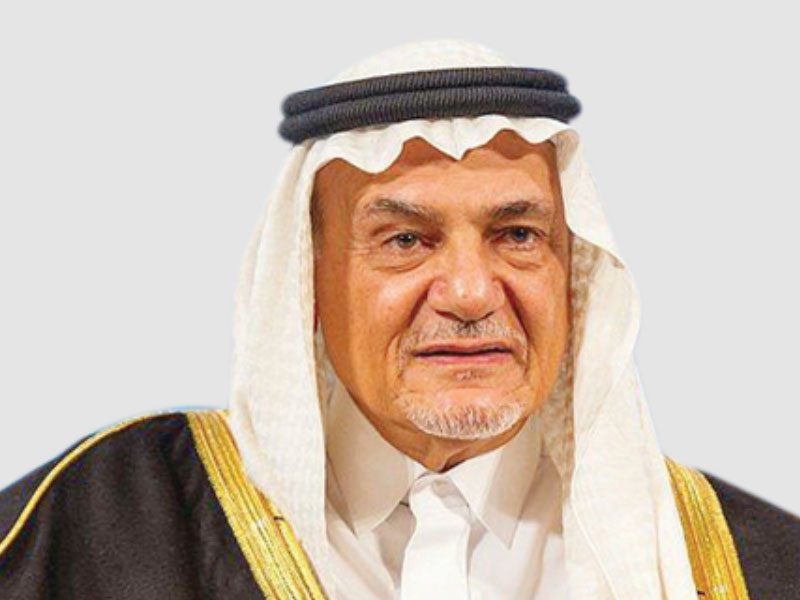

Prince Turki bin Faisal Al Saud: Saudi Arabia’s Veteran Intelligence Chief and Influential Diplomatic Voice
Prince Turki bin Faisal Al Saud (1945) is a senior Saudi royal, former intelligence chief, diplomat, and influential public intellectual. A grandson of Saudi Arabia’s founder King Abdulaziz and the youngest son of King Faisal, Prince Turki has played a significant behind-the-scenes role in Saudi foreign and security policy for more than four decades. He is currently chairman of the King Faisal Center for Research and Islamic Studies and a leading voice on Middle Eastern geopolitics.
Born in Mecca, Prince Turki was raised in a highly intellectual household shaped by the reformist outlook of his parents, King Faisal and Queen Iffat. He received his early education in Taif before being sent to the United States, where he completed secondary school at the Lawrenceville School in New Jersey. He later graduated in 1968 from Georgetown University’s Edmund A. Walsh School of Foreign Service, studying alongside future U.S. President Bill Clinton. He pursued further studies at Princeton, Cambridge, and the University of London, focusing on Islamic law and jurisprudence—an academic foundation that would inform his later political thought.
Prince Turki began his official career in 1973 as an adviser at the Saudi Royal Court. In 1979, during a period of intense regional upheaval, he was appointed Director General of Saudi Arabia’s General Intelligence Directorate, succeeding his uncle Kamal Adham. He held the post for 23 years, making him one of the longest-serving intelligence chiefs in the world. His tenure spanned major events including the 1979 Grand Mosque seizure in Mecca, the Soviet-Afghan war, the rise of al-Qaeda, and the Gulf conflicts.
During the Afghan jihad of the 1980s, Saudi intelligence—alongside the CIA and Pakistan’s ISI—supported anti-Soviet mujahideen. Prince Turki maintained contact with Osama bin Laden during this period but has consistently stated that relations ended after Iraq’s invasion of Kuwait in 1990. He later claimed to have pursued unsuccessful negotiations with the Taliban to extradite bin Laden in the late 1990s. Prince Turki resigned from his intelligence post on 1 September 2001, just days before the 9/11 attacks—an exit that sparked widespread speculation and controversy, though he has denied any foreknowledge of the attacks.
Following 9/11, Prince Turki became an outspoken critic of al-Qaeda, condemning it as an “evil cult” that distorted Islam. He was named in lawsuits by victims’ families but was later granted immunity by U.S. courts. In 2003, he entered public diplomacy, serving as Saudi ambassador to the United Kingdom and then to the United States from 2005 to 2006. His tenure in Washington was marked by policy disagreements, particularly over Iran, Iraq, and the Palestinian issue, and he resigned abruptly after just 15 months.
Since retiring from public office in 2007, Prince Turki has emerged as a prominent commentator on global affairs. Through the King Faisal Center, he has advocated education reform, warned against weapons of mass destruction in the Middle East, criticized Israeli occupation policies, and opposed unconditional normalization with Israel absent a sovereign Palestinian state.
Widely respected for his intellect and candor, Prince Turki bin Faisal remains one of the most articulate and influential Saudi voices shaping debate on security, diplomacy, and the future of the Middle East.