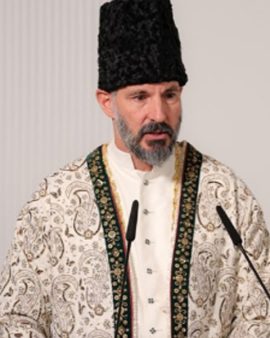


Professor Seyyed Hossein Nasr: Philosopher of Tradition, Spirituality, and Islamic Thought
Professor Seyyed Hossein Nasr is one of the most distinguished contemporary philosophers, scholars of religion, and university professors of the modern Islamic world. Renowned for his profound engagement with Islamic philosophy, Sufism, comparative religion, and the philosophy of science, Nasr has played a pivotal role in introducing classical Islamic intellectual traditions to global academic discourse while offering a sustained critique of modern materialism and secularism.
Born on April 7, 1933, in Tehran, Iran, Seyyed Hossein Nasr received an early education that combined traditional Islamic learning with modern sciences. His intellectual brilliance became evident at a young age, leading him to pursue higher studies in the United States. He earned his undergraduate degree in physics from the Massachusetts Institute of Technology (MIT) and later completed his PhD in the history of science and philosophy at Harvard University. This rare combination of scientific training and metaphysical inquiry shaped Nasr’s lifelong project: reconciling knowledge with spirituality and ethics.
Nasr began his academic career in Iran, where he served as a professor at the University of Tehran and held several important cultural and academic positions. He was instrumental in promoting the study of Islamic philosophy and Persian intellectual heritage and played a key role in fostering dialogue between traditional Islamic scholarship and modern academia. Following the Iranian Revolution of 1979, Nasr settled in the United States, where he continued his teaching and research.
For decades, Seyyed Hossein Nasr served as University Professor of Islamic Studies at George Washington University in Washington, D.C., one of the highest academic distinctions in the American university system. His classrooms became renowned spaces for rigorous intellectual engagement, attracting students from diverse religious and cultural backgrounds. Through his teaching, Nasr emphasized the universality of spiritual truths and the importance of sacred knowledge in human civilization.
A leading figure of the “Traditionalist” or “Perennialist” school of thought, Nasr argues that all authentic religious traditions share a common metaphysical core. He has consistently critiqued modernity’s reduction of knowledge to purely empirical or utilitarian ends, warning that the ecological crisis, moral disorientation, and spiritual emptiness of the modern world are consequences of humanity’s estrangement from the sacred. His writings on environmental ethics, particularly from an Islamic perspective, were among the earliest to link ecological degradation with spiritual crisis.
Professor Nasr is an extraordinarily prolific author, having written and edited more than 50 books and hundreds of scholarly articles. Some of his most influential works include Knowledge and the Sacred, Islam and the Plight of Modern Man, The Heart of Islam, and Religion and the Order of Nature. These works are widely read not only in academic circles but also among general readers seeking deeper spiritual understanding.
Throughout his career, Seyyed Hossein Nasr has been a bridge-builder—between East and West, science and spirituality, and tradition and modernity. His enduring legacy lies in his insistence that true knowledge must be rooted in wisdom, ethics, and reverence for the divine, making him one of the most important philosophical voices of the contemporary era.