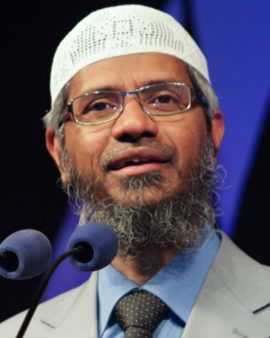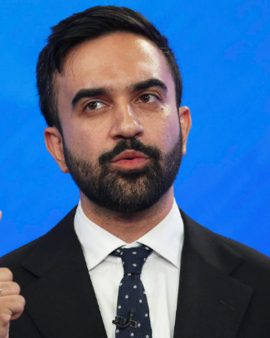
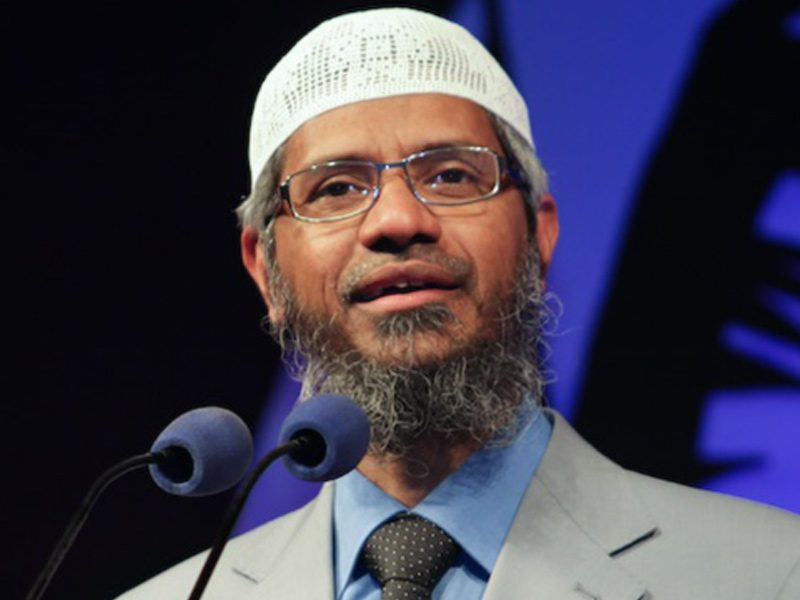

Dr. Zakir Naik: Islamic Preacher and Prominent Figure in Global Da‘wah
Dr. Zakir Abdul Karim Naik is a well-known Islamic preacher and comparative religion speaker, recognized internationally for his public lectures, debates, and television programs focused on Islam and interfaith discourse. Admired by supporters for his command over religious texts and criticized by detractors for controversial statements and legal issues, Dr. Naik remains one of the most debated religious figures from South Asia.
Born on 18 October 1965 in Mumbai, India, Zakir Naik was trained initially as a medical doctor, earning an MBBS degree. Early in his career, however, he chose to leave medical practice and devote himself full-time to Islamic preaching (da‘wah). He cites the influence of South African scholar Ahmed Deedat as pivotal in shaping his interest in comparative religion and public debate.
In 1991, Dr. Naik founded the Islamic Research Foundation (IRF) in Mumbai, aiming to promote Islamic education and outreach. He later launched Peace TV in 2006, an English-language Islamic television channel that expanded rapidly to include broadcasts in Urdu, Bangla, and other languages, reaching audiences across Asia, the Middle East, Europe, and Africa. Through Peace TV and large public lectures, Dr. Naik became known for his rapid recall of verses from the Qur’an, the Bible, the Bhagavad Gita, and other religious texts.
Dr. Naik’s preaching style emphasizes comparative religion, arguing for Islam through textual references and logical reasoning. His lectures often focus on monotheism, prophethood, science and Islam, and misconceptions about Islamic teachings. He has addressed massive gatherings in India, Malaysia, the Gulf, and Western countries, gaining a substantial following, particularly among young Muslims.
At the same time, Dr. Zakir Naik has been a highly controversial figure. Several of his public statements have drawn criticism from religious leaders, civil society groups, and governments, who accuse him of promoting sectarian views or inflammatory rhetoric. Following a series of controversies in India, authorities launched investigations into the Islamic Research Foundation on allegations related to hate speech and financial irregularities. In 2016, Peace TV was taken off air in India, and the IRF was banned under Indian law.
Dr. Naik left India and has since been based primarily in Malaysia, where he was granted permanent residency. Indian authorities have sought his extradition, which he has consistently contested, maintaining that the allegations against him are politically motivated and that he advocates peace and non-violence. The legal proceedings surrounding him continue to shape public perception of his work.
Despite restrictions in some countries, Dr. Zakir Naik remains influential through online platforms and international lectures. Supporters view him as a powerful defender of Islam in interfaith debates, while critics argue that his approach oversimplifies complex theological issues and fuels polarization.
Dr. Zakir Naik’s legacy is thus deeply contested. He stands as a symbol of the reach of modern media-driven religious preaching—illustrating both its ability to mobilize global audiences and the controversies that arise when faith, politics, and public discourse intersect.