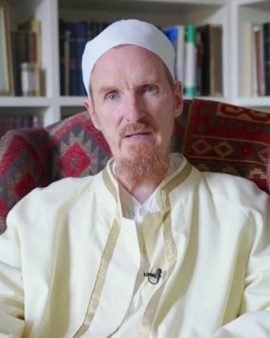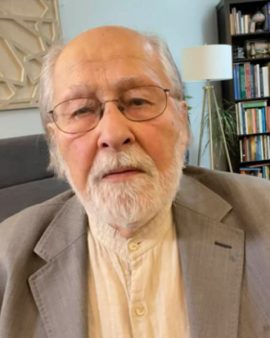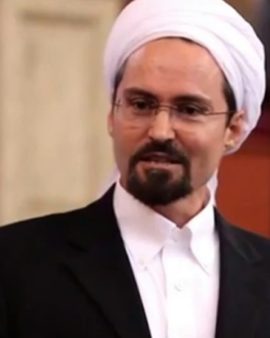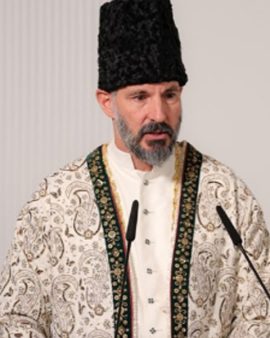
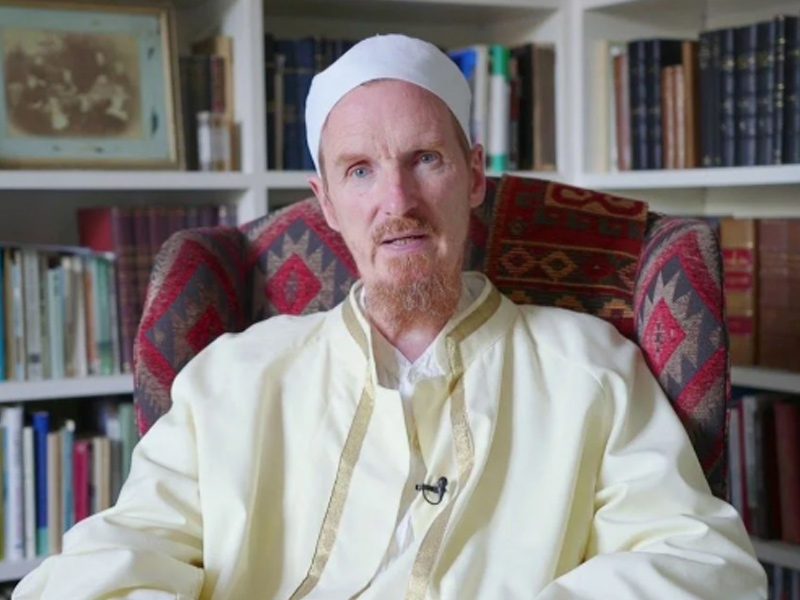

Dr Timothy Winter (Sheikh Abdal Hakim Murad): A Bridge Between Classical Islam and the Modern West
Dr Timothy Winter, widely known by his Muslim name Sheikh Abdal Hakim Murad, is one of the most influential Islamic scholars in the Western world. A British academic, theologian, and public intellectual, he is renowned for articulating a deeply rooted, classical understanding of Islam while engaging thoughtfully with modernity, secularism, and Western intellectual traditions. His work has made him a key voice in contemporary discussions on faith, ethics, and civilization.
Born in 1960 in London, Timothy Winter was educated at Westminster School and later at Pembroke College, Cambridge, where he studied Arabic and Middle Eastern Studies. His early academic interests were shaped by a strong engagement with Western philosophy, literature, and theology. A transformative period of study in the Middle East, particularly in Egypt, led him to formally embrace Islam. There, he studied under leading traditional scholars at Al-Azhar and beyond, immersing himself in Islamic theology (aqidah), jurisprudence (fiqh), Qur’anic studies, and Sufism.
Dr Winter is particularly associated with the Sunni orthodox tradition, combining Ash‘ari theology, one of the four classical schools of Islamic law, and a strong grounding in Sufi spirituality. His scholarship emphasizes Islam as a holistic moral and spiritual civilization rather than a politicized ideology. He has consistently critiqued extremism, literalism, and reductionist readings of Islam, arguing that they sever the faith from its ethical, aesthetic, and intellectual heritage.
As a Fellow of Wolfson College and the Shaykh Zayed Lecturer of Islamic Studies at the University of Cambridge, Dr Winter has played a central role in shaping the academic study of Islam in the UK. He is also the founder of the Cambridge Muslim College, an institution established to train Muslim scholars and community leaders who are deeply rooted in the classical Islamic tradition while being fully conversant with Western society. The college reflects his vision of producing leaders capable of thoughtful engagement rather than reactive polemics.
Dr Winter is also widely known for his prolific writings and translations. His translations of classical Islamic texts, as well as his original essays and lectures, have reached a global audience. He frequently addresses themes such as the crisis of modernity, environmental ethics, mental well-being, masculinity, and the spiritual consequences of consumer culture. His ability to draw connections between Islamic metaphysics and Western thinkers—from Shakespeare to Nietzsche—has earned him respect well beyond Muslim circles.
Publicly, Sheikh Abdal Hakim Murad has been a strong advocate for religious coexistence, pluralism, and civic responsibility. He argues that Muslims in the West should be confident, principled citizens who contribute positively to society while remaining faithful to their religious and moral commitments. His calm, intellectually rigorous style stands in contrast to both populist religiosity and confrontational secularism.
In an age marked by polarization and spiritual uncertainty, Dr Timothy Winter represents a rare synthesis: a scholar firmly anchored in Islamic tradition, deeply fluent in Western thought, and committed to restoring religion as a source of wisdom, balance, and compassion in public life.