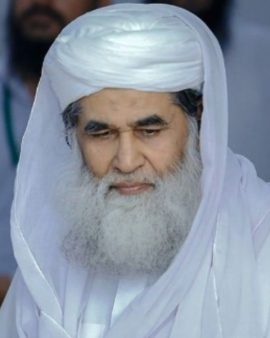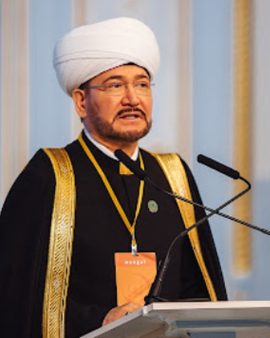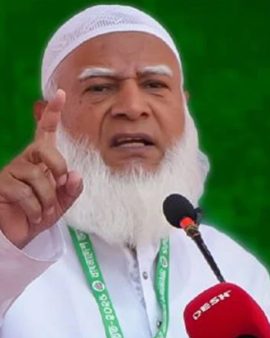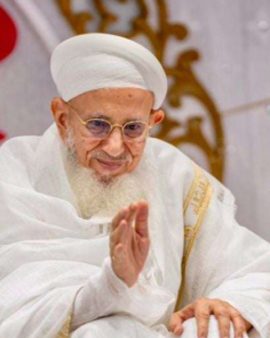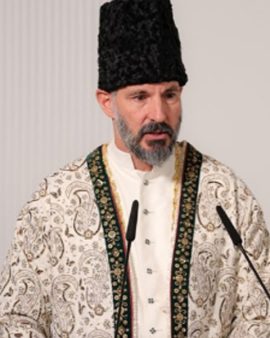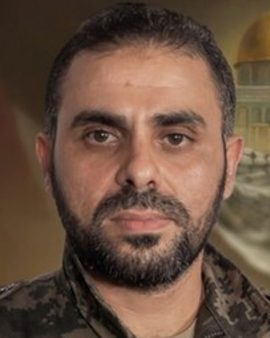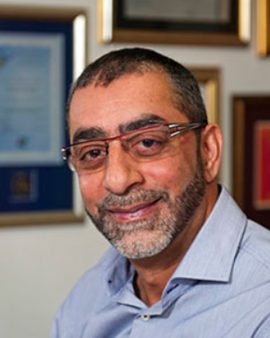
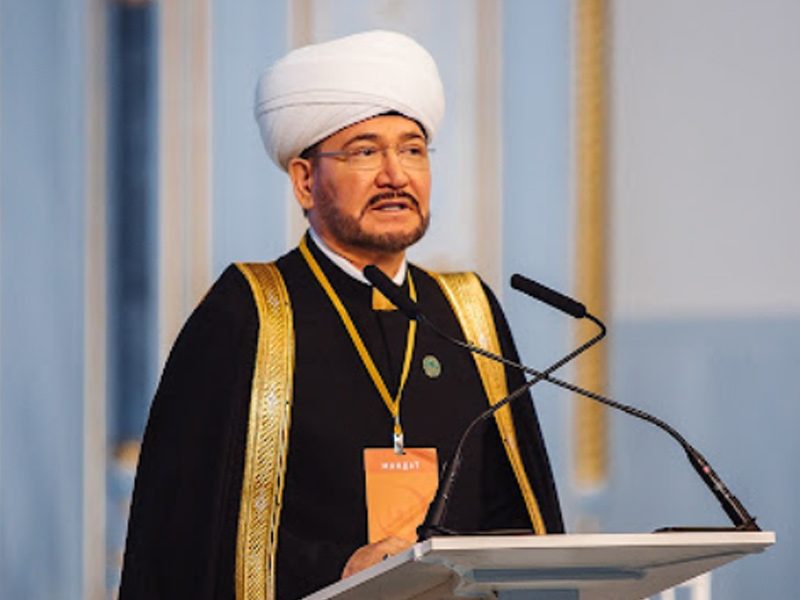
Mufti Sheikh Ravil Gaynutdin

Mufti Sheikh Ravil Gaynutdin - Mufti Sheikh Ravil Gaynutdin, Ravil Ismagilovich Gaynutdin, Sheikh Ravil Gaynutdin, Mufti Ravil Gaynutdin, Grand Mufti of Russia (de facto), Chairman DUM RF, Ravil Gaynutdin Russia, Russian Muslim Leader Gaynutdin, Sunni Muslim Authority Gaynutdin
#RavilGaynutdin, #MuftiGaynutdin, #RussianIslam, #SpiritualAdministrationOfMuslims, #DUMRF, #IslamicLeadership, #InterfaithDialogue, #ModerateIslam, #GlobalMuslimLeaders, #TheVoiceOfCoexistence
Country: Russia

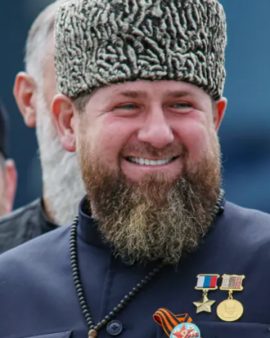
Mufti Sheikh Ravil Gaynutdin


Mufti Sheikh Ravil Gaynutdin: Russia’s Leading Muslim Authority and Voice of Islamic Coexistence

Mufti Sheikh Ravil Ismagilovich Gaynutdin is the most prominent Muslim religious leader in the Russian Federation and a central figure in shaping Islam’s public presence in post-Soviet Russia. Based in Moscow, he serves as the Chairman of the Spiritual Administration of Muslims of the Russian Federation (DUM RF) and is widely regarded as the de facto Grand Mufti of Russia. For decades, he has played a crucial role in representing Russia’s diverse Muslim population and promoting interfaith harmony within a multi-ethnic, multi-religious state.

Born in 1959 in the Republic of Tatarstan, a historic center of Islam in Russia, Ravil Gaynutdin grew up in a Muslim community that preserved religious traditions despite Soviet-era repression. He pursued formal Islamic education at the Mir-i-Arab Madrasa in Bukhara (then in the Soviet Union) and later continued his studies abroad, including advanced religious training in the Middle East. His scholarly formation combined traditional Sunni Islamic learning with a deep understanding of the political and social realities of Muslim life under and after communism.

Mufti Ravil rose to national prominence in the early 1990s, following the collapse of the Soviet Union, when religious freedom was restored and Muslim institutions had to be rebuilt almost from scratch. In 1996, he became Chairman of the Spiritual Administration of Muslims of the European Part of Russia, which later evolved into the Spiritual Administration of Muslims of the Russian Federation. From this position, he helped reconstruct mosques, revive Islamic education, and establish religious governance structures for millions of Muslims across Russia.

One of Mufti Ravil’s most significant achievements was his leadership in the construction of the Moscow Cathedral Mosque, inaugurated in 2015. As one of the largest mosques in Europe, it became a powerful symbol of Islam’s historical and contemporary presence in Russia. The mosque’s opening, attended by Russian state leaders and foreign dignitaries, reflected Gaynutdin’s ability to position Islam as an integral part of Russia’s national fabric rather than a marginal or foreign element.

Ideologically, Mufti Ravil is known for advocating a traditional, moderate Sunni Islam rooted in the Hanafi school of jurisprudence, which has long been practiced among Russia’s Tatars and other Muslim peoples. He has consistently spoken out against extremism and radical ideologies, emphasizing loyalty to the state, social stability, and peaceful coexistence. His approach aligns with what is often described as “traditional Russian Islam,” distinct from imported extremist interpretations.

Mufti Gaynutdin has also been active in interfaith dialogue, maintaining close working relationships with leaders of the Russian Orthodox Church, Judaism, and other religious communities. He regularly participates in national and international forums addressing religious tolerance, counter-extremism, and cultural dialogue. Internationally, he represents Russian Muslims in engagements with the Muslim world, including relations with institutions in the Middle East and Central Asia.

Critics sometimes view his close cooperation with the Russian state as overly accommodating, while supporters argue that his pragmatic approach has ensured institutional stability and protected Muslim interests in a complex political environment. Regardless of perspective, his influence on Russian Islamic life is undeniable.

Mufti Sheikh Ravil Gaynutdin stands as a central architect of contemporary Islam in Russia—balancing faith, state relations, and interreligious harmony while guiding a community shaped by history, diversity, and modern challenges.
Feedback & Comment

Please provide Rating 1-5 stars:


Total Records: 0
Page 1 of 0

The 100 Most Influential Muslims - 2026


Showing 98 of 98 records for 2026
Abdel Fattah Saeed El Sisi - selected in the list of  The Most Influential Global Muslims  - 2026

Abdel Fattah Saeed El Sisi

Abdel Fattah Saeed El-Sisi: Egypt’s De Facto Ruler and Architect of a Security-Centric State

Abdel Fattah Saeed El-Sisi, widely recognized as the de facto ruler of Egypt, has shaped the country’s political and security landscape with a firm and transformative—yet controversial—hand. Born on November 19, 1954, in Cairo’s historic Gamaleya district, Sisi grew up in a traditional and religious household where discipline, family values, and patriotism were deeply emphasized. His upbringing in a bustling yet close-knit neighborhood contributed to his image as a reserved, loyal, and duty-bound figure.

Sisi’s professional life began with his enrollment in the Egyptian Military Academy, from which he graduated in 1977. His military career spanned over three decades and saw him rise through key positions in infantry leadership, military attaché roles abroad, and later intelligence command. His time at the UK’s Joint Services Command and Staff College and the U.S. Army War College broadened his understanding of global military strategy and diplomacy, enhancing his stature within Egypt’s armed forces.

By 2010, Sisi had become Director of Military Intelligence, placing him at the nexus of Egypt’s security apparatus at a time of national upheaval. Following the 2011 revolution and the election of President Mohamed Morsi, Sisi was appointed Minister of Defense in 2012. His appointment at just 57 made him the youngest to hold the post, signaling his emergence as a rising power within the military establishment.

Sisi’s turning point came in 2013, when millions of Egyptians took to the streets demanding the removal of Morsi. On July 3, Sisi announced Morsi’s ouster, citing the need to prevent chaos and restore stability. This move—supported by significant segments of society—reshaped Egypt’s political trajectory and positioned Sisi as the central authority figure. While widely praised by his supporters as a protector of national security, the intervention was criticized by others as a military coup that undermined Egypt’s democratic experiment.

In 2014, Sisi resigned from the military and won the presidency by a landslide, solidifying his role as Egypt’s de facto ruler. He was re-elected in 2018 and again in 2024, ensuring his continued dominance over political institutions, security services, and policymaking.

Sisi’s governance is defined by a strong emphasis on security, state authority, and economic megaprojects. Under his leadership, Egypt has launched vast infrastructure initiatives, including the expansion of the Suez Canal, construction of the new administrative capital, nationwide road networks, and major energy projects. He has framed these initiatives as essential for development and national pride.

On the security front, Sisi has pursued aggressive measures against extremist groups, particularly in the Sinai Peninsula. His administration argues that stability is a prerequisite for progress in a volatile region. However, critics point to restrictions on political freedoms, tightened control over media, and limitations on civil society as defining characteristics of his rule.

Regionally, Sisi has positioned Egypt as a stabilizing force, strengthening ties with Gulf allies, engaging in African diplomacy, and asserting Cairo’s role in regional conflicts.

Today, Abdel Fattah El-Sisi remains the most powerful figure in Egypt—an assertive leader who, for supporters, restored order and development, and for critics, consolidated an unprecedented concentration of power. Regardless of perspective, his impact on Egypt’s contemporary history is profound and enduring.


Abdelilah Benkirane - selected in the list of  The Most Influential Global Muslims  - 2026

Abdelilah Benkirane

Abdelilah Benkirane: Islamist Democrat and Morocco’s Prime Minister in a Time of Transition

Abdelilah Benkirane is a leading Moroccan politician who served as Prime Minister of Morocco from 2011 to 2017, a period marked by regional upheaval following the Arab Spring and significant political reform within the kingdom. A central figure in Morocco’s moderate Islamist movement, Benkirane rose to prominence as the head of the Justice and Development Party (PJD), which emerged as the largest parliamentary force after the 2011 general election.

Born in Rabat to a family originally from Fes, Benkirane’s political and ideological outlook was shaped early by religion and activism. His father was drawn to Sufism and Islamic fundamentalism, while his mother was active in the women’s branch of the nationalist Istiqlal Party. During the 1970s, Benkirane himself was involved in leftist and Islamist political activism, reflecting the ideological ferment of the period. Over time, he gravitated toward a vision that sought to reconcile Islamic values with democratic governance.

Benkirane has represented the city of Salé in the Moroccan parliament since November 1997, making him one of the country’s most experienced legislators. In July 2008, he was elected secretary-general of the Justice and Development Party, succeeding Saadeddine Othmani. Under his leadership, the PJD refined its image as a party committed to constitutional politics, gradual reform, and participation within Morocco’s monarchical framework.

His political philosophy is often described as democratic Islamist. In a widely cited 2011 interview, Benkirane rejected moral authoritarianism, stating that if he entered government it would not be to police personal behavior or civil liberties. At the same time, he has expressed strong opposition to secularism, calling it “dangerous for Morocco,” and has taken conservative positions on social issues, including a failed 2010 campaign to block a concert by Elton John in Rabat on moral grounds. These positions reflected the tension in his politics between social conservatism and democratic commitments.

Following the 2011 parliamentary elections, held amid the Arab Spring, the PJD won a plurality of seats. King Mohammed VI appointed Benkirane as Prime Minister on 29 November 2011, tasking him with forming a coalition government. His administration set ambitious economic targets, including average annual growth of 5.5 percent and a reduction in unemployment to 8 percent by 2016. The government also sought to strengthen Morocco’s ties with the European Union, its largest trading partner, while deepening engagement with the Gulf Cooperation Council.

In October 2016, the PJD again emerged as the largest party, and Benkirane was reappointed prime minister. However, his second term never fully materialized. Prolonged coalition negotiations led to a five-month political deadlock, during which Benkirane was unable to assemble a functioning government. In March 2017, King Mohammed VI dismissed him and appointed Saadeddine Othmani to lead a new coalition, marking an abrupt end to Benkirane’s premiership.

After leaving office, Benkirane resigned from parliament in April 2017, citing incompatibility, though commentators suggested political calculations lay behind the decision. Despite setbacks, he remained influential within the PJD. In October 2021, following the party’s heavy defeat in national elections, Benkirane was reelected as secretary-general, signaling his continued relevance and appeal among party loyalists.

In his personal life, Benkirane is known for his plainspoken style and populist rhetoric. He enjoys chess and music, though he has expressed reservations about what he considers indecent art. Married to a fellow party activist, he is the father of six children; his youngest daughter lives with tetraplegia. Through his career, Benkirane has embodied the complexities of Morocco’s Islamist politics—balancing faith, democracy, and monarchy in a rapidly changing society.


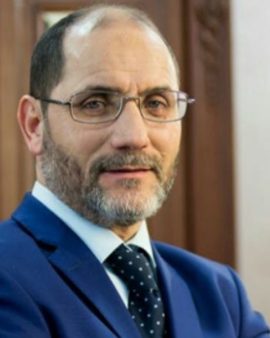
Abderrazak Makri - selected in the list of  The Most Influential Global Muslims  - 2026

Abderrazak Makri

Abderrazak Makri: The Pragmatist at the Helm of Algeria’s Islamist Reformists

Abderrazak Makri has emerged as one of the most thoughtful and pragmatic Islamist leaders in contemporary North African politics. As the long-time head of Algeria’s Movement of Society for Peace (MSP) (Harakat Mujtama’ as-Silm), Makri has sought to chart a path that blends Islamic values with political realism—advocating reform, participation, and social stability in a country shaped by a complex history of authoritarian rule and civil conflict.

Born in 1960 in the city of Biskra, on the edge of Algeria’s Sahara region, Makri grew up during a period when the newly independent nation was still defining its political and cultural identity. Like many Algerians of his generation, he was deeply influenced by questions of justice, governance, and national dignity. Trained as an academic and educator, Makri developed an early interest in Islamic thought, social reform, and civic responsibility—interests that would later shape his political outlook.

Makri joined the Islamist movement inspired by the late Sheikh Mahfoud Nahnah, the founding father of MSP, who championed a distinctly Algerian model of political Islam. Unlike more confrontational Islamist groups, MSP emphasized gradual reform, nonviolence, and engagement within the political system. This philosophy profoundly shaped Makri, who rose steadily through the party’s ranks, gaining recognition for his intellectual clarity and organizational skills.

In 2013, Abderrazak Makri was elected president of MSP, assuming leadership at a time of internal debate and regional upheaval. The Arab Spring had shaken governments across the Middle East and North Africa, reviving both hopes for democratic reform and fears of instability. In Algeria—still haunted by memories of the bloody civil war of the 1990s—Makri argued consistently for caution, dialogue, and political inclusion rather than radical rupture.

Under his leadership, MSP positioned itself as a reformist Islamist party committed to pluralism and peaceful political competition. Makri steered the movement through shifting alliances, including periods of participation in government coalitions and moments of principled opposition. He defended these choices as necessary to protect social cohesion while pushing incrementally for accountability, good governance, and respect for civil liberties.

Makri’s public persona differs markedly from the fiery image often associated with Islamist leaders. Soft-spoken and analytical, he is known for lengthy essays, policy reflections, and measured speeches rather than populist rhetoric. He has repeatedly emphasized that Islamic politics must respond to real social conditions—youth unemployment, corruption, economic inequality, and the erosion of public trust—rather than abstract slogans.

During Algeria’s 2019 Hirak protest movement, Makri sought to align MSP with popular demands for peaceful change, constitutional reform, and an end to entrenched political practices. While navigating a delicate political landscape, he called for national dialogue and warned against both authoritarian stagnation and reckless confrontation. His stance reinforced his reputation as a bridge-builder within Algeria’s fragmented political scene.

Today, Abderrazak Makri is regarded as one of the leading intellectual voices of moderate political Islam in the Maghreb. Supporters see him as a principled reformer who understands Algeria’s unique history and constraints; critics argue that his pragmatism risks diluting opposition pressure. Yet few dispute his influence.

In a region often defined by extremes, Makri’s leadership of the Movement of Society for Peace reflects an alternative vision—one rooted in patience, participation, and the belief that lasting change is built through institutions, dialogue, and social trust rather than upheaval alone.


Abdul Aziz Al Ghurair - selected in the list of  The Most Influential Global Muslims  - 2026

Abdul Aziz Al Ghurair

Abdul Aziz Al Ghurair: A Legacy of Giving and the Power of Purpose

Abdul Aziz Al Ghurair stands among the most influential philanthropists in the Arab world, a man whose life bridges commerce, public service, and a deep commitment to social uplift. A prominent Emirati businessman and humanitarian, he is best known as the Chairman of the Abdulla Al Ghurair Foundation for Education, one of the largest privately funded educational foundations in the Middle East. Through his work, Al Ghurair has helped redefine philanthropy in the region—not as charity alone, but as a long-term investment in human potential.

Born into one of the United Arab Emirates’ most respected business families, Abdul Aziz Al Ghurair inherited not only entrepreneurial acumen but also a strong ethic of responsibility. The Al Ghurair family has played a formative role in the UAE’s economic development, particularly in banking, industry, and trade. Abdul Aziz himself built a distinguished career in finance, serving for many years as CEO of Mashreq Bank, one of the UAE’s leading financial institutions, and later as Chairman of the Mashreq Group. His leadership helped modernize banking practices in the region while emphasizing prudence, innovation, and trust.

Yet it is philanthropy that has come to define his broader legacy. In 2015, Abdul Aziz Al Ghurair made headlines by dedicating a significant portion of his wealth to establish the Abdulla Al Ghurair Foundation, named in honor of his late father. The foundation’s mission is ambitious and transformative: to empower Arab youth through access to quality education and skills for the future. At a time when the Arab world faces pressing challenges of youth unemployment, skills gaps, and educational inequality, Al Ghurair’s vision addressed the root of the problem—human development.

The foundation focuses on scholarships, innovative learning programs, digital education, and partnerships with global universities and institutions. Its initiatives are designed not merely to provide degrees, but to equip young people with the skills needed to thrive in a rapidly changing global economy. For Al Ghurair, education is not a privilege but a catalyst for dignity, opportunity, and social stability.

Beyond education, Abdul Aziz Al Ghurair has been a strong advocate for institutional philanthropy—encouraging transparency, measurable impact, and sustainability. He has spoken often about the need for Arab philanthropy to move beyond short-term relief toward systemic solutions. His approach reflects a belief that giving should empower individuals to become contributors to society, not dependents.

Al Ghurair has also served his country in public life, including as Speaker of the Federal National Council of the UAE, where he contributed to legislative development and civic engagement. This blend of public service, private enterprise, and philanthropy underscores his belief that leadership carries a moral obligation to serve the wider community.

Despite his stature, Abdul Aziz Al Ghurair is known for humility and restraint. He rarely seeks the spotlight, preferring that the impact of his initiatives speak for itself. Those who work with him describe a leader guided by quiet conviction—someone who believes that true success is measured not by wealth accumulated, but by lives transformed.

In an era when inequality and uncertainty challenge societies worldwide, Abdul Aziz Al Ghurair offers an inspiring model of purpose-driven leadership. His life affirms a simple yet powerful idea: that wealth, when guided by values, can become a force for knowledge, opportunity, and enduring hope for generations to come.


Abdul Malik Al Houthi - selected in the list of  The Most Influential Global Muslims  - 2026

Abdul Malik Al Houthi

Sheikh Abdul Malik Badr al-Din al-Houthi: The Reclusive Leader Steering Yemen’s Most Influential Armed Movement

Abdul-Malik Badr al-Din Al-Houthi is the enigmatic and influential leader of Yemen’s Houthi movement, formally known as Ansar Allah. Emerging from a religious family in the rugged northern province of Saada, he has become one of the most consequential actors in Yemen’s modern history. Though rarely seen in public and known for his secluded lifestyle, Abdul-Malik’s leadership has shaped the trajectory of Yemen’s prolonged conflict and redefined regional dynamics in the Arabian Peninsula.

Born in 1979, Abdul-Malik grew up in a household deeply rooted in the Zaydi Shia religious tradition. His father, Badr al-Din Al-Houthi, was a prominent Zaydi scholar, and his elder brother, Hussein Badreddin Al-Houthi, founded the early movement that later evolved into Ansar Allah. This upbringing immersed Abdul-Malik in religious scholarship, tribal networks, and the cultural identity of Yemen’s northern highlands. He was known even in his youth for his quiet demeanor, strong memory, and ideological conviction.

The Houthi movement initially emerged in the early 2000s as a revivalist cultural and religious association but soon found itself in confrontation with the Yemeni state under President Ali Abdullah Saleh. After his brother Hussein’s killing in 2004 during the first of several Saada Wars, Abdul-Malik gradually rose through the ranks. His leadership became cemented after the deaths of several senior commanders, including brother Abdul-Karim and cousin Abdul-Khaliq.

By 2011, as the Arab Spring reached Yemen, Abdul-Malik had become the undisputed leader of the movement. He capitalized on widespread grievances—corruption, marginalization, and economic decline—to expand Houthi influence beyond Saada. His forces took advantage of political fragmentation in the post-Saleh era, eventually capturing the capital, Sana’a, in September 2014. In 2015, a Saudi-led military coalition intervened to restore the internationally recognized government, turning Yemen into one of the most devastating conflict zones of the century.

Under Abdul-Malik’s direction, the Houthis transformed from a localized insurgent group into a powerful political and military entity controlling significant parts of northern Yemen, including Sana’a. His speeches, often broadcast through Al-Masirah TV, emphasize anti-imperialism, resistance to foreign intervention, and social justice—rhetoric that resonates deeply with supporters. His leadership style is characterized by centralization, ideological discipline, and a blend of religious influence with pragmatic tribal alliances.

Despite his low public visibility, Abdul-Malik’s movement has proven highly adaptable. The Houthis developed advanced military capabilities, including long-range drones and ballistic missiles, enabling them to strike targets deep inside Saudi Arabia and the UAE. They have also established parallel governance systems in northern Yemen, managing security, taxation, courts, and humanitarian distribution in areas under their control.

Critics accuse Abdul-Malik of authoritarianism, human rights abuses, and exacerbating Yemen’s humanitarian crisis, while supporters view him as a nationalist leader resisting foreign aggression and corrupt elites. Regional actors and global powers closely monitor his decisions, given the Houthis’ growing military capabilities and strategic location near vital shipping routes.

Today, Abdul-Malik Al-Houthi remains one of the most influential yet elusive figures in Middle Eastern geopolitics. His leadership continues to shape Yemen’s future, regional security calculations, and the broader balance of power along the Red Sea and Arabian Peninsula.


Abdullah II Ibn Al Hussein - selected in the list of  The Most Influential Global Muslims  - 2026

Abdullah II Ibn Al Hussein

Abdullah II Ibn Al-Hussein: The Hashemite Monarch Steering Jordan Through Regional Turbulence

Abdullah II Ibn Al-Hussein, born on 30 January 1962, is the King of the Hashemite Kingdom of Jordan and one of the Middle East’s longest-serving contemporary monarchs. He ascended the throne in February 1999 following the death of his father, King Hussein bin Talal, inheriting a state known for its strategic importance, political moderation, and delicate balancing of regional pressures.

King Abdullah was born in Amman and educated in both Jordan and the West. His early schooling included St Edmund’s School in the United Kingdom, followed by Eaglebrook School in the United States. He later attended Georgetown University, where he earned a degree in international relations, before receiving formal military training at the Royal Military Academy Sandhurst. This blend of Western education and military discipline would shape his leadership style and worldview.

A career soldier before becoming king, Abdullah served extensively in the Jordanian Armed Forces, including as commander of Jordan’s Special Forces. He rose to the rank of Major General, gaining a reputation as a professional military officer with a keen interest in modernisation, technology, and counter-terrorism. His military background continues to influence his emphasis on security and stability in a volatile region.

Since assuming the throne, King Abdullah II has positioned Jordan as a moderate, stabilising force in Middle Eastern politics. He is a strong advocate of interfaith dialogue, democratic reform, and peaceful coexistence. Internationally, he is best known for his consistent support for a two-state solution to the Israeli-Palestinian conflict and for safeguarding Jordan’s custodial role over Islamic and Christian holy sites in Jerusalem, a responsibility central to the Hashemite monarchy’s legitimacy.

Domestically, Abdullah has pursued cautious political and economic reforms aimed at modernising the state while preserving stability. His reign has seen repeated efforts to reform electoral laws, strengthen institutions, and encourage greater political participation, though critics argue that reforms have often been incremental rather than transformative. Economically, Jordan has faced persistent challenges, including high unemployment, limited natural resources, and heavy dependence on foreign aid. The king has championed economic liberalisation, digital innovation, and public-private partnerships to address these pressures.

Jordan’s role as a humanitarian hub has expanded significantly under Abdullah’s leadership. The country hosts millions of refugees, particularly from Palestine, Iraq, and Syria, placing immense strain on its economy and infrastructure. King Abdullah has repeatedly highlighted this burden in international forums, urging greater global responsibility-sharing and sustained support for host countries.

Married to Queen Rania Al Abdullah, a globally recognised advocate for education, women’s empowerment, and child welfare, the king is father to four children, including Crown Prince Hussein bin Abdullah II, who is widely seen as a central figure in Jordan’s future leadership.

Often described as a pragmatic monarch navigating extraordinary constraints, King Abdullah II Ibn Al-Hussein remains a pivotal regional actor. His reign reflects the ongoing challenge of steering a small, resource-poor country through regional turmoil while preserving internal cohesion, international credibility, and the Hashemite legacy in an uncertain Middle East.


Abu Obaida - selected in the list of  The Most Influential Global Muslims  - 2026

Abu Obaida

Abu Obaida: The Masked Voice of the Qassam Brigades

Huthayfa Samir Abdallah al-Kahlout (Arabic: حذيفة سمير عبد الله الكحلوت; 11 February 1985 – 30 August 2025), widely known by the nom de guerre Abu Obaida (Arabic: أبو عبيدة), was a Palestinian militant figure who served for nearly two decades as the chief spokesperson of the Al-Qassam Brigades, the military wing of Hamas. From 2007 until his death in 2025, he became one of the most recognizable—and controversial—faces of Hamas’s military communications, often described as the central architect of the group’s media messaging.

Born in Gaza in 1985, al-Kahlout’s family history reflected the broader Palestinian displacement narrative. His family originally hailed from Ni’ilya, near present-day Ashkelon, and were displaced during the 1948 Palestine War. This background, frequently invoked in Palestinian political discourse, formed part of the context in which Abu Obaida later framed his rhetoric about resistance and occupation.

Abu Obaida first emerged publicly in the early 2000s, appearing at press briefings and representing the Qassam Brigades to regional and international media. Following Israel’s disengagement from Gaza in 2005, he was formally appointed as the group’s spokesperson. By at least 2007, according to U.S. assessments, he had become the consistent public voice of the organization’s military wing. He was known for maintaining strict anonymity, always appearing masked and wearing a red keffiyeh, a visual signature that reinforced both mystique and message discipline. Attempts by Israeli media to reveal his identity were denied by the Qassam Brigades, though U.S. authorities later identified him as al-Kahlout and imposed sanctions in 2024.

Throughout his career, Abu Obaida delivered statements at key moments of escalation. He announced the capture of Israeli soldier Gilad Shalit in 2006 and later commented on other high-profile cases involving Israeli captives. During successive Gaza conflicts—particularly in 2014, 2021, and after October 2023—his speeches combined military claims, warnings to Israel, and political messaging aimed at both Palestinian and regional audiences. His rhetoric often emphasized deterrence, rejected what he described as “red lines,” and framed armed resistance as a response to Israeli actions.

Abu Obaida also played a visible role in negotiations and signaling around prisoner exchanges, repeatedly asserting that future deals would be contingent on specific Palestinian demands. During ceasefire discussions and anniversaries of major operations, he criticized Israeli leadership, particularly Prime Minister Benjamin Netanyahu, accusing Israel of prolonging war and failing to secure the return of captives.

Analysts of his public statements noted that Abu Obaida functioned not merely as a spokesman but as a mobilizer, blending religious language, nationalist themes, and strategic threats. Academic analysis of his rhetoric characterized it as justifying armed struggle against what he termed “Zionist occupation,” while also situating the conflict within a broader regional and international framework.

On 30 August 2025, Abu Obaida was killed in an Israeli airstrike on an apartment building in Gaza City’s Rimal neighborhood. The strike resulted in multiple civilian deaths, including children. Israeli officials confirmed his killing shortly afterward, and Hamas later acknowledged his death, announcing a successor who would assume his nom de guerre.

In death, as in life, Abu Obaida remained a polarizing figure—viewed by supporters as a steadfast voice of resistance, and by critics as a propagandist for an armed organization designated as terrorist by several states. His legacy lies chiefly in how modern militant movements use media, symbolism, and controlled messaging to shape narratives in protracted conflict.


Ahmed Hussein al Sharaa - selected in the list of  The Most Influential Global Muslims  - 2026

Ahmed Hussein al Sharaa

Ahmed Hussein al-Sharaa

Ahmed Hussein al-Sharaa (born 29 October 1982), also known by his nom de guerre Abu Mohammad al-Julani, is a Syrian politician, revolutionary figure, and former rebel commander who has served as President of Syria since 2025. Prior to assuming the presidency, he was the emir of Hay’at Tahrir al-Sham (HTS) from 2017 to 2025 and emerged as Syria’s de facto leader following the collapse of the Bashar al-Assad government in December 2024.

Al-Sharaa was born in Riyadh, Saudi Arabia, to a Syrian Sunni Muslim family with roots in Daraa and the Golan Heights, and was raised in Damascus. His early political radicalisation coincided with regional upheavals following the US invasion of Iraq. Shortly before the 2003 invasion, he joined al-Qaeda in Iraq and participated in the Iraqi insurgency for nearly three years. In 2006, he was captured by American forces and remained imprisoned until 2011. His release coincided with the outbreak of the Syrian uprising against the Ba‘athist government of Bashar al-Assad.

In 2012, al-Sharaa founded the al-Nusra Front with backing from al-Qaeda, positioning it as a leading armed faction seeking to overthrow the Assad regime. Under his leadership, the group consolidated control over parts of northwestern Syria, particularly the Idlib Governorate. Al-Sharaa gained prominence for resisting efforts by Abu Bakr al-Baghdadi to forcibly merge al-Nusra with the Islamic State, a dispute that led to prolonged armed clashes between the rival groups.

In 2016, al-Sharaa publicly severed ties with al-Qaeda, dismantled its loyalist networks, and rebranded his political posture. He renounced transnational jihadism, shifted focus to Syrian national governance, and pledged protection for religious and ethnic minorities—moves widely interpreted as an attempt to gain broader domestic acceptance and international legitimacy.

In 2017, al-Sharaa merged al-Nusra with allied factions to form Hay’at Tahrir al-Sham, serving as its emir until 2025. HTS established the Syrian Salvation Government (SSG), a technocratic civil administration in Idlib that collected taxes, provided public services, and issued identity documents. Despite maintaining relative stability, the SSG faced internal protests and criticism for authoritarian practices and suppression of dissent.

In November 2024, al-Sharaa launched an 11-day military offensive that rapidly captured Aleppo, Hama, Homs, and Damascus, precipitating the flight of Bashar al-Assad to Russia and the collapse of the Ba‘athist state. Al-Sharaa headed a caretaker government from 8 December 2024 and was formally appointed President of Syria on 29 January 2025 at the Syrian Revolution Victory Conference held in the People’s Palace.

As president, al-Sharaa has prioritised state reconstruction, consolidation of authority, military integration, and the restoration of diplomatic relations with regional and global powers, including the United States and Russia. Domestically, his agenda has focused on economic recovery, refugee repatriation, security stabilisation, and minority reconciliation. He signed an agreement with the Syrian Democratic Forces to integrate their military and civil institutions into the state, though implementation remains unresolved.

His first year in office was marked by sectarian violence, including massacres targeting Alawites and clashes in southern Syria involving government-affiliated forces, drawing domestic and international criticism. Following Israel’s intensified military actions from the occupied Golan Heights, al-Sharaa reaffirmed Syria’s commitment to the 1974 disengagement agreement and opposed renewed conflict. He has also condemned Iranian influence in Syria. Al-Sharaa signed an interim constitution establishing a five-year transitional period and announced the formation of a transitional government.


Al Habib Luthfi bin Yahya - selected in the list of  The Most Influential Global Muslims  - 2026

Al Habib Luthfi bin Yahya

Al-Habib Luthfi bin Yahya: Indonesia’s Revered Sufi Preacher and Guardian of Spiritual Islam

Al-Habib Luthfi bin Yahya is one of Indonesia’s most respected Islamic scholars and spiritual leaders, widely admired for his deep Sufi spirituality, commitment to religious moderation, and unwavering support for national unity. Known simply as “Habib Luthfi,” he has played a unique role in shaping Indonesia’s Islamic discourse by harmonizing classical Islamic teachings with the country’s pluralistic and democratic ethos.

Born on 10 November 1947 in Pekalongan, Central Java, Habib Luthfi comes from a distinguished lineage of the Prophet Muhammad (peace be upon him), a heritage that carries great moral authority in Indonesian Muslim society. From an early age, he was immersed in Islamic learning, studying the Qur’an, Hadith, jurisprudence, and Sufism under prominent Indonesian and Middle Eastern scholars. His intellectual formation was deeply influenced by the traditional pesantren (Islamic boarding school) system, which emphasizes character, humility, and service alongside knowledge.

Habib Luthfi is best known as a leading Sufi master of the Ba‘Alawi tariqa, a spiritual path that stresses love of the Prophet, inner purification, ethical conduct, and compassion toward all creation. Through large public gatherings of dhikr (remembrance of God), mawlid celebrations, and spiritual lectures, he has drawn millions of followers across Indonesia and beyond. These gatherings are marked not by political rhetoric, but by a call to spiritual renewal, moral discipline, and social harmony.

A defining feature of Habib Luthfi’s leadership is his strong emphasis on nationalism and civic responsibility. He consistently teaches that love for one’s homeland (hubbul wathan) is an integral part of faith, a message that resonates deeply in Indonesia’s multi-ethnic and multi-religious society. He has been a vocal supporter of Pancasila, Indonesia’s foundational philosophy, arguing that it aligns with Islamic values of justice, unity, and mutual respect. In doing so, he has offered a powerful religious counter-narrative to extremist ideologies that reject the nation-state or promote sectarian division.

Habib Luthfi has also played an important institutional role. He has served as a senior figure in Nahdlatul Ulama (NU), the world’s largest Muslim organization, and as a key advisor to Indonesia’s armed forces and police on issues of religious moderation and national cohesion. His influence extends beyond formal positions; political leaders, military officials, and diplomats often seek his counsel, valuing his moral authority and unifying voice.

Despite his prominence, Habib Luthfi is known for personal humility and avoidance of partisan politics. He consistently urges Muslims to prioritize ethics over anger, unity over division, and spiritual depth over superficial religiosity. His message emphasizes that true Islamic strength lies not in confrontation, but in character, patience, and service to society.

In an age of rising polarization and ideological conflict, Al-Habib Luthfi bin Yahya stands as a symbol of Indonesia’s traditional, inclusive, and spiritually grounded Islam. His life and work continue to inspire millions, offering a vision of faith that nurtures both the soul and the nation.


Almuzzammil Yusuf - selected in the list of  The Most Influential Global Muslims  - 2026

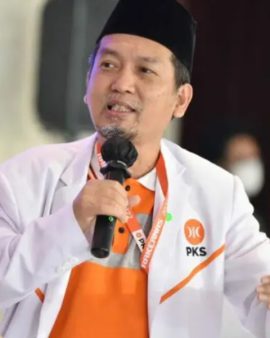
Almuzzammil Yusuf

Almuzzammil Yusuf: Principled Politics and Faith-Driven Leadership in Indonesia

Almuzzammil Yusuf stands among the most respected Islamist political figures in Indonesia, known for his calm intellect, moral clarity, and enduring commitment to democratic engagement rooted in Islamic values. A senior leader and widely recognized head figure of the Prosperous Justice Party (Partai Keadilan Sejahtera – PKS), Indonesia’s leading Islamist political party, Almuzzammil has played a central role in shaping the party’s ideological direction and national presence in the world’s largest Muslim-majority democracy.

Born into a society defined by diversity—of cultures, faiths, and political traditions—Almuzzammil Yusuf’s political journey reflects Indonesia’s own democratic evolution. Trained in Islamic thought and public affairs, he emerged from the tarbiyah movement that gave rise to PKS, a movement that emphasizes moral discipline, social responsibility, and service-oriented leadership. From the outset, his vision of politics was not about power alone, but about reforming society through integrity, justice, and ethical governance.

PKS occupies a unique position in Indonesian politics. Unlike revolutionary Islamist movements elsewhere, the party has consistently worked within Indonesia’s constitutional framework, championing democracy, anti-corruption reforms, and social welfare while drawing inspiration from Islamic principles. Almuzzammil Yusuf has been one of the key architects of this approach. As a strategist, parliamentarian, and party ideologue, he helped articulate PKS’s message as one of “clean governance” (politik bersih), appealing to voters seeking moral credibility in public life.

Almuzzammil’s leadership style is marked by intellectual rigor and quiet resolve. He is widely regarded as a thinker-politician—someone who believes that ideas, values, and institutions matter as much as electoral success. In parliamentary debates and public discourse, he has consistently emphasized constitutionalism, national unity, and the compatibility of Islam with democracy and pluralism. His speeches often stress that Islamic politics must uplift society as a whole, not divide it.

Under his guidance and influence, PKS has expanded its grassroots base, particularly among urban professionals, students, and faith-conscious middle-class voters. The party’s focus on social services, disaster relief, education, and community welfare has reinforced its reputation as a movement deeply embedded in everyday Indonesian life. Almuzzammil has repeatedly argued that political credibility is earned through service—by standing with people in times of hardship and offering practical solutions grounded in ethical values.

In a political environment often marked by transactional alliances and shifting loyalties, Almuzzammil Yusuf has advocated consistency and moral accountability. He has spoken openly about corruption, inequality, and the erosion of public trust, urging leaders to return to the foundational ideals of justice (keadilan), trustworthiness (amanah), and consultation (shura). For him, Islamic politics is not about imposing faith, but about embodying its highest ethical standards.

Beyond party politics, Almuzzammil Yusuf is seen as a bridge between religious conviction and civic responsibility. He represents a generation of Islamist leaders who reject extremism while refusing to abandon faith as a source of moral guidance. His influence extends beyond PKS, contributing to broader debates about the role of religion in public life across Southeast Asia.

In an era of global uncertainty and political cynicism, Almuzzammil Yusuf’s leadership offers an alternative narrative—one that affirms democracy, honors faith, and insists that power must always serve the common good. Through patience, principle, and perseverance, he continues to inspire those who believe that ethical politics is not only possible, but necessary.


Amr Khaled - selected in the list of  The Most Influential Global Muslims  - 2026

Amr Khaled

Amr Khaled: Egypt’s Pioneering Islamic Preacher and Media Evangelist

Dr. Amr Mohamed Helmi Khaled, widely known as Amr Khaled, is one of the most influential Muslim preachers and media personalities of the modern era. Born on 5 September 1967 in Alexandria, Egypt, he has become a defining figure in contemporary Islamic outreach, renowned for his innovative approach that combines traditional religious teachings with modern communication methods. Khaled’s work has inspired millions across the Arab world, particularly youth, to engage actively with their faith while addressing social and personal challenges.

Amr Khaled was raised in a middle-class family in Alexandria, where he imbibed both academic discipline and religious values. He pursued higher education at Cairo University, graduating with a degree in accounting in 1988, and later obtained a diploma in Islamic studies. Furthering his academic credentials, he earned a doctorate from the University of Wales, Lampeter, in 2010. His academic foundation in both secular and religious studies provided him with a unique perspective, enabling him to communicate Islamic teachings in a relatable and practical manner.

Khaled’s early career was in accounting, but his passion for religious activism and community service led him to full-time preaching in the 1990s. Initially delivering sermons in mosques across Egypt, he quickly gained recognition for his ability to connect with ordinary people, particularly young adults, through an approachable, motivational, and ethically grounded style. Rather than focusing solely on doctrinal teachings, Khaled emphasizes personal development, social responsibility, and spiritual growth, making religion relevant to contemporary life.

His rise to prominence coincided with the proliferation of satellite television in the Arab world, and Khaled became a household name through programs on channels like Iqraa TV. Shows such as Life Makers encouraged viewers to apply Islamic principles to everyday challenges, including family life, education, career, and community service. By integrating faith with actionable guidance, Khaled pioneered a form of media preaching that empowered young Muslims to see religion as a tool for positive societal impact.

Amr Khaled’s influence extends beyond broadcasting. He has been actively involved in social and humanitarian initiatives, fostering volunteerism, youth empowerment, and community development programs across the Middle East and North Africa. His approach emphasizes the integration of ethics, spirituality, and civic responsibility, reinforcing Islam as a force for personal and societal betterment.

Internationally, Khaled has received widespread recognition for his work. In 2007, Time magazine named him one of the 100 most influential people in the world, highlighting his innovative approach to religious outreach. While some traditional scholars have criticized his modern methods as overly simplified, Khaled’s broad appeal demonstrates the effectiveness of his strategy in engaging a generation often disconnected from conventional religious institutions.

Despite facing criticism and challenges, Amr Khaled remains a pioneering figure in Islamic media preaching. His career embodies a unique blend of scholarship, charisma, and modern communication, making him a symbol of a dynamic, compassionate, and socially engaged Islam. Through his media presence, public speaking, and humanitarian work, Khaled continues to inspire millions to embrace faith, ethics, and service in a rapidly changing world.


Anwar Ibrahim - selected in the list of  The Most Influential Global Muslims  - 2026

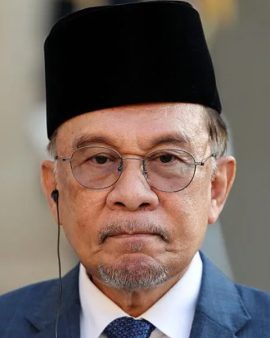
Anwar Ibrahim

Anwar Ibrahim: Malaysia’s Reformist Leader and Symbol of Democratic Resilience

Anwar Ibrahim, the Prime Minister of Malaysia, is one of Southeast Asia’s most influential political figures—celebrated globally as a reformist, a champion of democratic governance, and a statesman whose political journey has been marked by struggle, resilience, and intellectual depth. Born on August 10, 1947, in Penang, Anwar grew up in a middle-class family rooted in public service. His father served as a hospital porter who later became a Member of Parliament, while his mother was a dedicated community activist, shaping Anwar’s early exposure to social justice, welfare, and grassroots engagement.

A brilliant student, Anwar studied Malay studies at the University of Malaya, where he emerged as a charismatic youth leader. His activism began in the 1970s, when he co-founded the Muslim Youth Movement of Malaysia (ABIM), promoting Islamic values, education, and social reform. His eloquence, leadership ability, and progressive religious outlook quickly drew national attention and paved his way into mainstream politics.

Anwar joined the United Malays National Organisation (UMNO) in 1982 at the invitation of then–Prime Minister Dr. Mahathir Mohamad. His rise was meteoric: he served in several key ministerial portfolios—Education, Finance, and Culture—before becoming Deputy Prime Minister in 1993. His tenure as Finance Minister earned him international praise, especially during the 1997 Asian Financial Crisis, when he advocated for transparency, accountability, and market reforms.

However, political differences with Mahathir led to Anwar’s dramatic ouster in 1998. His arrest and subsequent imprisonment on politically motivated charges sparked widespread protests and birthed the “Reformasi” movement—calling for democratic reforms, justice, and an end to corruption. Anwar’s imprisonment, followed by a second conviction in 2015, made him a global symbol of political persecution. International human rights organizations, Western governments, and regional allies condemned his trials as politically driven.

Despite years in prison, Anwar remained steadfast, emerging as an intellectual and moral force for democracy. His writings on governance, Islam, and multiculturalism shaped a generation of thinkers across the Muslim world. In 2018, after forming an unexpected alliance with Mahathir and other opposition parties, the Pakatan Harapan coalition achieved a historic victory, ending UMNO’s 61-year rule. Anwar was pardoned and released, with an agreement that he would eventually succeed Mahathir as prime minister—an arrangement that collapsed amid political turmoil.

The following years of instability, marked by changing coalitions and three different prime ministers, culminated in the 2022 general election. Anwar’s coalition won the largest share of seats but not an outright majority. After days of uncertainty, he was appointed Malaysia’s 10th Prime Minister on November 24, 2022, forming a “Unity Government” and finally achieving the leadership he had pursued for decades.

As Prime Minister, Anwar has emphasized good governance, anti-corruption measures, economic revival, and strengthening Malaysia’s multicultural harmony. On the global stage, he projects Malaysia as a principled voice on human rights, Palestine, and equitable development.

Today, Anwar Ibrahim stands as a testament to perseverance—an intellectual, reformist, and statesman who transformed political adversity into a lifelong mission to build a fairer and more democratic Malaysia.


Ayatollah Sayyid Ali Hussein Al Sistani - selected in the list of  The Most Influential Global Muslims  - 2026

Ayatollah Sayyid Ali Hussein Al Sistani

Grand Ayatollah Sayyid Ali Hussein Al-Sistani: The Quiet Moral Authority Shaping Iraq’s Destiny

Grand Ayatollah Sayyid Ali Hussein Al-Sistani is the most influential Shiʿa religious authority in Iraq and one of the most respected clerics in the Muslim world. Known for his quietist theology, moral authority, and decisive interventions at critical historical moments, Al-Sistani has shaped post-2003 Iraq more profoundly than any political leader—despite never holding public office or seeking power.

Born on 4 August 1930 in Mashhad, Iran, into a family of distinguished religious scholars originally from Iraq, Ali Al-Sistani received early religious training before moving to Qom and later to Najaf, the heart of Shiʿa learning. In Najaf, he studied under some of the greatest scholars of the 20th century, including Grand Ayatollah Abul-Qasim Al-Khoei, whom he later succeeded as the leading marjaʿ (source of emulation) in Iraq following Al-Khoei’s death in 1992.

As a marjaʿ al-taqlid, Al-Sistani commands the religious allegiance of millions of Shiʿa Muslims across Iraq, Iran, South Asia, the Gulf, and the global diaspora. His influence rests not on institutional authority or political office, but on scholarly credibility, ethical consistency, and widespread trust. He is known for a life of austerity, rarely appearing in public and communicating largely through written statements issued from his modest residence in Najaf.

Al-Sistani adheres to the Najaf school of Shiʿa thought, which traditionally advocates political restraint by religious scholars, in contrast to Iran’s doctrine of Wilayat-e-Faqih (Guardianship of the Jurist). He has consistently opposed clerical rule, arguing that legitimacy must come from the will of the people rather than direct governance by religious authorities. This position has made him a unique moral counterweight to both authoritarianism and sectarian extremism.

Following the 2003 US-led invasion of Iraq, Al-Sistani emerged as the single most stabilising figure in the country. He insisted that Iraq’s political future be decided through free elections, rejecting imposed governance structures. His insistence on a constitution written by elected representatives laid the foundation for Iraq’s post-Saddam political process. At critical junctures, his calls for restraint prevented large-scale sectarian violence, even as the country descended into chaos.

In 2014, Al-Sistani issued a historic fatwa calling for national mobilisation against the so-called Islamic State (ISIS) after the group captured large swathes of Iraqi territory. The ruling helped galvanise resistance and played a decisive role in halting ISIS’s advance. Notably, he framed the call as a defence of the nation and all its citizens—Shiʿa, Sunni, Christian, and others—rather than a sectarian appeal.

Beyond politics and security, Al-Sistani has consistently advocated for human rights, minority protection, rule of law, and social justice. His meeting with Pope Francis in 2021 symbolised his commitment to interfaith coexistence and moral dialogue, earning global admiration.

Often described as the “silent authority,” Grand Ayatollah Ali Al-Sistani represents a rare model of leadership—one rooted in moral legitimacy rather than coercive power. His legacy lies in demonstrating how religious authority, when exercised with restraint and principle, can guide a fractured society toward dignity, coexistence, and political responsibility.


Azim Premji - selected in the list of  The Most Influential Global Muslims  - 2026

Azim Premji

Azim Premji: India’s IT Pioneer and Philanthropic Visionary

Azim Hashim Premji, born on 24 July 1945 in Mumbai, India, is one of the most respected industrialists and philanthropists in India and a globally recognized figure in the technology and social sectors. Often referred to as the “Czar of the Indian IT Industry,” Premji transformed Wipro Limited from a small vegetable oil company into a global technology and consulting powerhouse. Beyond his entrepreneurial achievements, he is renowned for his commitment to philanthropy, particularly in education, and has set new benchmarks for socially responsible business leadership.

Premji was born into a business-oriented family; his father, Hamid Premji, ran Western India Vegetable Products Ltd., which later became Wipro. After completing his early education in Mumbai, Azim Premji enrolled at Stanford University in the United States to study engineering. However, in 1966, following the untimely death of his father, he returned to India to take over the family business at the young age of 21. This early responsibility marked the beginning of a career that would revolutionize India’s technology sector.

Under Premji’s leadership, Wipro diversified from its original focus on vegetable oils into personal care products, consumer goods, and eventually the IT sector. In the 1980s, he foresaw the potential of software and services in India and strategically pivoted the company toward information technology. Wipro became one of India’s leading IT services firms, offering software development, consulting, and business process outsourcing to global clients. Premji’s emphasis on innovation, quality, and ethics helped establish Wipro as a trusted partner for multinational corporations, contributing significantly to India’s emergence as a global IT hub.

Apart from his business acumen, Azim Premji is widely admired for his ethical and socially conscious approach to leadership. He has consistently emphasized values such as integrity, transparency, and employee empowerment, fostering a corporate culture that balances profitability with responsibility. Wipro’s success under Premji’s stewardship is often cited as an example of sustainable and principled business management.

Philanthropy has been a defining feature of Premji’s life. He founded the Azim Premji Foundation, dedicated to improving education in India, particularly for underprivileged children. Through the foundation, Premji has funded schools, teacher training programs, and research initiatives aimed at enhancing the quality of education across India. In 2010, he made headlines by committing to donate a significant portion of his wealth to philanthropic causes, eventually contributing billions of dollars, making him one of the world’s largest individual philanthropists.

Premji’s contributions have earned him numerous accolades, including the Padma Bhushan (2005) and Padma Vibhushan (2011), two of India’s highest civilian honors. He has also been recognized internationally for his vision in business and social responsibility, appearing on lists of the world’s most influential people.

Even after stepping down as Wipro’s CEO in 2011, Premji continues to serve as the company’s Chairman and remains deeply engaged with his foundation’s work. His life exemplifies the integration of entrepreneurship with ethical leadership and social impact, inspiring generations of business leaders and social innovators.

Azim Premji’s legacy is not only defined by his transformative impact on India’s IT industry but also by his unwavering commitment to using wealth and influence to improve society. He embodies a rare combination of visionary business leadership and deep humanitarian concern, making him a global role model for responsible leadership and philanthropy.


Baroness Sayeeda Warsi - selected in the list of  The Most Influential Global Muslims  - 2026

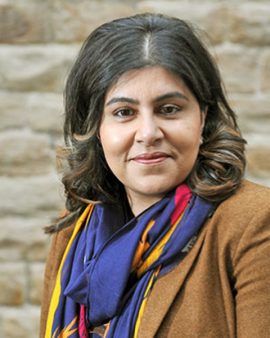
Baroness Sayeeda Warsi

Baroness Sayeeda Warsi: A Trailblazer in British Politics and Advocate for Faith, Justice, and Inclusion

Baroness Sayeeda Warsi is one of the most prominent and influential British Muslim figures of the 21st century. A lawyer, politician, and outspoken public intellectual, she made history as the first Muslim woman to serve in the UK Cabinet and has been a powerful voice on issues of social justice, faith in public life, and foreign policy, particularly concerning the Middle East.

Born on 28 March 1971 in Dewsbury, West Yorkshire, to Pakistani immigrant parents, Sayeeda Warsi grew up in a working-class household that emphasized education, faith, and civic responsibility. Her father ran a successful factory, and her upbringing gave her a strong understanding of both the aspirations and challenges faced by British minority communities. She studied law at the University of Leeds and later qualified as a solicitor, specializing in family law.

Warsi entered politics through the Conservative Party, a path that initially surprised many observers given the party’s limited appeal among ethnic minorities at the time. Her political rise was rapid. In 2007, she was appointed Vice Chairman of the Conservative Party, becoming the first Muslim to hold such a senior role within the party. Her appointment symbolized a significant shift in British politics and signaled an effort to broaden the party’s social and cultural base.

In 2010, following the formation of the Conservative–Liberal Democrat coalition government, Warsi was appointed Minister without Portfolio and made a member of the Cabinet. She later served as Senior Minister of State at the Foreign and Commonwealth Office, with responsibility for faith communities and human rights. In these roles, she worked to promote interfaith dialogue, combat religious discrimination, and strengthen the UK’s engagement with religious leaders globally.

Baroness Warsi gained widespread respect for her principled stance on issues of conscience. In 2014, she resigned from the government over its policy on Gaza, stating that she could no longer support what she described as a “morally indefensible” position. Her resignation was rare in modern British politics and underscored her willingness to prioritize ethical conviction over political advancement.

Throughout her career, Warsi has been a strong advocate against Islamophobia and all forms of racism. She has consistently argued that anti-Muslim prejudice has become socially acceptable in parts of British society and politics, calling for greater accountability in media and public discourse. At the same time, she has emphasized the importance of Muslims engaging constructively in democratic life rather than retreating from it.

Beyond politics, Baroness Warsi is an author and public speaker. Her memoir, The Enemy Within, explores identity, faith, and belonging in modern Britain, offering a candid account of her personal journey and political experiences. She continues to write and speak on issues ranging from freedom of religion to international justice and women’s empowerment.

Baroness Sayeeda Warsi remains a defining figure in contemporary British public life—respected for breaking barriers, admired for her moral courage, and influential as a bridge between faith, politics, and principled leadership in a diverse society.


Captain Ibrahim Traoré - selected in the list of  The Most Influential Global Muslims  - 2026

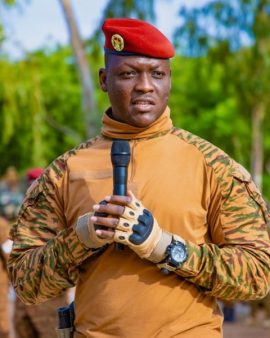
Captain Ibrahim Traoré

Captain Ibrahim Traoré: Interim President of Burkina Faso and a Symbol of a New Generation of African Leadership

Captain Ibrahim Traoré is the Interim President of Burkina Faso, having emerged as one of the youngest heads of state in the world amid a period of profound political instability and security crisis in the West African nation. Rising from the ranks of the military, Traoré has come to symbolize a new generation of African leaders shaped by frustration with prolonged insecurity, weak governance, and continued foreign influence in the Sahel region.

Born in 1988 in Bondokuy, in western Burkina Faso, Ibrahim Traoré grew up in a modest family environment that valued education and discipline. He pursued his early education in Burkina Faso before enrolling at the University of Ouagadougou, where he studied geology. During his student years, Traoré was known for his interest in social justice, national sovereignty, and pan-African ideas, themes that would later define his political outlook.

Traoré joined the Burkinabè Armed Forces and trained as an artillery officer. His military career unfolded against the backdrop of Burkina Faso’s worsening security situation, marked by the rapid expansion of armed insurgent groups linked to al-Qaeda and the Islamic State. He served in several counterinsurgency operations, particularly in the country’s conflict-ridden northern and eastern regions. First-hand exposure to the realities faced by soldiers—poor equipment, low morale, and mounting casualties—deeply shaped his views on leadership and national defense.

In September 2022, Captain Traoré came to national prominence when he led a military takeover that ousted Lieutenant Colonel Paul-Henri Sandaogo Damiba, who himself had seized power earlier that year. The coup reflected growing dissatisfaction within the armed forces and among the public over the failure to stem jihadist violence, which had displaced millions and claimed thousands of lives. Following the takeover, Traoré was appointed Interim President, pledging to restore security and guide the country toward stability.

As interim leader, Traoré positioned himself as a nationalist and sovereigntist, emphasizing Burkina Faso’s right to determine its own path free from external pressure. He adopted strong rhetoric against what he described as ineffective foreign military involvement, particularly from former colonial power France. Under his leadership, Burkina Faso distanced itself from French forces and sought new strategic partnerships, notably strengthening ties with Russia and aligning more closely with fellow military-led governments in Mali and Niger.

Domestically, Captain Traoré has focused on mobilizing the population for national defense, expanding the Volunteers for the Defense of the Homeland (VDP) program and calling for unity in the face of existential threats. While his supporters view him as a decisive and courageous leader willing to confront entrenched problems, critics have raised concerns about human rights, press freedoms, and the long-term implications of prolonged military rule.

Despite these challenges, Ibrahim Traoré remains a popular figure among many young Burkinabè and across parts of Africa, where he is seen as echoing the legacy of revolutionary leader Thomas Sankara. As Interim President, Traoré’s leadership represents both the hopes and uncertainties of a nation striving to reclaim security, dignity, and sovereignty in one of the world’s most volatile regions.


Datuk Seri Abdul Hadi Awang - selected in the list of  The Most Influential Global Muslims  - 2026

Datuk Seri Abdul Hadi Awang

Datuk Seri Abdul Hadi Awang: Malaysia’s Islamic Scholar and Political Leader

Datuk Seri Abdul Hadi Awang, born 20 October 1947 in Marang, Terengganu, Malaysia, is one of Malaysia’s most prominent Islamic scholars and political figures. As the President of the Malaysian Islamic Party (Parti Islam Se-Malaysia, PAS) and a former Minister of Religious Affairs, Abdul Hadi has played a pivotal role in shaping Malaysia’s Islamic political discourse and advocating for policies that integrate Islamic principles with governance. His career reflects a blend of religious scholarship, political activism, and national influence that has made him a key figure in Malaysian public life.

Abdul Hadi’s early life was rooted in religious education. He memorized the Quran at a young age and pursued advanced studies in Islamic theology, jurisprudence (fiqh), and Arabic language. He furthered his education at Al-Azhar University in Cairo, Egypt, where he obtained a degree in Islamic studies. This rigorous academic foundation established him as a respected scholar, providing the credentials and authority that would underpin both his religious and political career.

Returning to Malaysia, Abdul Hadi became actively involved in the Islamic movement and politics. He joined PAS, a party advocating for Islamic values within Malaysia’s pluralistic society, and quickly rose through the ranks due to his scholarship, oratory skills, and organizational acumen. In 2002, he was elected President of PAS, a position he has held for over two decades, making him one of the longest-serving leaders of a major political party in Malaysia. Under his leadership, PAS has continued to influence national debates on morality, governance, and the role of Islam in public life.

In addition to his political leadership, Abdul Hadi served as a Member of Parliament for several decades and as Minister of Religious Affairs from 1999 to 2004. In these roles, he championed policies promoting Islamic education, ethical governance, and interfaith harmony, while also advocating for legislation aligned with Sharia principles in civil matters. He is known for his persuasive speeches and writings, which seek to reconcile traditional Islamic teachings with contemporary societal challenges.

A notable aspect of Abdul Hadi’s leadership is his emphasis on intellectual and moral development. He has authored numerous books, articles, and speeches on Islamic jurisprudence, spirituality, and ethics, aiming to guide both Muslim communities and policymakers. His vision stresses moderation, moral integrity, and the centrality of faith in personal and public life.

Abdul Hadi’s political career, however, has not been without controversy. His advocacy for implementing Islamic legal principles in Malaysia has occasionally sparked debates in the country’s multi-ethnic, multi-religious context. Critics argue that some positions challenge Malaysia’s secular legal framework, while supporters view him as a principled leader committed to the moral and spiritual welfare of Muslims.

Beyond politics, Abdul Hadi is widely respected for his role in fostering Islamic scholarship, education, and community development. He has nurtured generations of religious scholars, activists, and policymakers, ensuring the continuity of informed Islamic leadership in Malaysia.

Datuk Seri Abdul Hadi Awang remains a central figure in Malaysia’s religious and political landscape. His life exemplifies the integration of scholarship, leadership, and social responsibility, reflecting a vision of Islam that seeks to shape both personal morality and national governance while navigating the complexities of a diverse and modern society.


Dr Timothy Winter Sheikh Abdal Hakim Murad - selected in the list of  The Most Influential Global Muslims  - 2026

Dr Timothy Winter Sheikh Abdal Hakim Murad

Dr Timothy Winter (Sheikh Abdal Hakim Murad): A Bridge Between Classical Islam and the Modern West

Dr Timothy Winter, widely known by his Muslim name Sheikh Abdal Hakim Murad, is one of the most influential Islamic scholars in the Western world. A British academic, theologian, and public intellectual, he is renowned for articulating a deeply rooted, classical understanding of Islam while engaging thoughtfully with modernity, secularism, and Western intellectual traditions. His work has made him a key voice in contemporary discussions on faith, ethics, and civilization.

Born in 1960 in London, Timothy Winter was educated at Westminster School and later at Pembroke College, Cambridge, where he studied Arabic and Middle Eastern Studies. His early academic interests were shaped by a strong engagement with Western philosophy, literature, and theology. A transformative period of study in the Middle East, particularly in Egypt, led him to formally embrace Islam. There, he studied under leading traditional scholars at Al-Azhar and beyond, immersing himself in Islamic theology (aqidah), jurisprudence (fiqh), Qur’anic studies, and Sufism.

Dr Winter is particularly associated with the Sunni orthodox tradition, combining Ash‘ari theology, one of the four classical schools of Islamic law, and a strong grounding in Sufi spirituality. His scholarship emphasizes Islam as a holistic moral and spiritual civilization rather than a politicized ideology. He has consistently critiqued extremism, literalism, and reductionist readings of Islam, arguing that they sever the faith from its ethical, aesthetic, and intellectual heritage.

As a Fellow of Wolfson College and the Shaykh Zayed Lecturer of Islamic Studies at the University of Cambridge, Dr Winter has played a central role in shaping the academic study of Islam in the UK. He is also the founder of the Cambridge Muslim College, an institution established to train Muslim scholars and community leaders who are deeply rooted in the classical Islamic tradition while being fully conversant with Western society. The college reflects his vision of producing leaders capable of thoughtful engagement rather than reactive polemics.

Dr Winter is also widely known for his prolific writings and translations. His translations of classical Islamic texts, as well as his original essays and lectures, have reached a global audience. He frequently addresses themes such as the crisis of modernity, environmental ethics, mental well-being, masculinity, and the spiritual consequences of consumer culture. His ability to draw connections between Islamic metaphysics and Western thinkers—from Shakespeare to Nietzsche—has earned him respect well beyond Muslim circles.

Publicly, Sheikh Abdal Hakim Murad has been a strong advocate for religious coexistence, pluralism, and civic responsibility. He argues that Muslims in the West should be confident, principled citizens who contribute positively to society while remaining faithful to their religious and moral commitments. His calm, intellectually rigorous style stands in contrast to both populist religiosity and confrontational secularism.

In an age marked by polarization and spiritual uncertainty, Dr Timothy Winter represents a rare synthesis: a scholar firmly anchored in Islamic tradition, deeply fluent in Western thought, and committed to restoring religion as a source of wisdom, balance, and compassion in public life.


Dr Imtiaz Ismail Sooliman - selected in the list of  The Most Influential Global Muslims  - 2026

Dr Imtiaz Ismail Sooliman

Dr. Imtiaz Ismail Sooliman: Compassion in Action and the Power of Humanitarian Faith

Dr. Imtiaz Ismail Sooliman stands as one of the most inspiring humanitarian figures of the modern era, a man whose life’s work has been guided by faith, service, and an unshakeable commitment to human dignity. A South African medical doctor by training and a global humanitarian by calling, Dr. Sooliman is best known as the founder and director of Gift of the Givers Foundation, the largest disaster response NGO in Africa and one of the most respected humanitarian organizations in the world.

Born in 1963 in Potchefstroom, South Africa, Dr. Sooliman grew up during the dark years of apartheid—a period that shaped his moral consciousness and sharpened his sensitivity to injustice and suffering. Trained as a medical doctor, he could have pursued a comfortable professional life. Instead, he chose a path defined by sacrifice and service, inspired by the Islamic principle that saving one life is akin to saving all of humanity.

The turning point in his life came in 1992 during the Bosnian war, when he was asked by his spiritual mentor to establish a humanitarian organization that would serve all people, regardless of race, religion, or nationality. From that moment, Gift of the Givers was born—rooted in faith, yet universal in its compassion. What began as a modest initiative soon evolved into a global humanitarian force responding to crises across Africa, the Middle East, Asia, Europe, and the Americas.

Under Dr. Sooliman’s leadership, Gift of the Givers has delivered life-saving aid in some of the world’s most devastating emergencies: famine in Somalia, war in Bosnia and Syria, earthquakes in Turkey and Haiti, floods in Pakistan and South Africa, and humanitarian crises in Gaza, Yemen, and beyond. The organization is known for its rapid response, logistical efficiency, and principled independence—often reaching places where others cannot.

Yet Dr. Sooliman’s vision extends beyond emergency relief. He has consistently emphasized sustainable development, focusing on clean water projects, healthcare, education, food security, and poverty alleviation. Gift of the Givers has installed water systems for millions, built clinics and schools, and empowered communities to rebuild with dignity rather than dependency. For him, true humanitarianism means restoring hope and self-worth alongside physical survival.

Despite international recognition and numerous awards, Dr. Sooliman remains deeply humble and fiercely mission-driven. He is known for his hands-on leadership, frequently visiting disaster zones himself, coordinating operations, and holding his teams to the highest ethical standards. His outspoken advocacy—especially on issues of injustice, occupation, and global inequality—has earned him admiration as well as controversy, but he has never shied away from speaking truth to power.

At the heart of Dr. Sooliman’s work is a profound belief that faith must be lived through action. He often reminds audiences that humanitarian service is not an act of charity, but a responsibility. His leadership reflects moral courage, discipline, and an unwavering refusal to accept indifference in the face of suffering.

Dr. Imtiaz Ismail Sooliman’s life is a testament to what one individual, guided by conscience and compassion, can achieve. In a world fractured by conflict and inequality, he stands as a beacon of hope—proving that humanity, when anchored in values and translated into action, can still prevail.


Dr Muhammad Sulaiman Al Jasser - selected in the list of  The Most Influential Global Muslims  - 2026

Dr Muhammad Sulaiman Al Jasser

Dr. Muhammad Sulaiman Al Jasser: Steering Development Finance with Vision and Discipline

Dr. Muhammad Sulaiman Al Jasser stands among the most respected economic policymakers in the Muslim world, a technocrat whose career bridges national governance and multilateral development. As Chairman and President of the Islamic Development Bank (IsDB) Group, headquartered in Jeddah, he has brought intellectual rigor, fiscal discipline, and a reformist outlook to one of the world’s leading development finance institutions serving Muslim-majority countries.

Born in Saudi Arabia, Dr. Al Jasser’s professional journey reflects a lifelong engagement with economics, public policy, and institutional reform. He earned advanced degrees in economics in the United States, equipping him with a strong analytical foundation that would later define his leadership style. Early in his career, he served in various policy and advisory roles within Saudi Arabia, gaining firsthand experience in macroeconomic management, monetary policy, and public finance.

Dr. Al Jasser rose to national prominence during his tenure as Governor of the Saudi Arabian Monetary Authority (SAMA), the Kingdom’s central bank, where he played a critical role in strengthening financial stability, modernizing regulatory frameworks, and navigating global economic turbulence. He later served as Saudi Arabia’s Minister of Finance, a position in which he was widely regarded for his prudence, clarity of thought, and commitment to long-term fiscal sustainability. These roles established his reputation as a steady hand in moments of uncertainty—an attribute that would prove invaluable in his later multilateral leadership.

In 2021, Dr. Al Jasser was appointed President of the Islamic Development Bank Group, effectively becoming the institution’s chief executive and leading figure. The IsDB, founded in 1975, is a multilateral development bank dedicated to fostering economic development and social progress in its 57 member countries, in accordance with the principles of Islamic finance. Under Dr. Al Jasser’s leadership, the Bank has sought to sharpen its development impact while modernizing its operations to meet contemporary global challenges.

At the helm of the IsDB, Dr. Al Jasser has emphasized results-driven development, innovation, and partnerships. He has championed initiatives focused on poverty alleviation, infrastructure, health, education, food security, and climate resilience—areas of urgent need across the Global South. At the same time, he has pushed for stronger governance, financial sustainability, and accountability within the institution, reinforcing its credibility in international financial markets.

A defining feature of Dr. Al Jasser’s leadership is his belief that development finance must be both ethical and effective. He has consistently highlighted the unique value of Islamic finance as a tool for inclusive growth—one that links finance to real economic activity, risk-sharing, and social responsibility. Under his guidance, the IsDB has expanded innovative instruments that blend Islamic finance with global development best practices.

Colleagues and observers describe Dr. Al Jasser as calm, methodical, and intellectually demanding—a leader who values data, dialogue, and institutional strength over rhetoric. He is not a populist figure, but his influence is profound, shaping policies that affect millions of lives across member countries.

In an era marked by economic shocks, climate stress, and widening inequality, Dr. Muhammad Sulaiman Al Jasser’s stewardship of the Islamic Development Bank represents continuity with purpose. His career embodies the idea that sound economics, ethical finance, and disciplined leadership can work together to advance shared prosperity—making him a central figure in the evolving story of development in the Muslim world.


Dr Shafiqur Rahman - selected in the list of  The Most Influential Global Muslims  - 2026

Dr Shafiqur Rahman

Dr. Shafiqur Rahman: Ameer of Bangladesh Jamaat-e-Islami and Veteran Islamic Political Leader

Dr. Shafiqur Rahman is the Ameer (President) of Bangladesh Jamaat-e-Islami, one of the country’s most prominent Islamist political parties. Known for his long association with the party, organizational discipline, and calm public demeanor, Dr. Rahman represents a generation of Jamaat leaders shaped by decades of political struggle, repression, and ideological commitment in Bangladesh’s turbulent political landscape.

Born in 1958, Dr. Shafiqur Rahman was educated in Bangladesh and trained as a medical doctor, a profession that earned him respect beyond partisan politics. Alongside his medical career, he became actively involved in Islamic student and social movements from an early age, eventually joining Bangladesh Jamaat-e-Islami as a full-time political worker. His background as a professional and his reputation for personal integrity helped him rise steadily through the party’s ranks.

Dr. Rahman served for many years as Secretary General of Bangladesh Jamaat-e-Islami, a role in which he was responsible for organizational management, grassroots coordination, and political strategy. This period coincided with one of the most difficult phases for the party, marked by mass arrests, legal challenges, and the execution or imprisonment of several senior Jamaat leaders following war crimes trials related to the 1971 Liberation War. Throughout this time, Dr. Rahman emerged as a key spokesperson, consistently defending the party’s position while calling for due process, rule of law, and political dialogue.

In 2022, Dr. Shafiqur Rahman was elected Ameer of Bangladesh Jamaat-e-Islami, succeeding a leadership vacuum created by the incarceration and execution of earlier leaders. His election was seen as an effort to consolidate the party, rebuild its organizational structure, and adapt to a rapidly changing political environment. As Ameer, he has emphasized discipline, patience, and non-violent political engagement, while reiterating Jamaat’s ideological commitment to Islam-based social justice and moral governance.

Under his leadership, Jamaat-e-Islami has sought to reassert itself despite remaining formally barred from electoral politics following court rulings that cancelled its registration as a political party. Dr. Rahman has repeatedly called for the restoration of democratic rights, freedom of association, and inclusive politics in Bangladesh. He has also spoken out on issues such as corruption, economic inequality, rising living costs, and what he describes as the shrinking space for dissent.

Dr. Shafiqur Rahman is known for his measured tone compared to more confrontational political figures. Supporters view him as a unifying leader who prioritizes organizational survival and ideological clarity during adversity. Critics, however, continue to associate Jamaat-e-Islami with its controversial past and question its role in Bangladesh’s future political order.

As Ameer, Dr. Shafiqur Rahman faces the challenge of navigating Jamaat-e-Islami through legal constraints, political isolation, and public scrutiny. His leadership will likely be judged by his ability to reposition the party within Bangladesh’s political mainstream while addressing historical controversies and responding to the aspirations of a new generation.


Dr Tahir ul Qadri - selected in the list of  The Most Influential Global Muslims  - 2026

Dr Tahir ul Qadri

Dr. Tahir-ul-Qadri: Islamic Scholar, Reformer, and Thinker

Dr. Tahir-ul-Qadri is a renowned Islamic scholar, theologian, author, and reformist thinker, widely known for his efforts to promote interfaith harmony, counter religious extremism, and articulate Islam’s compatibility with democracy, human rights, and modern civic life. With a career spanning several decades, he has emerged as one of the most internationally recognized Muslim intellectuals from South Asia.

Born on 19 February 1951 in Jhang, Punjab, Pakistan, Tahir-ul-Qadri received a strong religious and academic foundation from an early age. He pursued higher education in Pakistan, earning a PhD in Islamic Law (Fiqh) from the University of the Punjab, Lahore. His academic training combined classical Islamic sciences—Qur’an, Hadith, jurisprudence, and theology—with modern legal and constitutional studies, shaping his distinctive approach to religious scholarship.

In 1981, Dr. Tahir-ul-Qadri founded Minhaj-ul-Quran International (MQI), a global Islamic organization dedicated to education, social welfare, and spiritual reform. Headquartered in Lahore, MQI has expanded to more than 90 countries, running schools, colleges, research institutes, and welfare programs. Through MQI, Qadri sought to revive Islamic scholarship while countering sectarianism and radical ideologies.

Dr. Qadri gained international prominence for his strong and unequivocal stance against terrorism and violent extremism. In 2010, he issued a comprehensive fatwa against suicide bombings and terrorism, declaring them categorically forbidden (haram) in Islam. The document, running into hundreds of pages, was widely circulated and cited by scholars, governments, and peace activists as a landmark religious rebuttal to extremist narratives.

A prolific writer and speaker, Dr. Tahir-ul-Qadri has authored hundreds of books on Islamic theology, law, spirituality, and contemporary issues. His lectures—delivered in Urdu, Arabic, and English—have reached millions through television, digital media, and large public gatherings. His teachings emphasize love of the Prophet Muhammad (peace be upon him), ethical conduct, social justice, and peaceful coexistence.

In addition to his scholarly work, Dr. Qadri has played an active role in public life and politics. He founded the Pakistan Awami Tehreek (PAT) in 1989, advocating constitutional reform, rule of law, and social justice. Although his political interventions—such as mass protests and calls for systemic reform—have generated controversy, supporters view them as principled efforts to challenge corruption and authoritarianism, while critics question their practical outcomes.

Internationally, Dr. Tahir-ul-Qadri has engaged with Western governments, parliaments, universities, and interfaith forums, presenting Islam as a faith rooted in mercy, knowledge, and pluralism. He has been particularly influential among Muslim communities in Europe and North America, where his work focuses on integration, civic responsibility, and rejection of extremism.

Dr. Tahir-ul-Qadri remains a polarizing yet influential figure—respected by followers as a courageous reformer and scholar, and debated by critics for his political activism. His enduring legacy lies in his intellectual challenge to extremism and his efforts to present Islam as a force for peace, spirituality, and constructive engagement in the modern world.


Dr Zakir Naik - selected in the list of  The Most Influential Global Muslims  - 2026

Dr Zakir Naik

Dr. Zakir Naik: Islamic Preacher and Prominent Figure in Global Da‘wah

Dr. Zakir Abdul Karim Naik is a well-known Islamic preacher and comparative religion speaker, recognized internationally for his public lectures, debates, and television programs focused on Islam and interfaith discourse. Admired by supporters for his command over religious texts and criticized by detractors for controversial statements and legal issues, Dr. Naik remains one of the most debated religious figures from South Asia.

Born on 18 October 1965 in Mumbai, India, Zakir Naik was trained initially as a medical doctor, earning an MBBS degree. Early in his career, however, he chose to leave medical practice and devote himself full-time to Islamic preaching (da‘wah). He cites the influence of South African scholar Ahmed Deedat as pivotal in shaping his interest in comparative religion and public debate.

In 1991, Dr. Naik founded the Islamic Research Foundation (IRF) in Mumbai, aiming to promote Islamic education and outreach. He later launched Peace TV in 2006, an English-language Islamic television channel that expanded rapidly to include broadcasts in Urdu, Bangla, and other languages, reaching audiences across Asia, the Middle East, Europe, and Africa. Through Peace TV and large public lectures, Dr. Naik became known for his rapid recall of verses from the Qur’an, the Bible, the Bhagavad Gita, and other religious texts.

Dr. Naik’s preaching style emphasizes comparative religion, arguing for Islam through textual references and logical reasoning. His lectures often focus on monotheism, prophethood, science and Islam, and misconceptions about Islamic teachings. He has addressed massive gatherings in India, Malaysia, the Gulf, and Western countries, gaining a substantial following, particularly among young Muslims.

At the same time, Dr. Zakir Naik has been a highly controversial figure. Several of his public statements have drawn criticism from religious leaders, civil society groups, and governments, who accuse him of promoting sectarian views or inflammatory rhetoric. Following a series of controversies in India, authorities launched investigations into the Islamic Research Foundation on allegations related to hate speech and financial irregularities. In 2016, Peace TV was taken off air in India, and the IRF was banned under Indian law.

Dr. Naik left India and has since been based primarily in Malaysia, where he was granted permanent residency. Indian authorities have sought his extradition, which he has consistently contested, maintaining that the allegations against him are politically motivated and that he advocates peace and non-violence. The legal proceedings surrounding him continue to shape public perception of his work.

Despite restrictions in some countries, Dr. Zakir Naik remains influential through online platforms and international lectures. Supporters view him as a powerful defender of Islam in interfaith debates, while critics argue that his approach oversimplifies complex theological issues and fuels polarization.

Dr. Zakir Naik’s legacy is thus deeply contested. He stands as a symbol of the reach of modern media-driven religious preaching—illustrating both its ability to mobilize global audiences and the controversies that arise when faith, politics, and public discourse intersect.


Field Marshal Syed Asim Munir Ahmed Shah - selected in the list of  The Most Influential Global Muslims  - 2026

Field Marshal Syed Asim Munir Ahmed Shah

Field Marshal Syed Asim Munir Ahmed Shah: Pakistan’s Most Powerful Military Leader in a New Era of Civil–Military Relations

Field Marshal Syed Asim Munir Ahmed Shah is one of the most consequential figures in Pakistan’s military history, embodying the army’s enduring influence over the country’s security, politics, and regional posture. A career infantry officer with deep intelligence experience, Munir rose steadily through the ranks to become Chief of Army Staff (COAS) in November 2022 and was later elevated to the rare five-star rank of Field Marshal, only the second officer in Pakistan to receive this honour after Ayub Khan.

Born in Rawalpindi, the heart of Pakistan’s military establishment, Asim Munir belongs to a family known for religious learning. He is widely described as a Hafiz-e-Qur’an, a distinction that has often been highlighted by his supporters as reflecting personal discipline and moral grounding. He joined the Pakistan Army through the Officers Training School, Mangla, in 1986, graduating with the Sword of Honour, awarded to the best cadet of his course. He was commissioned into the Frontier Force Regiment, one of the army’s most decorated infantry units.

Munir’s career combined conventional command roles with some of the most sensitive intelligence assignments in the country. He commanded troops in challenging operational environments, including Pakistan’s northern and eastern sectors, and later served in important staff appointments at General Headquarters. His rise was marked by appointments as Director-General of Military Intelligence and subsequently Director-General of the Inter-Services Intelligence (ISI)—a rare trajectory that placed him at the centre of Pakistan’s internal security, counter-terrorism operations, and regional intelligence assessments.

After commanding XXX Corps, one of the army’s key strike formations, Munir was appointed Chief of Army Staff at a time of acute political instability, economic crisis, and strained civil–military relations. His tenure as army chief has been defined by a forceful reassertion of the military’s authority, a declared policy of “institutional discipline,” and an uncompromising stance toward political dissent perceived as threatening to the armed forces’ cohesion and prestige.

Munir’s elevation to Field Marshal came amid heightened regional tensions and was presented by the state as recognition of exceptional leadership during a period of military confrontation and strategic uncertainty. The promotion symbolised not merely personal achievement but also the centrality of the army in Pakistan’s national narrative. Around the same time, his role expanded further with the creation of a unified command structure, placing unprecedented authority in the hands of a single military leader.

Supporters portray Field Marshal Munir as a professional soldier committed to stability, national security, and institutional strength, crediting him with restoring discipline within the ranks and projecting resolve externally. Critics, however, argue that his rise represents the deepening of military dominance over civilian politics, raising concerns about democratic backsliding, civil liberties, and the shrinking space for dissent.

Whether viewed as a stabilising force or a symbol of over-centralised power, Field Marshal Syed Asim Munir Ahmed Shah stands as a defining figure of contemporary Pakistan—one whose legacy will shape the country’s civil–military balance and regional posture for years to come.


Grand Ayatollah Hajj Sayyid Ali Khamenei - selected in the list of  The Most Influential Global Muslims  - 2026

Grand Ayatollah Hajj Sayyid Ali Khamenei

Grand Ayatollah Hajj Sayyid Ali Khamenei: The Ideologue and Guardian of Iran’s Islamic Revolution

Grand Ayatollah Hajj Sayyid Ali Khamenei, the Supreme Leader of the Islamic Republic of Iran, stands as one of the most consequential political and religious figures in the contemporary Muslim world. Born on July 17, 1939, in Mashhad, a historic center of Shia scholarship, he was raised in a deeply religious family. His father, Ayatollah Javad Hosseini Khamenei, was a respected cleric known for his modest lifestyle, discipline, and scholarship. From an early age, Sayyid Ali Khamenei immersed himself in Islamic sciences, studying in the seminaries of Mashhad, Najaf, and Qom under prominent scholars including Ayatollah Borujerdi, Imam Khomeini, and Allama Tabataba’i.

A committed activist even as a young cleric, Khamenei took part in the resistance against the Pahlavi monarchy. He was imprisoned and tortured multiple times for delivering sermons against tyranny, Western domination, and cultural alienation. His association with Imam Khomeini marked him as one of the influential pillars of the revolutionary movement that culminated in the 1979 Islamic Revolution.

Following the revolution, Khamenei played major roles in shaping the new Islamic Republic. He served as Tehran’s Friday prayer leader, a member of parliament, the secretary of defense during the early years of the Iran–Iraq War, and later as the President of Iran from 1981 to 1989. His presidency coincided with one of the most challenging periods for the nation—war, reconstruction, and the consolidation of the revolutionary state. Known for his disciplined work ethic, firm principles, and intellectual rigor, he worked closely with Ayatollah Khomeini to ensure the stability and continuity of the Islamic system.

After the passing of Imam Khomeini in 1989, Sayyid Ali Khamenei was elected the Supreme Leader, becoming the highest authority in Iran’s political and religious hierarchy. As Supreme Leader, he is responsible for guiding the country’s strategic direction, overseeing defense, foreign policy, and the functioning of key state institutions. Over the past three decades, he has positioned Iran as a regional powerhouse, balancing ideological steadfastness with geopolitical pragmatism.

Under his leadership, Iran has expanded its influence across West Asia, supporting resistance movements and maintaining a foreign policy centered on independence from Western hegemony. Domestically, he has emphasized self-sufficiency, cultural identity, technological progress, and Islamic ethics. Ayatollah Khamenei has been a strong advocate of scientific advancement, particularly in fields like nuclear energy, medicine, and military technology, encouraging Iranian youth to innovate despite sanctions and isolation.

Beyond politics, he is also known for his intellectual contributions. A scholar of Qur’anic exegesis, Islamic jurisprudence, literature, and philosophy, he has authored numerous works and delivered hundreds of lectures. His deep interest in poetry and culture reflects a softer dimension of his personality, often overshadowed by geopolitical narratives.

Today, Grand Ayatollah Khamenei remains a pivotal figure in shaping the ideological, political, and strategic trajectory of the Islamic Republic. For supporters, he represents steadfast resistance, Islamic authenticity, and national dignity. His leadership continues to influence not only Iran but also the broader dynamics of the Muslim world.


Gus Yahya Cholil Staquf - selected in the list of  The Most Influential Global Muslims  - 2026

Gus Yahya Cholil Staquf

Gus Yahya Cholil Staquf: Reformist Islamic Leader and Chairman of Nahdlatul Ulama

Kyai Haji Yahya Cholil Staquf (born 16 February 1966), widely known as Gus Yahya, is a prominent Indonesian Islamic cleric, intellectual, and political figure who currently serves as Chairman of the Executive Council of Nahdlatul Ulama (NU), the largest Muslim organization in Indonesia and one of the most influential Islamic bodies in the world. He assumed this position in December 2021 after winning a closely watched leadership contest at the 34th NU Conference (Muktamar NU) held at Lampung University, Bandar Lampung. In that election, Gus Yahya defeated the incumbent chairman Said Aqil Siradj, securing 337 votes to Siradj’s 210, marking a significant leadership transition within NU.

Gus Yahya’s rise to national prominence has been shaped by a long engagement with both religious institutions and state affairs. Between 1999 and 2001, he served as spokesperson to President Abdurrahman Wahid (Gus Dur), Indonesia’s first democratically elected president and a towering figure within NU. This role placed Yahya at the heart of Indonesia’s post–New Order political transition and exposed him to high-level policymaking and international diplomacy. In recognition of his experience and standing, President Joko Widodo appointed him on 31 May 2018 as a member of the Presidential Advisory Council, replacing the late Hasyim Muzadi.

Politically, Yahya was previously associated with the National Awakening Party (PKB), a party closely linked to NU. He was at one time widely predicted to become Minister of Religious Affairs in the Onward Indonesia Cabinet. Ultimately, however, President Jokowi appointed his younger brother, Yaqut Cholil Qoumas, to that influential post—making the Cholil family one of the most prominent clerical-political families in contemporary Indonesia.

Beyond formal politics, Gus Yahya has been active in grassroots and intellectual community initiatives. In 2009, he founded the “Community of Terong Gosong”, an informal discussion forum and civic platform, and later served as chairman of its supervisory board. The community reflects his interest in open dialogue, cultural critique, and social engagement beyond traditional religious spaces.

Born in Leteh village, Rembang, Central Java, Gus Yahya is the eldest son of Muhammad Cholil Bisri, a respected Islamic scholar and former Deputy Speaker of the People’s Consultative Assembly. His educational background combines traditional Islamic learning and modern social sciences. He studied at Madrasah Al-Munawwir Krapyak in Yogyakarta, one of Indonesia’s leading pesantren, and later enrolled in sociology at Gadjah Mada University, although he did not complete his degree. During this period, he was active in the Muslim Students’ Association (HMI) and NU, laying the foundation for his future leadership.

Within NU, Yahya steadily rose through the ranks, serving as Katib Aam (General Secretary of the Supreme Council) from 2015 to 2021 before being elected chairman. He has also authored several books, including The Terong Gosong (2011), Terong Gosong Reloaded (2016), and PBNU: Perjuangan Besar Nahdlatul Ulama (2020), which reflect his thinking on religion, organization, and society.

Gus Yahya has not been without controversy. His 2018 visit to Israel as a guest of the American Jewish Committee sparked widespread debate in Indonesia, where public support for Palestine is strong and diplomatic ties with Israel do not exist. Critics warned of potential unrest, while supporters argued for dialogue and engagement. The episode underscored Gus Yahya’s reputation as a bold and unconventional leader, willing to challenge taboos in pursuit of what he views as NU’s broader moral and global mission.


Hafiz Naeem ur Rehman - selected in the list of  The Most Influential Global Muslims  - 2026

Hafiz Naeem ur Rehman

Hafiz Naeem ur Rehman: Engineer, Organizer, and the New Face of Jamaat-e-Islami Pakistan

Hafiz Naeem ur Rehman is a prominent Pakistani political leader known for his grassroots activism, organizational discipline, and articulate advocacy of Islamic social justice. A trained civil engineer by profession, he rose through decades of student politics, civic engagement, and party organization to become the Ameer (President) of Jamaat-e-Islami Pakistan, one of the country’s oldest and most structured religious-political parties.

Born in Pakistan, Hafiz Naeem ur Rehman pursued civil engineering, a background that shaped his methodical and problem-solving approach to public life. During his student years, he became actively involved in Islami Jamiat-e-Talaba (IJT), the student wing of Jamaat-e-Islami. Like many leaders of the party, his political formation was rooted in campus activism, intellectual debate, and organizational work rather than dynastic politics.

Over the years, Hafiz Naeem emerged as a committed party organizer with a strong presence at the grassroots level. He gained national recognition during his tenure as Ameer of Jamaat-e-Islami Karachi, Pakistan’s largest and most complex metropolis. In Karachi, he became known for vocal campaigns on civic issues such as water shortages, electricity tariffs, urban governance, corruption, and the rights of ordinary citizens. His leadership style emphasized street-level mobilization combined with policy-based critique, allowing Jamaat-e-Islami to reclaim political relevance in a city dominated by ethnic and populist parties.

Hafiz Naeem’s public profile rose sharply during mass protests and sit-ins against inflated utility bills and poor municipal services. Unlike many traditional politicians, he positioned himself as a representative of the urban middle and lower-middle classes, framing economic injustice as both a governance failure and a moral issue. His speeches often blend religious values with constitutional rights, stressing accountability, rule of law, and social welfare.

In 2024, Hafiz Naeem ur Rehman was elected Ameer of Jamaat-e-Islami Pakistan, succeeding Sirajul Haq. His elevation marked a generational and stylistic shift within the party—from a primarily rural and Khyber Pakhtunkhwa-focused leadership to a more urban, issues-driven orientation. As Ameer, he has sought to reposition Jamaat-e-Islami as a principled opposition force addressing inflation, inequality, and governance failures while maintaining the party’s ideological foundations rooted in the thought of Abul A‘la Maududi.

Ideologically, Hafiz Naeem advocates an Islamic welfare state grounded in social justice, ethical governance, and economic fairness. He has been critical of elite capture of the economy, military-civil imbalance, and what he describes as externally driven economic policies that burden ordinary Pakistanis. At the same time, he emphasizes peaceful political struggle, constitutionalism, and democratic engagement.

Despite leading a religious party, Hafiz Naeem is often described as pragmatic and accessible, avoiding overt sectarian rhetoric. His engineering background, combined with long organizational experience, contributes to a leadership style that prioritizes structure, data, and disciplined activism.

As Pakistan faces deep economic stress and political polarization, Hafiz Naeem ur Rehman represents Jamaat-e-Islami’s attempt to reassert itself as a moral, organized, and socially responsive political force—bridging ideology with everyday concerns of governance and public welfare.


HH Sheikha Moza bint Nasser Al Missned - selected in the list of  The Most Influential Global Muslims  - 2026

HH Sheikha Moza bint Nasser Al Missned

HH Sheikha Moza bint Nasser Al Missned: A Visionary Architect of Education, Dignity, and Global Hope

Her Highness Sheikha Moza bint Nasser Al Missned stands as one of the most influential and inspiring women of the modern Muslim world—a leader whose vision has transformed education, social development, and human dignity not only in Qatar, but far beyond its borders. Known for her elegance, intellect, and unwavering commitment to knowledge, Sheikha Moza has reshaped the meaning of leadership by placing human development at the heart of national and global progress.

Born in 1959, Sheikha Moza’s life has been defined by resilience and purpose. Her early experiences instilled in her a deep awareness of justice, identity, and the transformative power of education. She pursued higher studies at Qatar University, graduating with a degree in sociology, a discipline that would later inform her holistic approach to societal development—one that connects education, culture, and opportunity.

As Chairperson of the Qatar Foundation for Education, Science and Community Development, founded in 1995, Sheikha Moza has been the driving force behind one of the most ambitious educational initiatives in the world. Under her leadership, Education City in Doha emerged as a global hub of learning, hosting branch campuses of leading international universities and fostering cutting-edge research. Her vision was simple yet revolutionary: to empower future generations through access to world-class education while remaining deeply rooted in Arab and Islamic values.

Sheikha Moza’s influence extends well beyond Qatar. Through her international advocacy, she has become a global champion for education as a fundamental human right. As a former UNESCO Special Envoy for Basic and Higher Education, she consistently highlighted the plight of marginalized children—particularly those affected by conflict, poverty, and displacement. Her work underscores a powerful belief: that education is the most effective tool against extremism, inequality, and despair.

In addition to education, Sheikha Moza has been a tireless advocate for social justice, family cohesion, and women’s empowerment. She has redefined the narrative around Muslim women, presenting a model of leadership that harmonizes faith, cultural identity, and modernity. Her presence on global platforms—always dignified, confident, and unapologetically authentic—has challenged stereotypes and inspired millions of women across the Muslim world to aspire, lead, and innovate.

Through initiatives such as Silatech, she has addressed youth unemployment by promoting entrepreneurship and economic inclusion across the Arab world. Her focus on youth reflects a forward-looking philosophy: investing in young people is not charity, but a strategic imperative for peace and prosperity.

Despite her global stature, Sheikha Moza is widely admired for her humility and consistency of purpose. She does not pursue influence for its own sake; rather, she uses it to amplify the voices of the vulnerable and to advocate for long-term, sustainable change. Her leadership is marked by patience, foresight, and moral clarity—qualities that have earned her respect across cultures and continents.

HH Sheikha Moza bint Nasser Al Missned represents a rare convergence of vision and action. In an era of uncertainty, she stands as a beacon of hope, demonstrating that true progress is built not merely through wealth or power, but through knowledge, compassion, and the courage to imagine a better future for all.


Ilham Aliyev - selected in the list of  The Most Influential Global Muslims  - 2026

Ilham Aliyev

Ilham Aliyev: President of Azerbaijan and Architect of a Modern Energy-Driven State

Ilham Heydar oglu Aliyev is the President of the Republic of Azerbaijan and one of the most influential political figures in the South Caucasus. In office since 2003, he has played a central role in shaping Azerbaijan’s political stability, economic growth, and regional standing, particularly through energy diplomacy and the country’s strategic partnerships with Europe and Asia.

Born on 24 December 1961 in Baku, Ilham Aliyev is the son of Heydar Aliyev, the former President of Azerbaijan and a dominant figure in the country’s post-Soviet political history. Ilham Aliyev received his early education in Baku before pursuing higher studies at the Moscow State Institute of International Relations (MGIMO), one of the Soviet Union’s most prestigious institutions. He earned a doctorate in history and later served as a lecturer, gaining early exposure to international affairs and diplomacy.

Aliyev’s political career began in the 1990s, initially through Azerbaijan’s energy sector, which would become a cornerstone of his leadership. In 1994, he became vice-president of the State Oil Company of Azerbaijan Republic (SOCAR), and later its first vice-president. During this period, he was closely involved in negotiating major oil and gas agreements with Western energy companies, including the landmark “Contract of the Century,” which integrated Azerbaijan into global energy markets.

In 2003, Ilham Aliyev was elected President of Azerbaijan following the death of his father. His presidency has been marked by a strong emphasis on economic modernization, infrastructure development, and diversification of the economy beyond oil and gas. Under his leadership, Azerbaijan invested heavily in transportation corridors, urban development, education, and digital governance, transforming Baku into a modern regional hub.

Energy diplomacy has remained central to Aliyev’s international strategy. Projects such as the Baku–Tbilisi–Ceyhan oil pipeline, the Southern Gas Corridor, and the Trans-Anatolian and Trans-Adriatic pipelines have enhanced Azerbaijan’s role as a reliable energy supplier to Europe, strengthening the country’s geopolitical relevance and strategic partnerships.

One of the defining moments of Aliyev’s presidency came in 2020 during the Nagorno-Karabakh conflict. Azerbaijan regained control over significant territories lost in the early 1990s, a development that dramatically reshaped the regional balance and boosted Aliyev’s domestic standing. Since then, his government has focused on reconstruction, resettlement, and integration of the reclaimed areas.

Ilham Aliyev’s leadership style is often described as centralized and assertive, with strong state control over political life. While supporters credit him with stability, development, and restored territorial integrity, critics raise concerns over political freedoms, media independence, and human rights.

As Azerbaijan continues to navigate complex regional dynamics involving Russia, Turkey, Iran, and the European Union, Ilham Aliyev remains a pivotal figure—steering the country through energy diplomacy, post-conflict reconstruction, and efforts to consolidate Azerbaijan’s position as a key Eurasian state.


Ilham Tohti - selected in the list of  The Most Influential Global Muslims  - 2026

Ilham Tohti

Ilham Tohti: Uyghur Economist, Scholar, and Voice for Dialogue and Human Rights

Ilham Tohti is a highly respected Uyghur economist, academic, and public intellectual from the Xinjiang Uyghur Autonomous Region of China. Born on 25 October 1969 in Artush (Artux), Xinjiang, he became internationally known not only for his scholarly work but also for his courageous advocacy on behalf of the Uyghur ethnic minority and his commitment to peaceful dialogue and understanding between ethnic groups in China. 

Tohti’s academic journey began with traditional higher education in China. He earned degrees in economics from Northeast Normal University and then from the Minzu University of China (formerly Central Nationalities University) in Beijing. After completing his studies, he joined the faculty of Minzu University, where he taught economics and conducted research on issues affecting ethnic minorities, particularly the socio economic conditions and relations between Uyghurs and Han Chinese.

Throughout the 1990s and early 2000s, Tohti became known as one of the few influential Uyghur voices engaging seriously with China’s ethnic policies. Rather than advocate separatism, he consistently emphasized the need for mutual understanding, legal rights, and respectful coexistence between Uighurs and the Han majority. His academic writings and public lectures focused on economic disparities, cultural differences, and the importance of implementing China’s own regional autonomy laws to protect minority rights.

In 2006, Tohti founded Uyghur Online, a Chinese language website designed to foster dialogue and understanding between Uyghurs and Han Chinese by presenting researched commentary on ethnic issues and social conditions. The platform became widely read but was repeatedly shut down by Chinese authorities, who accused it of links to “extremists.” 

Tohti’s growing prominence and critical engagement with government policies led to increasing scrutiny by authorities. He was first detained temporarily in 2009 after ethnic riots in Ürümqi, and then again in January 2014. In September 2014, following a two day trial widely condemned by international rights groups, he was convicted on charges of “separatism” and sentenced to life imprisonment, along with the freezing of his assets. Many human rights organizations have denounced the trial as unfair and politically motivated. 

Despite his imprisonment, Tohti’s work has been recognized globally. He has received multiple major human rights awards, including the PEN/Barbara Goldsmith Freedom to Write Award (2014), the Martin Ennals Award for Human Rights Defenders (2016), and the Sakharov Prize for Freedom of Thought from the European Parliament (2019). These honors reflect his steadfast commitment to nonviolent dialogue and human rights, even under extreme repression. 

Tohti remains a symbol of peaceful resistance and intellectual courage. His life and work highlight the broader struggles of the Uyghur people within China’s political landscape, and he continues to be a focal point for international calls for justice, autonomy, and respect for human rights in Xinjiang.


Imran Khan - selected in the list of  The Most Influential Global Muslims  - 2026

Imran Khan

Imran Khan: From Cricketing Icon to Jailed Prime Minister in Pakistan’s Deepening Political Crisis

Imran Khan (born 5 October 1952) is a Pakistani politician, former international cricketer, and philanthropist who served as the 22nd Prime Minister of Pakistan from August 2018 until his removal through a parliamentary no-confidence vote in April 2022. Once celebrated as a national sports icon and reformist outsider, Khan’s political career has been marked by mass popularity, polarising leadership, and a dramatic fall from power that culminated in imprisonment.

Born in Lahore to a well-off Pashtun family, Imran Khan was educated at Aitchison College before studying philosophy, politics, and economics at Keble College, Oxford. He rose to global fame as one of Pakistan’s greatest cricketers, captaining the national team to victory in the 1992 Cricket World Cup. His sporting success made him a household name and laid the foundation for his later political appeal.

After retiring from cricket, Khan turned to philanthropy, founding the Shaukat Khanum Memorial Cancer Hospital & Research Centre in Lahore in 1994 in memory of his mother. The hospital, built largely through public donations, enhanced his reputation as a figure committed to public service. In 1996, he launched the Pakistan Tehreek-e-Insaf (PTI), positioning it as an anti-corruption, reformist alternative to Pakistan’s entrenched political elite.

For more than a decade, PTI remained on the margins of politics. Khan’s breakthrough came in the early 2010s, when his populist rhetoric, opposition to US military involvement in the region, and promise of a “Naya Pakistan” resonated with urban middle-class voters and youth. In the 2018 general elections, PTI emerged as the largest party in parliament, and Khan became prime minister.

As prime minister, Khan pledged to combat corruption, reform governance, and establish an Islamic welfare state inspired by Medina. His government launched social protection initiatives such as the Ehsaas Programme, expanded health insurance schemes, and pursued tax reforms. However, his tenure was also marked by economic instability, rising inflation, strained relations with opposition parties, and criticism over press freedom and civil-military relations. Foreign policy under Khan sought closer ties with China, improved relations with Muslim-majority countries, and a more independent stance toward the United States.

In April 2022, Khan was ousted through a vote of no confidence, becoming the first Pakistani prime minister to be removed in this manner. He alleged a foreign-backed conspiracy behind his removal—claims denied by both Pakistan’s military leadership and the United States. Following his ouster, Khan launched a nationwide protest movement demanding early elections, significantly intensifying political polarisation.

Khan’s legal troubles escalated after his removal from office. He faced multiple cases, including corruption, contempt of court, and charges related to state gifts and classified documents. In 2023 and 2024, he was arrested, convicted in several cases, and imprisoned, effectively sidelining him from active politics. His detention and the crackdown on PTI supporters drew criticism from human rights organisations and deepened Pakistan’s political crisis.

Imran Khan remains one of the most influential and divisive figures in Pakistan’s contemporary history. Supporters view him as a principled leader persecuted for challenging entrenched power structures, while critics argue that his confrontational style weakened democratic institutions. Despite imprisonment, his political legacy and popular appeal continue to shape Pakistan’s volatile political landscape.


Kais Saied - selected in the list of  The Most Influential Global Muslims  - 2026

Kais Saied

Kais Saied: From Constitutional Scholar to Tunisia’s Powerful and Polarizing President

Kais Saied(born 22 February 1958) is a Tunisian politician, constitutional jurist, and former academic who has served as the fifth President of Tunisia since October 2019. Known for his austere personal style, legalistic worldview, and populist rhetoric, Saied rose from relative political obscurity to become one of the most consequential—and controversial—figures in Tunisia’s post-revolutionary history.

Born in BéniKhiar in the Cap Bon region, Saied is the son of Moncef Saied and ZakiaBellagha. He comes from an educated family; his paternal uncle, Hicham Saied, was Tunisia’s first pediatric surgeon and gained national recognition in the 1970s for separating conjoined twins. Saied completed his secondary education at the prestigious Sadiki College before pursuing higher studies in law. From an early stage, he demonstrated a strong interest in constitutional theory and public law.

A jurist by training, Saied built a long academic career as a specialist in constitutional law. He served as secretary-general of the Tunisian Association of Constitutional Law from 1990 to 1995 and later as its vice-president, eventually becoming its president in 1995—a position he held until 2019. He directed public law departments at the University of Sousse and later at the University of Carthage, where he taught until his retirement in 2018. Beyond academia, Saied worked as an expert for the Arab League, the Arab Institute for Human Rights, and played a role in revising Tunisia’s 2014 Constitution following the Arab Spring.

Saied’s political ascent began gradually after 2013, when he participated in youth-oriented political forums and public debates. In 2016, supporters established the Mouassissoun movement to promote his ideas, though he remained formally independent. In the 2019 presidential election, Saied ran as an outsider with a socially conservative, anti-corruption platform that resonated strongly with young voters frustrated by political elites. Backed by an unusually broad coalition—including Islamists, leftists, and independents—he won a landslide victory in the second round with 72.71 percent of the vote and was sworn in on 23 October 2019.

As president, Saied initially presented himself as a guardian of constitutional legality and national sovereignty. However, his tenure has been marked by severe democratic backsliding. Amid economic crisis, protests, and the COVID-19 pandemic, Saied dismissed parliament and Prime Minister HichemMechichi on 25 July 2021, consolidating power in what critics widely described as a self-coup. He subsequently ruled by decree, weakened judicial independence, and oversaw the arrest and prosecution of political opponents and critics.

In 2022, Saied pushed through a new constitution that significantly expanded presidential powers and reduced checks and balances. Legislative elections held under the new framework saw historically low turnout. Despite domestic and international criticism, Saied secured a second presidential term in October 2024, cementing his dominance over Tunisia’s political system.

Once celebrated as a symbol of democratic renewal, Kais Saied remains a polarizing figure—viewed by supporters as a principled reformer restoring state authority, and by critics as an authoritarian leader who has dismantled the democratic gains of Tunisia’s 2011 revolution.


Keith Ellison - selected in the list of  The Most Influential Global Muslims  - 2026

Keith Ellison

Keith Ellison: A Pioneer of American Muslim Political Leadership and Civil Rights Advocate

Keith Maurice Ellison is a prominent American politician, lawyer, and civil rights advocate whose career has marked several historic firsts in the United States. As the first Muslim elected to the U.S. Congress and later as the first Muslim elected statewide as Minnesota’s Attorney General, Ellison has played a significant role in expanding representation, advancing social justice, and shaping debates on civil rights, policing, and equality in modern America.

Born on 4 August 1963 in Detroit, Michigan, Keith Ellison was raised in a large working-class family. He earned his undergraduate degree from Wayne State University and later graduated from the University of Minnesota Law School. During his student years, Ellison converted to Islam, a decision that would later become a visible and meaningful part of his public identity. His faith, however, has consistently been framed by him as a source of ethical grounding rather than political division.

Ellison’s early career was rooted in community activism and law. He worked as a civil rights attorney and became deeply involved in grassroots organizing, particularly around issues affecting marginalized communities, including racial justice, housing, and police accountability. His legal and activist background laid the foundation for a political career focused on reform and inclusion.

In 2006, Keith Ellison made history when he was elected to the U.S. House of Representatives from Minnesota’s 5th Congressional District. His election was widely seen as a milestone for American Muslims and religious minorities. When he took his oath of office in 2007 using Thomas Jefferson’s Qur’an, the moment became a powerful symbol of religious freedom enshrined in the U.S. Constitution. During his time in Congress, Ellison served six terms, becoming known for his progressive positions on healthcare reform, economic justice, immigration, and opposition to U.S. military interventions abroad.

Ellison was also a prominent voice within the Democratic Party. He served as Deputy Chair of the Democratic National Committee, where he worked to strengthen grassroots engagement and party unity. Known for his close ties to social movements, he often acted as a bridge between institutional politics and activists advocating for systemic change.

In 2018, Ellison was elected Attorney General of Minnesota, another historic first. As the state’s chief legal officer, he took on a broad portfolio, including consumer protection, civil rights enforcement, and environmental issues. His tenure gained international attention following the 2020 killing of George Floyd in Minneapolis. Ellison led the prosecution of former police officer Derek Chauvin, securing a conviction that was widely viewed as a landmark moment in accountability for police violence in the United States.

Throughout his career, Keith Ellison has faced scrutiny and criticism, including from political opponents who questioned his faith or progressive views. He has consistently responded by reaffirming constitutional values, emphasizing that religious freedom and equal protection under the law are fundamental American principles.

Keith Ellison stands as a pioneering figure in U.S. public life—someone who expanded the boundaries of political representation while remaining firmly rooted in civil rights advocacy. His career reflects the evolving face of American democracy and the growing role of Muslim leaders in shaping its future.


Khabib Nurmagomedov - selected in the list of  The Most Influential Global Muslims  - 2026

Khabib Nurmagomedov

Khabib Nurmagomedov: The Undefeated Champion Who Redefined Mixed Martial Arts

Khabib Abdulmanapovich Nurmagomedov is one of the most dominant and respected figures in the history of mixed martial arts (MMA). A former UFC Lightweight Champion, Khabib is celebrated not only for his unbeaten professional record but also for his discipline, humility, and strong personal values, which set him apart in a sport often defined by spectacle and bravado.

Born on 20 September 1988 in Sildi, a small village in the mountainous region of Dagestan, Russia, Khabib was raised in an environment where wrestling and combat sports were a way of life. He was trained from a young age by his father, Abdulmanap Nurmagomedov, a highly respected coach and decorated combat sports expert. Growing up, Khabib practiced wrestling, judo, and sambo, developing the grappling-heavy style that would later overwhelm opponents at the highest level of MMA.

Khabib began his professional MMA career in 2008, quickly establishing himself as an exceptional talent on the regional circuit. His relentless pressure, superior conditioning, and mastery of takedowns made him nearly unstoppable. In 2012, he signed with the Ultimate Fighting Championship (UFC), where he steadily climbed the lightweight rankings. Unlike many fighters, Khabib relied less on trash talk and more on technical superiority, earning respect for his quiet confidence and sportsmanship.

His crowning achievement came in April 2018, when he defeated Al Iaquinta to win the UFC Lightweight Championship. Khabib successfully defended his title against elite opponents, including Conor McGregor, Dustin Poirier, and Justin Gaethje. His victory over McGregor at UFC 229 remains one of the most watched events in UFC history, highlighting both his athletic dominance and the intense global attention he commanded.

In October 2020, following a submission win over Justin Gaethje, Khabib announced his retirement from professional fighting with a perfect record of 29 wins and 0 losses—a rare achievement in MMA. His decision was deeply personal, honoring a promise made to his mother after the passing of his father earlier that year. Khabib’s retirement was widely praised as a demonstration of principle and family loyalty.

Since stepping away from competition, Nurmagomedov has remained influential in the sport as a coach, mentor, and promoter. He has guided several fighters to championship success and expanded MMA’s popularity in Russia and across the Muslim world. Outside the cage, Khabib is known for his strong faith, discipline, and commitment to ethical conduct, often speaking about humility, respect, and responsibility.

Khabib Nurmagomedov’s legacy extends far beyond titles and statistics. He redefined what it means to be a champion—combining excellence in sport with integrity in character—leaving an enduring mark on MMA and inspiring millions around the globe.


Khaled Mashal - selected in the list of  The Most Influential Global Muslims  - 2026

Khaled Mashal

Khaled Mashal (also spelled Khaled Meshaal) is one of the most prominent and enduring leaders of the Palestinian Islamist movement Hamas, and a central figure in Palestinian politics for more than three decades. Known for his political acumen, international outreach, and survival through years of exile and conflict, Mashal has played a decisive role in shaping Hamas from a clandestine resistance organisation into a key actor in Palestinian national life and regional geopolitics.

Born in 1956 in Silwad, a village near Ramallah in the occupied West Bank, Mashal’s early life was shaped by displacement. Following the 1967 Arab–Israeli war, his family moved to Kuwait, where he grew up and received his education. He later earned a degree in physics from Kuwait University. During his student years, Mashal became deeply involved in Islamic activism, joining the Muslim Brotherhood, the ideological current from which Hamas would later emerge.

Mashal was among the founding figures of Hamas when it was established in 1987 during the First Intifada. Unlike many Hamas leaders who operated primarily inside Gaza or the West Bank, Mashal emerged as a key political strategist in exile. His rise within the organisation accelerated after the assassination of Hamas founder Sheikh Ahmed Yassin in 2004, when Mashal was elected Chairman of Hamas’s Political Bureau, effectively becoming the movement’s top political leader.

His leadership gained global attention in 1997, when Israel’s intelligence agency, Mossad, attempted to assassinate him in Amman, Jordan, by poisoning. The failed operation, which nearly cost Mashal his life, led to a diplomatic crisis between Israel and Jordan and ultimately resulted in Israel being forced to provide the antidote that saved him. The incident significantly elevated Mashal’s stature within the Palestinian resistance and across the Arab world.

As head of Hamas’s political bureau, Mashal operated largely from Damascus until the outbreak of the Syrian civil war in 2011, after which he relocated, spending time in Qatar and other regional capitals. He became the movement’s principal international voice, engaging with regional governments and articulating Hamas’s positions on resistance, negotiations, and Palestinian unity. While maintaining Hamas’s ideological commitment to armed resistance, Mashal also demonstrated political flexibility, at times signalling openness to long-term truces and reconciliation with rival Palestinian factions, particularly Fatah.

Mashal stepped down as political bureau chief in 2017, succeeded by Ismail Haniyeh, but he remained an influential figure within Hamas. In 2021, he was elected head of the movement’s diaspora leadership, underscoring his continued importance in shaping Hamas’s external relations and strategic vision.

Often described as pragmatic yet ideologically steadfast, Khaled Mashal occupies a complex place in Middle Eastern politics. To supporters, he is a symbol of Palestinian resistance, resilience, and political survival. To critics, particularly Israel and its allies, he represents the leadership of a movement designated as a terrorist organisation. Regardless of perspective, Mashal’s political longevity, survival through assassination attempts, and role in steering Hamas through changing regional dynamics have secured his place as one of the most influential Palestinian leaders of the modern era.


Khalifa Haftar - selected in the list of  The Most Influential Global Muslims  - 2026

Khalifa Haftar

Khalifa Haftar: Libya’s Powerful Military Strongman and a Central Figure in the Country’s Prolonged Conflict

Field Marshal Khalifa Belqasim Haftar is one of the most polarizing and influential figures in contemporary Libya. A career military officer turned political-military leader, Haftar has played a central role in Libya’s fractured post-2011 landscape, commanding the self-styled Libyan National Army (LNA) and positioning himself as a key power broker in the country’s long-running conflict.

Born in 1943 in Ajdabiya, eastern Libya, Haftar joined the Libyan army as a young man and rose through the ranks under Muammar Gaddafi. He was part of the group of officers that helped bring Gaddafi to power in the 1969 coup. For years, Haftar was seen as a loyal officer within the regime, serving in various military roles and gaining battlefield experience.

His career took a dramatic turn in the late 1980s during Libya’s war with Chad. After Libyan forces were defeated and Haftar was captured, Gaddafi disowned him, a moment that marked a decisive break between the two men. Following his release, Haftar went into exile, spending many years in the United States. During this period, he became associated with Libyan opposition groups hostile to Gaddafi, though he remained largely outside the country’s political life.

Haftar returned to Libya after the 2011 uprising that toppled Gaddafi. In the chaotic aftermath of the revolution, as militias proliferated and state institutions weakened, he sought to reassert himself as a national military leader. In 2014, he launched “Operation Dignity,” presenting it as a campaign against Islamist militias and extremism. This move effectively deepened Libya’s internal divisions, contributing to the split between rival governments in the east and west of the country.

As commander of the Libyan National Army, Haftar consolidated control over much of eastern Libya, including Benghazi, and later expanded his influence into southern regions and key oil-producing areas. He cultivated an image as a secular strongman promising order, stability, and a unified army, a message that resonated with some Libyans weary of insecurity and militia rule.

Internationally, Haftar has received backing—political, military, or diplomatic—from several regional and global actors, while being opposed by others who support rival authorities based in Tripoli. His 2019–2020 military offensive on the capital was a turning point: initially gaining ground, it ultimately failed, leading to a ceasefire and renewed UN-led political efforts. The episode underscored both Haftar’s military reach and the limits of force in resolving Libya’s crisis.

Supporters view Haftar as a bulwark against extremism and chaos, arguing that Libya requires a strong centralized authority to restore order. Critics, however, accuse him of authoritarian ambitions, human rights abuses, and undermining democratic transition. Allegations against forces aligned with him have further fueled controversy around his leadership.

Today, Khalifa Haftar remains a decisive actor in Libya’s fragile political equation. Though no longer advancing militarily toward national control, he retains significant influence through territory, armed forces, and regional alliances. His future role—whether as kingmaker, military ruler, or negotiated stakeholder—will continue to shape Libya’s uncertain path toward stability and unity.


King Hamad bin Isa Al Khalifa - selected in the list of  The Most Influential Global Muslims  - 2026

King Hamad bin Isa Al Khalifa

King Hamad bin Isa Al Khalifa: Reformist Monarch, Political Survivor, and Architect of Modern Bahrain

Hamad bin Isa bin Salman Al Khalifa (born 28 January 1950) has ruled Bahrain since 1999 and has reigned as its first king since 2002. A senior member of the Al Khalifa dynasty, which has governed Bahrain for over two centuries, King Hamad presided over a critical transition period in the country’s modern history—marked by early political liberalization, economic modernization, and later, deep political unrest and contested reforms.

Born in Riffa, Bahrain, Hamad is the son of Isa bin Salman Al Khalifa, who ruled Bahrain for nearly four decades, and Hessa bint Salman Al Khalifa. He received his early education in Bahrain before being sent to the United Kingdom, where he attended Applegarth College in Surrey and later The Leys School in Cambridge. His education emphasized discipline and leadership, themes that would later define his governing style. Hamad underwent military training at Britain’s Mons Officer Cadet School, graduating in 1968, and further enhanced his strategic credentials at the United States Army Command and General Staff College at Fort Leavenworth, where he completed a leadership degree in 1973.

Designated crown prince in 1964, Hamad assumed senior responsibilities at a young age. He held multiple security and defense roles, including commander of the Bahrain National Guard, commander-in-chief of the Bahrain Defence Force, and minister of state for defense from 1971 to 1988. He also played a key role in establishing the Bahrain Amiri Air Force, reflecting his strong focus on military modernization and national security.

Upon the death of his father in March 1999, Hamad became Emir of Bahrain. His early years in power were widely welcomed. He introduced political reforms that included releasing political prisoners, dissolving the State Security Court, abolishing restrictive security laws, and allowing exiled Bahrainis to return. These reforms culminated in the 2001 National Action Charter referendum, which passed overwhelmingly and paved the way for Bahrain’s transformation into a constitutional monarchy. In 2002, Hamad declared himself King of Bahrain, formalizing the new political order.

Despite these reforms, King Hamad retained extensive executive authority. He appoints the prime minister and cabinet, commands the armed forces, chairs the Higher Judicial Council, appoints members of the upper house of parliament, and holds the power to dissolve the elected lower chamber. While Bahrain developed into a regional financial hub under his rule, political tensions—particularly between the ruling elite and the Shi‘a majority—persisted, fueled by allegations of discrimination, unequal access to state resources, and limited political participation.

These tensions erupted during the 2011 Arab Spring, when mass protests demanding democratic reforms shook the country. The government responded with a heavy security crackdown, drawing international criticism and damaging Bahrain’s human rights record. In response, King Hamad declared a state of emergency and requested military assistance from Gulf Cooperation Council allies. Seeking to restore credibility, he established the Bahrain Independent Commission of Inquiry (BICI), whose findings acknowledged serious abuses and recommended reforms. While the initiative was praised internationally, human rights groups later argued that implementation remained limited.

In foreign affairs, King Hamad has pursued close ties with Western allies while aligning Bahrain firmly within the Gulf bloc. In a significant diplomatic shift, Bahrain normalized relations with Israel in 2020 under the Abraham Accords, though relations were later downgraded amid the Gaza conflict in 2023.

Today, King Hamad remains a pivotal yet polarizing figure—credited by supporters for stability and modernization, and criticized by opponents for authoritarian governance. His reign reflects the complex balance between reform, control, and survival in a deeply divided Gulf monarchy.


King Mohammed VI - selected in the list of  The Most Influential Global Muslims  - 2026

King Mohammed VI

King Mohammed VI: Monarch of Morocco and Architect of Modern Reform

King Mohammed VI is the King of Morocco and one of the most influential monarchs in the Arab and African worlds. Since ascending the throne in 1999, he has overseen a period marked by cautious political reform, economic modernization, and a distinctive approach to religious and diplomatic leadership, balancing tradition with the demands of a rapidly changing society.

Born on 21 August 1963 in Rabat, Mohammed VI is the eldest son of King Hassan II and Princess Lalla Latifa. He received a rigorous education that combined Islamic studies with modern disciplines. After completing his early education in Morocco, he earned a degree in law from Mohammed V University in Rabat and later obtained a doctorate in law from the University of Nice in France. His academic training, particularly in constitutional and international law, shaped his pragmatic and reform-oriented leadership style.

Mohammed VI became king on 23 July 1999, following the death of his father, who had ruled Morocco for nearly four decades. Early in his reign, the new monarch signaled a departure from the authoritarian image of the past by emphasizing human rights, social justice, and reconciliation. One of his most significant initiatives was the establishment of the Equity and Reconciliation Commission (IER) in 2004, which investigated abuses committed during Morocco’s “Years of Lead” and provided compensation to victims—an unprecedented step in the Arab world.

Under Mohammed VI, Morocco has pursued gradual political reforms while maintaining the monarchy’s central role. Constitutional changes introduced after the 2011 Arab Spring expanded the powers of the elected government and parliament, though the king retains decisive authority over security, religion, and strategic policy. As “Commander of the Faithful” (Amir al-Mu’minin), Mohammed VI also exercises religious leadership, promoting a moderate interpretation of Islam rooted in the Maliki school and Sufi traditions to counter extremism.

Economically, the king has championed large-scale infrastructure and development projects aimed at transforming Morocco into a regional hub linking Africa, Europe, and the Middle East. These include the Tanger-Med port complex, renewable energy initiatives such as the Noor Ouarzazate solar power plant, and investments in industry, tourism, and agriculture. While these projects have boosted growth and foreign investment, challenges related to unemployment, inequality, and cost of living persist.

On the international stage, Mohammed VI has strengthened Morocco’s diplomatic and economic ties across Africa, positioning the kingdom as a key partner in South-South cooperation. His reign has also been defined by Morocco’s firm stance on the Western Sahara issue, which he considers a core national priority.

Despite criticism from human rights groups and opposition activists who argue that reforms remain limited, King Mohammed VI is widely viewed as a stabilizing figure. His two-and-a-half decades on the throne reflect a governing approach that seeks incremental change—anchored in Morocco’s traditions while navigating the pressures of modern statehood.


King Salman bin Abdul Aziz Al Saud - selected in the list of  The Most Influential Global Muslims  - 2026

King Salman bin Abdul Aziz Al Saud

King Salman bin Abdul-Aziz Al-Saud: Architect of a Transforming Kingdom

King Salman bin Abdul-Aziz Al-Saud, the Custodian of the Two Holy Mosques and King of Saudi Arabia, is one of the most prominent leaders in the Arab and Islamic worlds. Born on December 31, 1935, in Riyadh, he is the 25th son of the kingdom’s founder, King Abdulaziz Al-Saud. From an early age, Salman was immersed in traditional Islamic studies—memorizing the Qur’an by age ten—and in statecraft through close exposure to the royal court, shaping him into a leader with a deep sense of cultural identity, history, and national responsibility.

His public service began remarkably early. At just 19, Salman was appointed the Governor of Riyadh in 1954, a position he held for nearly five decades. This long tenure became a defining chapter in his career. Under his leadership, Riyadh transformed from a modest desert town into a modern metropolis—one of the Arab world’s fastest-growing cities. He oversaw major infrastructure projects, urban planning, and economic development, while carefully fostering the city’s cultural heritage. His governance earned him a reputation for efficiency, discipline, and an ability to balance rapid modernization with cultural authenticity.

Salman's rise within the national leadership continued steadily. In 2011, he became Minister of Defense, guiding the kingdom’s military modernization. A year later, he was appointed Crown Prince and Deputy Prime Minister. Upon the death of King Abdullah in January 2015, Salman ascended the throne, becoming the seventh king of Saudi Arabia.

As king, Salman has overseen a period of transformative change. He initiated sweeping administrative reforms and restructured key state institutions. One of his most significant legacies is supporting the launch of Vision 2030, the kingdom’s ambitious plan—championed by Crown Prince Mohammed bin Salman—to diversify the economy, reduce dependence on oil, expand tourism, reform governance, and empower Saudi youth. This program has reshaped almost every sector, from investment and entertainment to digital innovation and women’s participation in public life.

Regionally, King Salman’s leadership has been marked by assertive foreign policy and efforts to strengthen Saudi Arabia’s strategic position in the Middle East. He has maintained the kingdom’s central role in the Arab world, deepened ties with global powers, and worked to safeguard regional security. As Custodian of the Two Holy Mosques, he continues to emphasize the kingdom’s spiritual responsibility, overseeing large-scale expansions and modernization projects in Makkah and Madinah to accommodate millions of pilgrims.

Beyond politics, Salman is recognized for his humanitarian contributions. For decades, he chaired numerous charitable organizations focused on education, health, disaster relief, and social welfare. His long experience in public administration has shaped his image as a steady, pragmatic leader with a strong sense of duty toward his nation and the wider Muslim world.

Today, King Salman stands as a symbol of continuity and transformation—rooted in tradition yet guiding Saudi Arabia through one of the most ambitious modernization phases in its history. His leadership remains central to defining the kingdom’s future trajectory and its role in global affairs.


Lt Gen Prabowo Subianto - selected in the list of  The Most Influential Global Muslims  - 2026

Lt Gen Prabowo Subianto

Lt Gen Prabowo Subianto, President of Indonesia

Lieutenant General (Retd.) Prabowo Subianto is the eighth President of Indonesia, assuming office in October 2024 after a decisive electoral victory. A former army general turned seasoned politician, Prabowo’s rise to the presidency reflects a complex journey shaped by military service, controversy, persistence, and a promise of continuity blended with assertive nationalism.

Born on October 17, 1951, in Jakarta, Prabowo comes from an elite Indonesian family. His father, Prof. Sumitro Djojohadikusumo, was a prominent economist and served multiple times as a cabinet minister, while his family maintained close ties with Indonesia’s political establishment. Educated partly abroad, Prabowo attended the American School in London and later the United States before enrolling at Indonesia’s prestigious Military Academy (AKABRI), graduating in 1974.

Prabowo built a formidable military career in the Indonesian Army, particularly within Kopassus, the elite special forces unit. Rising through the ranks, he became commander of Kopassus and later led the Army Strategic Reserve Command (Kostrad). Known for his decisiveness and strong leadership style, he was regarded as one of the most powerful officers of his generation. However, his military career ended abruptly in 1998 amid allegations of human rights abuses linked to the abduction of pro-democracy activists during the final days of President Suharto’s rule. He was discharged from the armed forces, a development that cast a long shadow over his public life and international standing.

After years largely outside mainstream politics, Prabowo re-emerged as a political force in the mid-2000s. He founded the Great Indonesia Movement Party (Gerindra) in 2008, positioning it as a nationalist platform advocating economic self-reliance, strong governance, and social justice. Prabowo contested the presidency multiple times—most notably in 2014 and 2019—losing both elections to Joko Widodo (Jokowi). Despite the defeats, he consolidated a loyal support base, particularly among conservative, nationalist, and rural voters.

In a significant political turn, Prabowo joined Jokowi’s cabinet in 2019 as Minister of Defence. During his tenure, he sought to modernise Indonesia’s armed forces, strengthen defence diplomacy, and expand military procurement, while projecting a pragmatic and statesmanlike image internationally. This period helped soften his earlier hardline reputation and reintroduce him to global diplomatic circles.

Prabowo’s successful 2024 presidential campaign was marked by a strategic alliance with Jokowi’s political network and the nomination of Jokowi’s son, Gibran Rakabuming Raka, as his vice-presidential running mate. Presenting himself as a unifying figure, Prabowo promised policy continuity, economic stability, welfare expansion, and Indonesia’s emergence as a strong, respected global power.

As president, Prabowo Subianto inherits Southeast Asia’s largest economy and democracy at a pivotal moment. His leadership style, shaped by military discipline and political pragmatism, will be closely watched—both for how he addresses past human rights concerns and how he steers Indonesia’s domestic development, regional influence, and strategic autonomy in an increasingly multipolar world.


Mahathir bin Mohamad - selected in the list of  The Most Influential Global Muslims  - 2026

Mahathir bin Mohamad

Mahathir bin Mohamad: Architect of Modern Malaysia

Mahathir bin Mohamad (Jawi: محاضر بن محمد; born 10 July 1925) stands as one of the most consequential and enduring figures in Malaysian history. A physician by training, an author by inclination, and a politician by destiny, Mahathir served as Malaysia’s fourth prime minister from 1981 to 2003 and returned as its seventh prime minister from 2018 to 2020. With a cumulative tenure of 24 years, he remains the country’s longest-serving head of government and, at the age of 100, the first Malaysian prime minister to reach a centenary. His political career, spanning more than seven decades, mirrors Malaysia’s own journey from colonial rule to a modern nation-state.

Born in Alor Setar, Kedah, into a modest, non-aristocratic family, Mahathir’s rise was shaped by discipline, education, and ambition. Excelling academically, he studied medicine at the King Edward VII College of Medicine in Singapore and became a doctor known for his dedication to poor patients in rural Kedah. His medical career fostered a strong sense of social responsibility and nationalism, values that later defined his politics. Parallel to his medical work, Mahathir became politically active, writing passionately on Malay rights and national identity under the pen name “Che Det.”

Mahathir entered Parliament in 1964 as an UMNO member but suffered an early setback when he lost his seat in 1969 and was expelled from the party following sharp criticism of then Prime Minister Tunku Abdul Rahman. During this political exile, he authored The Malay Dilemma, a controversial but influential work advocating affirmative action for Malays. He rejoined UMNO in the early 1970s, rose rapidly through the ranks, and served as Minister of Education and later Minister of Trade and Industry before becoming deputy prime minister in 1976.

In 1981, Mahathir assumed the premiership, ushering in an era of rapid economic growth and state-led modernization. His government promoted industrialization, privatization, and ambitious infrastructure projects such as the North–South Expressway, the Kuala Lumpur City Centre, and the national car project, Proton. These initiatives earned him the title “Father of Modernisation” (Bapa Pemodenan). Under his leadership, Malaysia transformed into one of Southeast Asia’s most dynamic emerging economies. During the 1997 Asian financial crisis, Mahathir rejected IMF prescriptions, imposed capital controls, and steered the country toward a relatively swift recovery.

Yet his rule was not without controversy. His administration faced criticism for authoritarian tendencies, including Operation Lalang in 1987, the 1988 constitutional crisis affecting judicial independence, and the dramatic dismissal of Deputy Prime Minister Anwar Ibrahim in 1998, which sparked the Reformasi movement. Supporters viewed his actions as necessary for stability; critics saw them as abuses of power.

After retiring in 2003, Mahathir remained politically active, eventually returning to power in 2018 at the age of 92 by leading the Pakatan Harapan coalition to victory. His second premiership focused on anti-corruption reforms and addressing the 1MDB scandal, though it ended amid political turmoil in 2020. Despite electoral defeat in 2022, Mahathir continues to influence Malaysian political discourse. Named among Time magazine’s 100 most influential people in 2019, his legacy is that of a complex, dominant, and transformative leader who indelibly shaped modern Malaysia.


Mahmoud Abbas - selected in the list of  The Most Influential Global Muslims  - 2026

Mahmoud Abbas

Mahmoud Abbas: The Veteran Palestinian Leader Navigating Diplomacy, Division, and the Quest for Statehood 

Mahmoud Abbas (born 15 November 1935), widely known by his nom de guerre Abu Mazen, is a Palestinian political leader who has served as President of the State of Palestine and President of the Palestinian Authority (PA) since 2005. He is also the chairman of the Palestine Liberation Organization (PLO), making him the most senior representative of the Palestinian national movement in international forums.

Abbas was born in Safad, in what was then Mandatory Palestine. His family fled to Syria during the 1948 Arab–Israeli war, an experience that shaped his political outlook and commitment to Palestinian statehood. He later studied law at Damascus University and earned a PhD in history from the Patrice Lumumba University in Moscow, where his academic work focused on Zionism and the Holocaust—a subject that later drew controversy and criticism.

A founding member of Fatah, Abbas played a crucial role in the early organisation of the Palestinian national movement alongside Yasser Arafat. Unlike many contemporaries, he was primarily a political strategist rather than a guerrilla commander. Over decades, he emerged as one of the leading advocates of diplomacy and negotiation with Israel, believing that armed struggle alone could not achieve Palestinian independence.

Abbas rose to international prominence as the chief Palestinian negotiator during the Oslo peace process of the 1990s. He was a key architect of the 1993 Oslo Accords, which established the Palestinian Authority and laid the groundwork for limited Palestinian self-rule in parts of the West Bank and Gaza Strip. In 2003, under international pressure for reforms within the PA, Abbas briefly served as Palestinian prime minister, though his tenure was undermined by power struggles with Arafat and Israeli restrictions.

Following Arafat’s death in 2004, Abbas was elected President of the Palestinian Authority in January 2005. His presidency has been defined by a continued commitment to a two-state solution, non-violence, and international diplomacy. He has consistently opposed armed resistance and has promoted security coordination with Israel, a policy that has drawn sharp criticism from Palestinian factions, particularly Hamas.

Abbas’s leadership has faced major challenges, including the Hamas takeover of Gaza in 2007, which resulted in a lasting political and geographic split between Gaza and the West Bank. Multiple reconciliation efforts between Fatah and Hamas have failed to produce lasting unity. Abbas has governed largely by decree since the Palestinian Legislative Council became inactive, and repeated postponements of elections have raised concerns about democratic legitimacy.

On the international stage, Abbas has sought to advance Palestinian statehood through multilateral institutions. In 2012, Palestine was granted non-member observer state status at the United Nations, a diplomatic milestone under his leadership. He has also supported legal action against Israel through international bodies, including the International Criminal Court.

In recent years, Abbas’s presidency has been marked by declining public support, criticism over governance, and frustration over the stalled peace process. Nevertheless, he remains a central figure in Palestinian politics, representing a generation shaped by exile, negotiation, and the enduring pursuit of an independent Palestinian state.


Manal Fakhoury - selected in the list of  The Most Influential Global Muslims  - 2026

Manal Fakhoury

Dr. Manal Fakhoury: A Steady Voice for Civil Rights and Conscience at CAIR

Dr. Manal Fakhoury’s leadership as President of the Board of the Council on American-Islamic Relations (CAIR) reflects a career-long commitment to principled service, ethical governance, and the protection of civil liberties in the United States. At a time when American Muslims face heightened scrutiny and systemic challenges, her stewardship brings clarity, compassion, and resolve to one of the nation’s most prominent Muslim civil rights organizations.

Founded in 1994, CAIR is the largest Muslim civil rights and advocacy organization in the U.S., dedicated to protecting constitutional rights, promoting a positive understanding of Islam, and empowering American Muslims to fully participate in civic life. As President of the Board, Dr. Fakhoury plays a pivotal role in guiding CAIR’s national vision—ensuring organizational integrity, strengthening governance, and supporting strategic initiatives that defend justice and human dignity for all.

Dr. Fakhoury’s leadership style is marked by balance: firm in principle, collaborative in practice. As a board president, she works closely with CAIR’s executive leadership and regional chapters to uphold transparency, accountability, and mission alignment. Her role is not merely administrative; it is deeply moral. She helps steward an institution that stands at the intersection of civil rights law, public education, media engagement, and grassroots mobilization—often in moments of national crisis.

A respected professional and community leader, Dr. Fakhoury brings to CAIR a perspective shaped by service, scholarship, and lived experience. Her approach emphasizes thoughtful deliberation and inclusive decision-making, values that resonate strongly within CAIR’s culture and with the communities it serves. Colleagues describe her as measured yet courageous—someone who listens carefully, asks difficult questions, and insists that advocacy remain grounded in ethical clarity.

Under her board leadership, CAIR continues to expand its impact: defending individuals facing discrimination, challenging unconstitutional policies, training the next generation of Muslim civic leaders, and building coalitions across faith and racial lines. Dr. Fakhoury has consistently underscored that CAIR’s work is not only about Muslims, but about safeguarding the civil liberties that define American democracy itself. In this vision, the fight against Islamophobia is inseparable from the broader struggle against racism, authoritarianism, and injustice.

Equally important to her leadership is an emphasis on dignity and empathy. Dr. Fakhoury has been a strong advocate for centering human stories—of families affected by hate crimes, students confronting bias, and communities seeking safety and belonging. She believes that effective advocacy must speak both to the law and to the conscience of the nation.

As CAIR navigates an increasingly polarized political landscape, Dr. Manal Fakhoury’s presidency of the board offers steady guidance and moral reassurance. Her leadership affirms that institutions matter—but only when they are led with integrity, courage, and an unwavering commitment to justice. In helping steer CAIR’s mission forward, she stands as a reminder that principled governance can be a powerful force for social good, strengthening not only American Muslims, but the democratic fabric of the country itself.


Masoud Barzani - selected in the list of  The Most Influential Global Muslims  - 2026

Masoud Barzani

Masoud Barzani: Kurdish Leader and Former President of the Kurdistan Region

Masoud Barzani, born on 16 August 1946 in Mahabad, Iran, is a prominent Kurdish politician, nationalist leader, and former President of the Kurdistan Region of Iraq. As the head of the Kurdistan Democratic Party (KDP) and a central figure in Kurdish politics for decades, Barzani has played a crucial role in advancing Kurdish autonomy, navigating Iraq’s complex political landscape, and advocating for Kurdish national identity within the broader Middle East.

Barzani was born into a politically active family. His father, Mustafa Barzani, was a legendary Kurdish nationalist and leader of the Kurdish resistance movement, whose efforts inspired generations of Kurdish leaders. Growing up amid political struggle and displacement, Masoud Barzani developed a deep commitment to the Kurdish cause. He received his early education in Kurdistan and later underwent political and military training, preparing him for leadership in both resistance movements and political governance.

Barzani’s political career began in the Kurdish resistance against the Iraqi government during the 1960s and 1970s. He played a key role in organizing Kurdish forces, negotiating ceasefires, and advocating for Kurdish rights in Iraq. His efforts contributed to the eventual establishment of the autonomous Kurdish region in northern Iraq following the Gulf War and the imposition of a no-fly zone in the early 1990s. Barzani became the leader of the KDP in 1979, guiding the party through periods of armed struggle, political negotiation, and reconstruction.

In 2005, Masoud Barzani was elected the first President of the Kurdistan Region of Iraq, a role he held until 2017. His presidency was marked by efforts to consolidate the Kurdistan Regional Government (KRG), promote economic development, and strengthen Kurdish self-governance. Barzani championed infrastructure projects, education initiatives, and social welfare programs, aiming to modernize the region while maintaining its cultural and political identity. He also worked to position Kurdistan as a key player in Iraq and the wider Middle East, balancing relationships with Baghdad, neighboring countries, and international partners.

A defining moment of Barzani’s leadership came in 2017, when he spearheaded a non-binding independence referendum for the Kurdistan Region. Although the referendum garnered significant support among Kurds, it prompted a strong response from the Iraqi government and regional actors, leading to political and territorial challenges. Barzani subsequently resigned as President, emphasizing accountability to the Kurdish people and seeking to preserve unity within the KRG.

Beyond his political roles, Masoud Barzani has been an advocate for Kurdish culture, language, and identity. He has promoted the teaching of Kurdish history and language, supported cultural institutions, and encouraged the preservation of Kurdish traditions. Internationally, he has been recognized as a key interlocutor for Kurdish issues, meeting with world leaders to discuss regional stability, human rights, and counter-terrorism efforts, particularly during the fight against ISIS.

Masoud Barzani’s legacy is that of a strategic, resilient, and influential leader who has navigated decades of conflict, negotiation, and state-building. His commitment to Kurdish autonomy, national identity, and regional stability has left an indelible mark on Iraq and the Kurdish people. Even after stepping down from formal office, Barzani remains a central figure in Kurdish politics, offering guidance to the KDP and advocating for the rights and aspirations of Kurds across Iraq and the broader region.


Masoud Pezeshkian - selected in the list of  The Most Influential Global Muslims  - 2026

Masoud Pezeshkian

Masoud Pezeshkian: Reformist President of Iran and Advocate of Pragmatic Governance

Masoud Pezeshkian is the President of the Islamic Republic of Iran, having assumed office in 2024 following a landmark election that returned a reformist figure to Iran’s highest executive post after years of conservative dominance. A physician by training and a veteran lawmaker, Pezeshkian is widely known for his moderate political stance, emphasis on social justice, and calls for greater accountability and engagement with Iranian society.

Born on 29 September 1954 in Mahabad, in Iran’s West Azerbaijan province, Masoud Pezeshkian comes from a modest background. He is of Azeri origin and has spoken openly about Iran’s ethnic and cultural diversity, often stressing national unity rooted in equal citizenship. Early in life, he pursued medical studies, graduating as a cardiac surgeon. His career in medicine profoundly shaped his worldview, instilling in him a reputation for empathy, discipline, and service to the public.

Pezeshkian entered public service during the reformist era of President Mohammad Khatami, serving as Minister of Health and Medical Education from 2001 to 2005. In that role, he focused on expanding healthcare access, improving medical education, and strengthening Iran’s public health infrastructure. His tenure earned him respect across political lines for professionalism and integrity, even as reformists faced increasing resistance from conservative institutions.

After leaving the cabinet, Pezeshkian was elected multiple times as a Member of Parliament (Majles), representing Tabriz, Osku, and Azarshahr. In parliament, he emerged as a principled reformist voice, often criticizing corruption, mismanagement, and the marginalization of ordinary Iranians. From 2016 to 2020, he served as First Vice Speaker of the Majles, further raising his national profile as a consensus-oriented and outspoken legislator.

Masoud Pezeshkian ran for the presidency on a platform centered on economic relief, social inclusion, and political moderation. His campaign emphasized the need to rebuild public trust, ease social restrictions through dialogue rather than coercion, and pursue a more rational approach to Iran’s foreign relations in order to alleviate economic pressure from sanctions. His victory reflected voter fatigue with economic hardship and political rigidity, as well as renewed support for reformist and moderate politics.

As president, Pezeshkian has pledged to prioritize economic stabilization, fight corruption, and improve relations between the state and society. While operating within Iran’s complex power structure—where ultimate authority rests with the Supreme Leader—he has sought to signal openness to professional governance, expert-driven policymaking, and cautious diplomatic engagement. Observers note that his success depends largely on balancing reformist aspirations with institutional constraints.

Pezeshkian is known for his plain speaking and moral seriousness, often invoking ethical values rather than ideological slogans. Supporters see him as a sincere and grounded leader committed to easing social tensions and improving everyday life. Critics question how much change he can realistically deliver within Iran’s tightly controlled political system.

Masoud Pezeshkian’s presidency represents both hope and limitation—hope for a more responsive and humane governance style, and limitation imposed by entrenched structures of power. His leadership will likely be judged by whether he can translate reformist rhetoric into tangible improvements for the Iranian people amid enduring domestic and international challenges.


Maulana Tariq Jameel - selected in the list of  The Most Influential Global Muslims  - 2026

Maulana Tariq Jameel

Maulana Tariq Jameel: Pakistan’s Influential Islamic Scholar and Preacher

Maulana Tariq Jameel is one of the most widely known and respected Islamic scholars and preachers in Pakistan, renowned for his emotionally powerful sermons, simple language, and emphasis on moral reform, compassion, and personal accountability. Over several decades, he has emerged as a leading figure of the Tableeghi Jamaat tradition, reaching millions across South Asia and the global Muslim diaspora.

Born in 1953 in Mian Channu, Khanewal district of Punjab, Pakistan, Tariq Jameel came from a well-educated family. He initially pursued modern education and enrolled at King Edward Medical College, Lahore, one of Pakistan’s most prestigious institutions. However, he soon experienced a profound spiritual transformation that led him to abandon medicine and dedicate his life to Islamic learning and preaching.

He later enrolled at the Jamia Arabia, Raiwind, and then studied at the historic Jamia Ul Uloom-ul-Islamia (Binori Town), Karachi, where he specialized in Hadith under renowned scholars, including Mufti Wali Hasan. This blend of modern exposure and classical Islamic scholarship contributed to his distinctive preaching style—accessible, heartfelt, and deeply rooted in Islamic tradition.

Maulana Tariq Jameel rose to prominence through his association with the Tableeghi Jamaat, a global Islamic revivalist movement that focuses on personal piety, prayer, and adherence to basic Islamic practices rather than political activism. His sermons, delivered in Urdu and Punjabi, are known for their emotional intensity, frequent references to the lives of the Prophet Muhammad (peace be upon him) and his companions, and vivid reminders of accountability in the Hereafter.

What sets Tariq Jameel apart is his ability to connect with diverse audiences, ranging from rural villagers to urban professionals, students, and celebrities. His speeches are widely circulated through television, social media, and digital platforms, making him one of the most listened-to Islamic preachers in the Urdu-speaking world. Many credit his sermons with inspiring personal change, reconciliation, and renewed religious commitment.

Despite his popularity, Maulana Tariq Jameel has largely stayed away from formal politics, often emphasizing unity, humility, and moral self-correction over ideological confrontation. At times, his public remarks have generated controversy, drawing criticism from both religious and secular circles. He has generally responded by reiterating his commitment to peace, repentance, and spiritual reform rather than public debate.

In recent years, he has also been associated with humanitarian and social initiatives, including support for education and welfare projects. His influence extends beyond Pakistan to communities in India, the Middle East, Europe, and North America, where he frequently addresses large gatherings.

Maulana Tariq Jameel remains a defining voice in contemporary Islamic preaching—admired for his sincerity, emotional appeal, and ability to bring religious teachings into the everyday lives of ordinary people. His enduring impact lies in his call for inner transformation, humility, and a return to ethical living grounded in faith.


Mehdi Hasan - selected in the list of  The Most Influential Global Muslims  - 2026

Mehdi Hasan

Mehdi Hasan: Influential Journalist, Political Commentator, and Voice of Sharp Accountability

Mehdi Hasan is a prominent journalist, author, and political commentator, widely known for his incisive interviewing style, rigorous questioning of power, and articulate critiques of political hypocrisy. With a career spanning British and American media, Hasan has emerged as one of the most recognizable Muslim voices in contemporary journalism, particularly in debates on foreign policy, civil liberties, religion, and social justice.

Born in 1979 in Swindon, England, Mehdi Hasan was raised in a British Muslim family of Indian origin. He was educated at Merchant Taylors’ School before studying Philosophy, Politics, and Economics (PPE) at Christ Church, University of Oxford. His academic background in political theory and ethics laid the groundwork for his analytical approach to journalism and debate.

Hasan began his career in British media as a writer and commentator, contributing columns to publications such as The Guardian, where he wrote extensively on UK politics, Islamophobia, civil rights, and international affairs. Early on, he gained a reputation for challenging dominant political narratives, particularly around the “war on terror,” surveillance, and Western foreign policy in the Middle East and South Asia.

His international profile rose significantly after he moved into broadcast journalism. Hasan became widely known for his work with Al Jazeera English, where he hosted the interview program “Head to Head.” On the show, he conducted high-profile and often confrontational interviews with politicians, diplomats, and public intellectuals, pressing them on human rights, war, inequality, and accountability. His interviews frequently went viral, earning both praise for their rigor and criticism from those who felt challenged by his style.

In the United States, Mehdi Hasan further expanded his influence through his work with The Intercept, where he served as a columnist and later as editor-at-large. He also hosted “The Mehdi Hasan Show” on MSNBC and Peacock, becoming one of the few Muslim hosts in American cable news. His presence on U.S. television marked a significant moment in media representation, particularly amid polarized debates on race, religion, and foreign policy.

Hasan is also the author of “Win Every Argument: The Art of Debating, Persuading, and Public Speaking” (2019), a book that blends classical rhetoric with modern political examples. Drawing on his experience as a debater and interviewer, the book reflects his belief in evidence-based argumentation and intellectual honesty, even amid ideological disagreement.

A consistent theme in Mehdi Hasan’s work is his critique of double standards—whether in Western approaches to human rights, media coverage of conflicts, or political rhetoric around democracy and freedom. He has been outspoken on issues such as Islamophobia, anti-Black racism, authoritarianism, and the humanitarian impact of war, while also challenging extremism and intolerance within Muslim societies.

While admired by supporters as a fearless truth-teller and skilled interrogator of power, Hasan is also a polarizing figure. Critics accuse him of partisanship or excessive confrontation, charges he counters by emphasizing journalistic responsibility to hold leaders accountable rather than deferential.

Mehdi Hasan’s career reflects the evolving role of journalism in an age of media fragmentation and political polarization. As a journalist who combines intellectual rigor with moral urgency, he continues to shape public debate across borders, insisting that tough questions remain essential to any functioning democracy.


Miftachul Akhyar - selected in the list of  The Most Influential Global Muslims  - 2026

Miftachul Akhyar

Miftachul Akhyar: Influential Islamic Scholar and Leader in Indonesia’s Nahdlatul Ulama

Miftachul Akhyar is a prominent Islamic scholar and a key figure in Indonesia’s Nahdlatul Ulama (NU), the world’s largest Muslim organization. Known for his deep scholarship, dedication to religious moderation, and leadership within Indonesia’s traditionalist Muslim community, he has played a significant role in guiding the organization’s social, educational, and spiritual initiatives.

Born in East Java, Indonesia, Miftachul Akhyar grew up in a family deeply rooted in Islamic education and the pesantren (Islamic boarding school) tradition, which has historically been central to NU’s identity. He pursued classical Islamic studies, focusing on Qur’anic exegesis, Hadith, jurisprudence (fiqh), and theology (aqidah), gaining recognition as a learned scholar among the Nahdliyin—the adherents of Nahdlatul Ulama.

Over the years, Miftachul Akhyar has held several leadership positions within Nahdlatul Ulama. He became particularly prominent as a member of the organization’s executive board and was later appointed as the caretaker (acting) chairman of NU following leadership transitions. In these roles, he has focused on strengthening NU’s religious authority, promoting educational programs in pesantrens, and guiding the organization’s extensive social and charitable activities across Indonesia.

A defining feature of Miftachul Akhyar’s leadership is his commitment to wasatiyyah, the principle of moderation and balance in Islamic practice and thought. He emphasizes tolerance, interfaith harmony, and the importance of applying Islamic principles in ways that promote social cohesion and national unity in Indonesia, the world’s largest Muslim-majority country.

Miftachul Akhyar is also recognized for his efforts to engage youth and civil society, encouraging dialogue and understanding between traditional religious authorities and modern educational and social institutions. His guidance often extends beyond spiritual matters to issues of social justice, humanitarian work, and civic responsibility.

Under his leadership, Nahdlatul Ulama has continued to be a stabilizing force in Indonesian society, advocating democracy, pluralism, and ethical governance while preserving the rich traditions of Islamic scholarship and Sufi practice within the country.

Miftachul Akhyar’s life and work exemplify the role of contemporary Islamic scholars in Indonesia: balancing tradition with modernity, promoting social welfare, and fostering an inclusive, tolerant interpretation of Islam. His influence continues to shape not only NU but also the broader religious and civic landscape of Indonesia.


Mohamed Badie - selected in the list of  The Most Influential Global Muslims  - 2026

Mohamed Badie

Mohamed Badie: The Quiet Academic Who Rose to Lead the Muslim Brotherhood

Mohamed Badie stands as one of the most consequential yet understated figures in the modern history of Egypt’s Islamist movement. As the eighth General Guide (Supreme Guide) of the Muslim Brotherhood, Badie assumed leadership during one of the most turbulent chapters in Egypt’s political life—guiding the organization through revolution, brief political ascendance, and severe repression.

Born in 1943 in Mahalla al-Kubra, a major industrial city in Egypt’s Nile Delta, Mohamed Badie was shaped early by discipline, study, and faith. Unlike many charismatic political leaders, Badie’s formative identity was academic. He pursued veterinary medicine, earning a doctorate and later becoming a professor of pathology. For years, he worked quietly in academia, cultivating a reputation as a serious scholar rather than a public firebrand. This background would later define his leadership style—measured, doctrinal, and rooted in institutional continuity.

Badie joined the Muslim Brotherhood in his youth, during a period when the organization faced periodic repression under successive Egyptian governments. Rising steadily through its ranks, he became known internally for his organizational skills, ideological consistency, and loyalty to the Brotherhood’s founding principles of Islamic reform, social justice, and gradual societal change. In 2010, following the death of his predecessor Mohamed Mahdi Akef, Badie was elected as the Brotherhood’s Supreme Guide—a role combining spiritual authority, political direction, and organizational stewardship.

His tenure soon coincided with historic upheaval. The 2011 Egyptian revolution, which toppled President Hosni Mubarak, propelled the Muslim Brotherhood from decades of semi-clandestine opposition into the political mainstream. Under Badie’s guidance, the Brotherhood endorsed political participation through its Freedom and Justice Party, culminating in the election of Mohamed Morsi as Egypt’s first civilian and Islamist president in 2012.

For supporters, this period marked the realization of a long-suppressed political vision. For critics, it raised fears of ideological dominance and exclusion. Badie himself remained largely behind the scenes, rarely appearing in public, but issuing statements that emphasized legitimacy, constitutional order, and the Brotherhood’s interpretation of Islamic governance.

The movement’s ascent proved short-lived. In July 2013, Egypt’s military ousted President Morsi following mass protests, triggering a sweeping crackdown on the Brotherhood. Badie was arrested later that year and subsequently faced multiple trials, receiving several death sentences and life terms—many of which were later overturned or commuted, amid widespread international criticism of Egypt’s judicial process.

Since his imprisonment, Badie has become a symbol of the Brotherhood’s dramatic reversal of fortunes. To followers, he represents steadfastness under persecution and the enduring resilience of an ideological movement. To opponents, he remains associated with a period they view as destabilizing and divisive. His continued detention underscores the broader dismantling of the Brotherhood as a legal political force in Egypt.

Mohamed Badie’s leadership was never defined by charisma or populist appeal. Instead, his influence lies in his embodiment of institutional Islamism—disciplined, hierarchical, and deeply ideological. In Egypt’s modern political narrative, he occupies a paradoxical space: an academic who led a mass movement, a quiet figure at the center of national upheaval, and a Supreme Guide whose tenure coincided with both the Brotherhood’s greatest political breakthrough and its most severe repression.


Mohamed Irfaan Ali - selected in the list of  The Most Influential Global Muslims  - 2026

Mohamed Irfaan Ali

Dr. Mohamed Irfaan Ali: Guyana’s President and a Symbol of Inclusive, Multi-Ethnic Leadership

Dr. Mohamed Irfaan Ali is the President of the Co-operative Republic of Guyana and one of the most prominent Muslim heads of government in the Western Hemisphere. Since assuming office in August 2020, he has emerged as a key figure in guiding Guyana through a period of profound transformation marked by rapid economic growth, driven largely by newfound oil wealth, alongside longstanding challenges of governance, equity, and national unity.

Born on 25 April 1980 in Leonora, West Coast Demerara, Mohamed Irfaan Ali grew up in a modest Indo-Guyanese Muslim family. His early life reflected the diversity of Guyana, a country shaped by African, Indian, Indigenous, European, and mixed heritages. Ali pursued higher education with determination, earning a doctorate in Urban and Regional Planning from the University of the West Indies, making him one of the few heads of government in the Caribbean with a PhD. His academic background has strongly influenced his technocratic and planning-oriented approach to leadership.

Ali entered public life at a young age. In 2006, he was appointed Minister of Housing and Water, becoming one of the youngest cabinet ministers in Guyana’s history. During his tenure, he gained recognition for overseeing large-scale housing schemes that expanded home ownership, particularly among lower- and middle-income families. Supporters credit him with modernizing aspects of Guyana’s housing sector, while critics have scrutinized issues of transparency and implementation—debates that would follow him throughout his political career.

A senior member of the People’s Progressive Party/Civic (PPP/C), Ali rose steadily within the party’s ranks. After the PPP’s return to power following the contentious 2020 elections, he was sworn in as President amid a tense political climate. His assumption of office came after months of electoral disputes and international scrutiny, making the restoration of democratic credibility and national stability one of his first major challenges.

As President, Dr. Ali has focused on economic development, infrastructure expansion, and social welfare. Under his leadership, Guyana has experienced unprecedented economic growth due to offshore oil discoveries, placing the country among the world’s fastest-growing economies. Ali has repeatedly emphasized that oil revenues must be used responsibly to avoid inequality and corruption, advocating investment in healthcare, education, housing, and climate-resilient infrastructure.

Internationally, President Ali has positioned Guyana as an emerging voice on climate change, particularly for low-lying and vulnerable states. Despite Guyana’s oil boom, he has highlighted the country’s vast rainforests and its role as a global carbon sink, seeking climate financing and balanced development pathways. Regionally, he has strengthened ties within CARICOM and maintained diplomatic engagement with global powers.

As a Muslim leader in a religiously plural society, Ali has consistently stressed interfaith harmony and national unity. He presents his faith as a personal moral compass rather than a political platform, reinforcing Guyana’s secular and inclusive democratic traditions.

Dr. Mohamed Irfaan Ali’s presidency represents both opportunity and responsibility: the chance to transform Guyana’s fortunes while ensuring that growth benefits all citizens. His leadership will ultimately be judged by how effectively he balances economic ambition with social justice, democratic accountability, and national cohesion.


Mohamed Salah - selected in the list of  The Most Influential Global Muslims  - 2026

Mohamed Salah

Mohamed Salah: Egypt’s Football Icon and One of the World’s Greatest Forwards

Mohamed Salah Hamed Mahrous Ghaly, widely known as Mohamed Salah, is Egypt’s most celebrated footballer and one of the most influential players of his generation. Renowned for his blistering pace, clinical finishing, and relentless work ethic, Salah has risen from humble beginnings in rural Egypt to become a global sporting icon and a source of immense national pride.

Born on 15 June 1992 in Nagrig, a small village in Egypt’s Gharbia Governorate, Salah developed an early passion for football. As a teenager, he undertook long daily journeys to Cairo to train with Arab Contractors, demonstrating the determination and discipline that would define his career. He made his professional debut with the club in 2010, quickly attracting attention with his speed and technical ability.

Salah’s breakthrough on the international stage came with his move to FC Basel in Switzerland in 2012. At Basel, he won consecutive Swiss Super League titles and impressed in European competitions, notably against English clubs. His performances earned him a transfer to Chelsea FC in the English Premier League in 2014. However, limited playing time in England led Salah to rebuild his career through successful spells in Italy with Fiorentina and AS Roma, where he matured into one of Europe’s most dangerous attackers.

In 2017, Salah joined Liverpool FC, a move that transformed both his career and the club’s fortunes. In his debut season, he shattered the Premier League record for most goals in a 38-game season, earning the Golden Boot and finishing third in the Ballon d’Or voting. Under manager Jürgen Klopp, Salah became central to Liverpool’s attacking system, helping the club win the UEFA Champions League (2019), the Premier League title (2020)—their first in 30 years—the FIFA Club World Cup, and multiple domestic trophies.

On the international stage, Mohamed Salah is the talisman of the Egyptian national team. He played a crucial role in Egypt’s run to the Africa Cup of Nations final in 2017 and 2021, and his goals helped Egypt qualify for the 2018 FIFA World Cup, their first appearance in the tournament in 28 years. As national captain, Salah carries the hopes of millions, symbolizing resilience and ambition in Egyptian football.

Beyond the pitch, Salah is admired for his humility, philanthropy, and strong connection to his roots. He has funded schools, hospitals, and charitable initiatives in his hometown of Nagrig, earning admiration across social and religious divides. His public expressions of faith and sportsmanship have also made him a role model for young athletes worldwide.

More than a footballer, Mohamed Salah is a cultural ambassador for Egypt and Africa. His journey from a village in the Nile Delta to the pinnacle of world football stands as a powerful story of perseverance, talent, and global impact.


Mohammad bin Salman bin AbdulAziz Al Saud - selected in the list of  The Most Influential Global Muslims  - 2026

Mohammad bin Salman bin AbdulAziz Al Saud

Mohammad bin Salman bin AbdulAziz Al-Saud: The Driving Force of Saudi Arabia’s Transformation

Mohammad bin Salman bin AbdulAziz Al-Saud, widely known as MBS, is the Crown Prince, Prime Minister, and one of the most influential leaders in contemporary Saudi Arabia. Born on August 31, 1985, in Riyadh, he is the eldest son of King Salman’s third wife, Princess Fahda bint Falah Al Hithlain. Raised in a close-knit royal household, he received his early education in Riyadh and later earned a degree in law from King Saud University, graduating near the top of his class. His academic background and early exposure to governance deeply shaped his strategic mindset and future political path.

MBS entered public life at a young age, initially serving in advisory roles within the royal court. His rise accelerated rapidly after King Salman became Crown Prince in 2012, giving him broader responsibilities in state affairs. In 2015, with King Salman’s accession to the throne, Mohammad bin Salman was appointed Minister of Defense and Deputy Crown Prince. His decisive leadership, bold reforms, and ambitious vision soon made him the defining figure of a new era in Saudi policymaking. In June 2017, he became Crown Prince, formally placing him as the next ruler of the kingdom.

Crown Prince Mohammed bin Salman is best known as the architect of Vision 2030, Saudi Arabia’s sweeping national transformation strategy. This historic initiative aims to diversify the economy away from oil, foster a dynamic private sector, expand tourism, modernize infrastructure, promote technological innovation, and empower Saudi youth and women. Under his oversight, the kingdom has witnessed unprecedented changes—legal reforms, cultural openness, digital modernization, and the expansion of entertainment, sports, and investment sectors. Projects like NEOM, the futuristic smart city on the Red Sea, signal his aspiration to make Saudi Arabia a global hub of innovation.

In foreign policy, MBS has adopted an assertive and strategic approach. He has strengthened ties with major powers, redefined the kingdom’s regional role, and positioned Saudi Arabia as an active player in global geopolitics. His leadership has emphasized the need to protect national security, diversify international partnerships, and counter threats to regional stability. At the same time, he has worked to transform Saudi Arabia’s global image by presenting a modern, forward-looking vision of the kingdom.

Domestically, Crown Prince Mohammed bin Salman has championed wide-ranging reforms. These include expanding women’s participation in the workforce, easing social restrictions, investing heavily in sports and entertainment, and creating opportunities for young Saudis. His focus on entrepreneurship, digital transformation, and cultural revival has energized the nation’s youth—more than two-thirds of the population—positioning them as central to Saudi Arabia’s future.

Despite navigating complex political landscapes and global scrutiny, MBS remains a transformative figure, widely seen as the driving force behind the kingdom’s rapid modernization. His vision blends national pride, economic ambition, and a resolve to position Saudi Arabia as a leading power of the 21st century.

Today, Crown Prince Mohammed bin Salman stands at the center of one of the most ambitious reform agendas in the Middle East, reshaping not only Saudi Arabia’s economy and society but also its role on the world stage.


Mohammed Al Issa - selected in the list of  The Most Influential Global Muslims  - 2026

Mohammed Al Issa

Sheikh Dr. Mohammed Al-Issa: Reframing Muslim Leadership Through Dialogue and Global Engagement

Sheikh Dr. Mohammed bin Abdulkarim Al-Issa stands as one of the most influential Muslim leaders of the 21st century, a scholar-statesman whose work has redefined the global image and mission of the Muslim World League (MWL). As Secretary-General of the MWL, headquartered in Makkah, he has transformed the organization from a largely traditional religious body into a dynamic global platform for interfaith dialogue, moderation, and Muslim civic engagement in a rapidly changing world.

Born in 1965 in Riyadh, Saudi Arabia, Sheikh Dr. Al-Issa comes from a family deeply rooted in scholarship and public service. His academic journey reflects both religious depth and legal rigor. He earned a doctorate in comparative jurisprudence (fiqh muqaran), equipping him with a broad understanding of Islamic law and its application across diverse contexts. Early in his career, he served in Saudi Arabia’s judicial system, eventually rising to become Minister of Justice—a role that sharpened his appreciation for institutional reform, rule of law, and social balance.

In 2016, Dr. Al-Issa was appointed Secretary-General of the Muslim World League, an organization founded in 1962 to represent Muslim interests and promote Islamic values globally. His appointment marked a turning point. At a time when Islam and Muslims were increasingly associated in global discourse with extremism and division, Dr. Al-Issa articulated a renewed vision: to reclaim Islam’s moral voice as a force for mercy, coexistence, and universal human dignity.

Under his leadership, the MWL has become an active participant in global conversations on peace, tolerance, and religious harmony. Dr. Al-Issa has engaged with world leaders, faith representatives, and international institutions, emphasizing that Islam unequivocally rejects extremism, violence, and hate. His historic visit to Auschwitz in 2020—where he led a delegation of Muslim scholars to honor Holocaust victims—sent a powerful message about remembrance, moral responsibility, and solidarity against all forms of hatred.

Dr. Al-Issa’s approach is rooted in a theology of moderation (wasatiyyah). He argues that Islamic teachings, when understood in their ethical and civilizational context, are fully compatible with pluralism, citizenship, and modern nation-states. Through MWL initiatives, he has promoted charters on religious freedom, minority rights, and interfaith cooperation, seeking to build trust between Muslim communities and the wider world.

Beyond diplomacy, Dr. Al-Issa has focused on reforming religious discourse within Muslim societies. He has called on scholars, educators, and preachers to address contemporary realities with wisdom and responsibility, rejecting politicization of religion and misuse of sacred texts. This internal reform agenda has resonated with younger Muslims seeking a faith that is both authentic and constructive.

Despite his global profile, Sheikh Dr. Mohammed Al-Issa maintains a tone of humility and inclusiveness. He presents himself not as a political figure, but as a servant of shared human values, guided by Islamic ethics. Supporters praise his courage in addressing difficult issues; critics debate the pace and scope of change. Yet few dispute the impact of his leadership.

In an era marked by polarization and mistrust, Sheikh Dr. Mohammed Al-Issa has positioned the Muslim World League as a bridge-builder—between faiths, cultures, and civilizations. His work reflects a conviction that Islam’s true strength lies not in isolation or confrontation, but in moral leadership, dialogue, and the courage to engage the world with confidence and compassion.


Mohammed Shia Al Sudani - selected in the list of  The Most Influential Global Muslims  - 2026

Mohammed Shia Al Sudani

Mohammed Shia' Al-Sudani: Iraqi Politician and Statesman

Mohammed Shia' Al-Sudani, born in 1969 in Baghdad, Iraq, is a prominent Iraqi politician, economist, and public servant known for his pragmatic approach to governance and his efforts to strengthen Iraq’s political and economic institutions. Over the years, Al-Sudani has emerged as a key figure in Iraq’s post-2003 political landscape, navigating complex sectarian dynamics while advocating for development, reform, and national reconciliation.

Al-Sudani comes from a well-educated family in Baghdad, where he received his early education. He later pursued higher studies in economics, equipping himself with the technical expertise necessary for managing public policy and national development. His academic background laid the foundation for a career that would blend governance, economic planning, and political leadership.

His early career was marked by involvement in Iraq’s political and administrative structures during periods of reconstruction and reform following the U.S.-led invasion of Iraq in 2003. Known for his organizational skills and policy expertise, Al-Sudani held several key positions in both the executive branch and regional administrations. His work focused on improving governance, fostering economic development, and addressing the needs of Iraq’s diverse population, including marginalized communities affected by conflict and instability.

Mohammed Shia' Al-Sudani’s leadership abilities were recognized when he was appointed Governor of Maysan Province, where he implemented policies aimed at infrastructure development, education, and healthcare improvement. His tenure was noted for emphasizing transparency, effective service delivery, and responsive governance, earning him respect across political and ethnic lines.

In 2018, Al-Sudani’s political trajectory advanced further when he was appointed Minister of Human Rights and later Minister of Labor and Social Affairs, positions in which he addressed critical social and economic challenges, including unemployment, social welfare, and the protection of civil liberties. His work has reflected a commitment to balancing Iraq’s immediate humanitarian needs with longer-term structural reforms.

In 2022, Mohammed Shia' Al-Sudani became the Prime Minister-designate of Iraq, a role that placed him at the forefront of national politics during a crucial period of political realignment and economic recovery. He is widely regarded as a pragmatic leader seeking consensus across Iraq’s fragmented political spectrum, advocating for inclusive governance, anti-corruption measures, and sustainable economic strategies. His leadership style emphasizes dialogue, negotiation, and coalition-building, essential skills in Iraq’s complex sectarian and multi-party political system.

Al-Sudani is also known for his advocacy for social justice and national reconciliation. He has spoken out on issues of human rights, governance reform, and the importance of addressing the grievances of marginalized groups, including internally displaced persons and war-affected populations. His efforts to foster inclusivity and equitable policy reflect a vision of Iraq as a unified, sovereign, and forward-looking nation.

Throughout his career, Mohammed Shia' Al-Sudani has combined economic expertise, administrative experience, and political acumen to navigate Iraq’s challenging governance landscape. His pragmatic and reform-oriented approach continues to shape Iraq’s efforts toward political stability, economic development, and national unity, making him one of the country’s most influential contemporary leaders.


Mufazzal Saifuddin - selected in the list of  The Most Influential Global Muslims  - 2026

Mufazzal Saifuddin

Mufazzal Saifuddin: Spiritual Leader of the Dawoodi Bohras and Custodian of a Global Community

Syedna Mufazzal Saifuddin, born 20 August 1946 in India, is the 53rd Dai al-Mutlaq (spiritual leader) of the Dawoodi Bohra community, one of the largest sub-sects of the Tayyibi branch of Ismaili Shia Islam. Revered as both a religious guide and a custodian of social and cultural development, Syedna Mufazzal Saifuddin has dedicated his life to preserving the spiritual heritage of his community while fostering global education, social welfare, and ethical leadership.

Born into a lineage of spiritual leadership, Mufazzal Saifuddin is the son of the 52nd Dai, Syedna Mohammed Burhanuddin, and grew up immersed in the religious, educational, and administrative life of the Dawoodi Bohras. From an early age, he received rigorous training in Islamic theology, jurisprudence (fiqh), Arabic language, and Quranic studies, as well as the practical aspects of community administration. This unique upbringing prepared him to assume the responsibilities of leading a transnational community with millions of followers across India, the Middle East, Africa, Europe, and North America.

He assumed the office of Dai al-Mutlaq in 2014 following the passing of his father, a succession that was met with both widespread celebration and legal challenges. Despite disputes, Mufazzal Saifuddin’s leadership has been characterized by stability, administrative efficiency, and continuity of his father’s vision. Under his guidance, the community has continued to emphasize spiritual development alongside worldly education and civic responsibility.

A hallmark of Syedna Mufazzal Saifuddin’s leadership is his focus on education and knowledge dissemination. He has championed modern schooling alongside traditional religious instruction, ensuring that Bohra youth are well-versed in secular subjects while maintaining a strong foundation in faith. Many institutions, including schools, colleges, and libraries, have flourished under his patronage, reflecting his belief in the transformative power of knowledge.

Social welfare is another pillar of his guidance. He has spearheaded initiatives in healthcare, disaster relief, and community development, particularly targeting underserved populations. During natural disasters and public health crises, the Dawoodi Bohra community, under his leadership, has been quick to provide aid, medical assistance, and logistical support, reflecting the emphasis on social responsibility ingrained in the faith.

Syedna Mufazzal Saifuddin also places significant emphasis on cultural preservation and religious heritage. He has overseen the restoration of historic mosques, shrines, and community centers, ensuring that architectural and spiritual heritage is maintained for future generations. His guidance stresses ethical conduct, humility, and the pursuit of justice, encouraging followers to balance spiritual devotion with social engagement.

Internationally, Mufazzal Saifuddin represents a model of modern religious leadership: combining spiritual authority with pragmatic administration and global outreach. He engages with other Muslim leaders, interfaith organizations, and global institutions to promote understanding, tolerance, and the ethical application of faith in public life.

Through decades of spiritual guidance, social initiatives, and community building, Syedna Mufazzal Saifuddin has solidified his role as both a religious leader and a visionary custodian of the Dawoodi Bohra community. His life reflects a commitment to preserving tradition while addressing contemporary challenges, embodying an Islamic leadership that harmonizes faith, knowledge, and service.


Mufti Menk - selected in the list of  The Most Influential Global Muslims  - 2026

Mufti Menk

Mufti Menk: Faith, Compassion, and a Global Digital Minbar

Mufti Ismail Menk—widely known as Mufti Menk—is among the most influential Islamic preachers of the 21st century, a scholar whose reach extends far beyond mosque pulpits into the vast digital public square. With millions of followers across social media platforms, he has emerged as a global voice of faith defined by compassion, accessibility, and moral clarity in a fast-changing world.

Born in Zimbabwe to a family of scholars, Mufti Menk pursued Islamic education from an early age. He studied Shariah in Madinah, graduating with a specialization that grounded him firmly in classical Islamic scholarship. Yet what distinguishes him is not only his learning, but his ability to translate timeless teachings into language that resonates with contemporary audiences—especially young people navigating questions of faith, identity, and purpose.

Mufti Menk’s rise coincided with the growth of digital media, which he embraced as a tool for da‘wah (inviting towards good). His short talks, reminders, and reflections—often delivered with warmth, humor, and emotional intelligence—have made Islamic teachings approachable rather than intimidating. Whether addressing relationships, mental well-being, social justice, or personal accountability, his message consistently emphasizes mercy over judgment and hope over fear.

Beyond preaching, Mufti Menk is a powerful social influencer who uses his platform responsibly. He speaks out on humanitarian crises, encourages charitable action, and advocates ethical conduct in both private and public life. His ability to balance moral conviction with empathy has earned him respect across cultures and faith traditions. He is frequently invited to speak at international conferences, universities, and community events across Africa, Asia, Europe, and North America.

Crucially, Mufti Menk avoids the polemics that often divide religious discourse. He urges unity within the Muslim community and cautions against sectarianism, arrogance, and self-righteousness. His emphasis on self-improvement—fix yourself before fixing others—has become a defining feature of his teaching style. In an age of outrage and online hostility, his calm and measured tone offers a refreshing counter-narrative.

Mufti Menk’s influence lies not in controversy, but in connection. He understands that modern believers seek authenticity, relevance, and reassurance—and he meets them where they are, without diluting core values. By blending traditional scholarship with contemporary communication, he has redefined what it means to be a preacher in the digital age.

At heart, Mufti Menk’s mission is simple yet profound: to remind people of God’s mercy, inspire ethical living, and make faith a source of comfort rather than fear. In doing so, he has become not just a preacher, but a trusted companion on the spiritual journeys of millions around the world.


Mufti Sheikh Ravil Gaynutdin - selected in the list of  The Most Influential Global Muslims  - 2026

Mufti Sheikh Ravil Gaynutdin

Mufti Sheikh Ravil Gaynutdin: Russia’s Leading Muslim Authority and Voice of Islamic Coexistence

Mufti Sheikh Ravil Ismagilovich Gaynutdin is the most prominent Muslim religious leader in the Russian Federation and a central figure in shaping Islam’s public presence in post-Soviet Russia. Based in Moscow, he serves as the Chairman of the Spiritual Administration of Muslims of the Russian Federation (DUM RF) and is widely regarded as the de facto Grand Mufti of Russia. For decades, he has played a crucial role in representing Russia’s diverse Muslim population and promoting interfaith harmony within a multi-ethnic, multi-religious state.

Born in 1959 in the Republic of Tatarstan, a historic center of Islam in Russia, Ravil Gaynutdin grew up in a Muslim community that preserved religious traditions despite Soviet-era repression. He pursued formal Islamic education at the Mir-i-Arab Madrasa in Bukhara (then in the Soviet Union) and later continued his studies abroad, including advanced religious training in the Middle East. His scholarly formation combined traditional Sunni Islamic learning with a deep understanding of the political and social realities of Muslim life under and after communism.

Mufti Ravil rose to national prominence in the early 1990s, following the collapse of the Soviet Union, when religious freedom was restored and Muslim institutions had to be rebuilt almost from scratch. In 1996, he became Chairman of the Spiritual Administration of Muslims of the European Part of Russia, which later evolved into the Spiritual Administration of Muslims of the Russian Federation. From this position, he helped reconstruct mosques, revive Islamic education, and establish religious governance structures for millions of Muslims across Russia.

One of Mufti Ravil’s most significant achievements was his leadership in the construction of the Moscow Cathedral Mosque, inaugurated in 2015. As one of the largest mosques in Europe, it became a powerful symbol of Islam’s historical and contemporary presence in Russia. The mosque’s opening, attended by Russian state leaders and foreign dignitaries, reflected Gaynutdin’s ability to position Islam as an integral part of Russia’s national fabric rather than a marginal or foreign element.

Ideologically, Mufti Ravil is known for advocating a traditional, moderate Sunni Islam rooted in the Hanafi school of jurisprudence, which has long been practiced among Russia’s Tatars and other Muslim peoples. He has consistently spoken out against extremism and radical ideologies, emphasizing loyalty to the state, social stability, and peaceful coexistence. His approach aligns with what is often described as “traditional Russian Islam,” distinct from imported extremist interpretations.

Mufti Gaynutdin has also been active in interfaith dialogue, maintaining close working relationships with leaders of the Russian Orthodox Church, Judaism, and other religious communities. He regularly participates in national and international forums addressing religious tolerance, counter-extremism, and cultural dialogue. Internationally, he represents Russian Muslims in engagements with the Muslim world, including relations with institutions in the Middle East and Central Asia.

Critics sometimes view his close cooperation with the Russian state as overly accommodating, while supporters argue that his pragmatic approach has ensured institutional stability and protected Muslim interests in a complex political environment. Regardless of perspective, his influence on Russian Islamic life is undeniable.

Mufti Sheikh Ravil Gaynutdin stands as a central architect of contemporary Islam in Russia—balancing faith, state relations, and interreligious harmony while guiding a community shaped by history, diversity, and modern challenges.
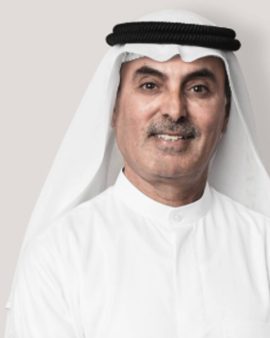

Muhammad Yunus - selected in the list of  The Most Influential Global Muslims  - 2026

Muhammad Yunus

Muhammad Yunus: Economist, Nobel Laureate, and Steward of Bangladesh’s Democratic Transition

Muhammad Yunus (born 28 June 1940) is a Bangladeshi economist, social entrepreneur, and Nobel Peace Prize laureate who assumed office as Interim Prime Minister of Bangladesh in 2024 amid a period of profound political transition. Internationally renowned as the pioneer of microfinance and the founder of Grameen Bank, Yunus is widely regarded as one of the most influential development thinkers of the modern era.

Born in Chittagong (now Chattogram), then part of British India, Yunus grew up in a middle-class family and was exposed early to the ideals of social justice and public service. He studied economics at Dhaka University before pursuing higher education in the United States, earning a PhD in economics from Vanderbilt University. He later taught economics at Middle Tennessee State University before returning to Bangladesh shortly after the country’s independence in 1971.

Yunus’s global prominence emerged during the 1974 famine in Bangladesh, when he began experimenting with small, collateral-free loans to impoverished villagers, particularly women. This initiative evolved into the Grameen Bank, formally established in 1983, which revolutionised access to credit for the rural poor. The Grameen model challenged conventional banking norms by demonstrating that the poor were reliable borrowers and that microcredit could serve as a powerful tool for poverty alleviation and women’s empowerment.

In 2006, Yunus and Grameen Bank were jointly awarded the Nobel Peace Prize for their efforts to create economic and social development from below. Over the decades, his ideas influenced global development policy, inspiring microfinance institutions across Asia, Africa, and Latin America. Yunus also promoted the concept of “social business”, enterprises designed to solve social problems without profit maximisation, further shaping debates on ethical capitalism.

Despite his international acclaim, Yunus’s relationship with Bangladeshi politics has been complex and often contentious. In 2007, he briefly considered forming a political party during a military-backed caretaker government but later withdrew. Under successive elected governments, particularly that of Sheikh Hasina, Yunus faced legal and regulatory challenges, including disputes over Grameen Bank’s governance and multiple court cases, which his supporters described as politically motivated.

Yunus was appointed Interim Prime Minister following widespread unrest and a breakdown of political consensus, as Bangladesh sought a neutral and credible figure to oversee a transitional phase. His appointment was widely welcomed both domestically and internationally, given his reputation for integrity, non-partisanship, and commitment to democratic norms.

As interim prime minister, Yunus’s mandate has focused on restoring political stability, overseeing administrative reforms, ensuring free and fair elections, and rebuilding public trust in state institutions. He has emphasised the rule of law, protection of civil liberties, and inclusive governance, while steering clear of long-term policy commitments beyond the transition period. Economically, his approach has prioritised stabilisation, social protection, and engagement with international partners.

Muhammad Yunus’s legacy extends far beyond his interim political role. Celebrated as a visionary economist and moral voice of development, he remains a symbol of innovation rooted in human dignity. His stewardship during Bangladesh’s transitional moment has added a new chapter to a career defined by global impact, reformist ideals, and a lifelong commitment to empowering the marginalised.


Mullah Haibatullah Akhundzada - selected in the list of  The Most Influential Global Muslims  - 2026

Mullah Haibatullah Akhundzada

Mullah Haibatullah Akhundzada: Supreme Leader of the Taliban and the Power Behind Afghanistan’s Islamic Emirate

Mullah Haibatullah Akhundzada is the Supreme Leader (Amir al-Mu’minin) of the Taliban and the most powerful authority in Afghanistan since the group returned to power in August 2021. Unlike many militant leaders who rose through battlefield prominence, Akhundzada’s authority is rooted primarily in religious scholarship, judicial authority, and ideological legitimacy, making him a decisive—if largely unseen—figure in Afghanistan’s contemporary political order.

Born around 1961 in Kandahar province, Akhundzada belongs to the Noorzai Pashtun tribe, one of the influential tribal groupings in southern Afghanistan. He received traditional Islamic education in local madrasas and later deepened his studies in Islamic jurisprudence (fiqh), specializing in the Hanafi school of Sunni Islam. His reputation as a religious scholar rather than a military commander distinguished him early within Taliban ranks.

During the Taliban’s first regime (1996–2001), Akhundzada served in the judicial system, reportedly as a sharia court judge and later in senior religious roles. After the U.S.-led intervention in 2001 toppled the Taliban government, he remained active within the movement during the insurgency years, gradually rising as a key religious authority. His standing increased significantly after he became head of the Taliban’s Ulema Council and later served as chief justice under Taliban shadow governance.

In May 2016, following the killing of Taliban leader Mullah Akhtar Mansour in a U.S. drone strike, Haibatullah Akhundzada was appointed as the new supreme leader. His selection reflected the Taliban’s desire to unify competing factions under a figure seen as doctrinally authoritative and relatively neutral in internal power struggles. Two deputies—Sirajuddin Haqqani and Mullah Yaqoob—handled much of the military and operational command, while Akhundzada focused on religious guidance and strategic direction.

Since the Taliban’s return to power in August 2021, Akhundzada has ruled largely from Kandahar, issuing decrees that shape Afghanistan’s political, legal, and social life. Although rarely seen in public and seldom photographed, his edicts carry ultimate authority over the Taliban government in Kabul. He has emphasized strict enforcement of the Taliban’s interpretation of Islamic law, including policies that have drawn widespread international criticism—most notably severe restrictions on women’s education, employment, and public life.

Akhundzada has rejected Western models of governance and human rights frameworks, asserting that legitimacy flows from Islamic law rather than popular sovereignty. Under his leadership, Afghanistan has remained diplomatically isolated, with no country formally recognizing the Taliban government, largely due to concerns over human rights, inclusivity, and counterterrorism commitments.

Supporters within the Taliban view Mullah Haibatullah Akhundzada as a guardian of ideological purity and unity after decades of conflict. Critics, both inside and outside Afghanistan, argue that his rigid governance has deepened humanitarian suffering and stalled international engagement. As Afghanistan continues to face economic collapse, humanitarian crises, and global isolation, Akhundzada remains the central figure determining whether the Taliban’s rule evolves—or hardens further—under the banner of the Islamic Emirate.


Nouman Ali Khan - selected in the list of  The Most Influential Global Muslims  - 2026

Nouman Ali Khan

Nouman Ali Khan: Bridging Faith and Contemporary Thought

Nouman Ali Khan, born in 1978 in Germany, is a prominent American Islamic preacher, educator, and speaker widely recognized for his efforts to make the teachings of Islam accessible to a global audience, particularly English-speaking Muslims. His work spans lectures, seminars, and digital content, with a strong focus on Quranic studies, Arabic language, and the practical application of Islamic principles in contemporary life.

Raised in a diverse environment, Khan’s early life exposed him to multicultural influences, which later shaped his approach to teaching Islam in a modern context. He completed his higher education in the United States, developing a deep interest in Arabic and Quranic studies, which became the foundation of his career. Khan’s intellectual curiosity, combined with his passion for making religious knowledge understandable, has earned him a devoted following among youth and adults alike.

Khan is best known as the founder of Bayyinah Institute, an educational platform dedicated to teaching Quranic Arabic and fostering a deeper understanding of the Quran. Through Bayyinah, he has created a variety of courses, ranging from beginner to advanced levels, emphasizing the linguistic beauty, structure, and meaning of the Quran. His teaching style is approachable and relatable, often connecting classical Islamic scholarship with modern life challenges, making complex concepts comprehensible without diluting their essence.

Beyond formal education, Nouman Ali Khan has emerged as a sought-after public speaker at Islamic conferences, interfaith dialogues, and community events worldwide. His lectures often address themes such as personal development, spirituality, social justice, and the ethical dimensions of Islam. By using contemporary examples and storytelling techniques, he engages audiences in a manner that resonates with modern sensibilities while remaining rooted in traditional Islamic scholarship.

Khan’s work extends heavily into digital media, where he has leveraged platforms like YouTube, podcasts, and social media to reach millions of listeners and viewers globally. His online presence has been instrumental in spreading Islamic knowledge to those who might not have access to formal education or traditional learning institutions. This digital outreach has made him particularly influential among young Muslims seeking guidance on integrating faith with everyday life in a rapidly changing world.

Despite his widespread acclaim, Khan has faced controversies and challenges in his personal and professional life. Nevertheless, his contributions to Islamic education and community engagement remain significant. His efforts continue to inspire a generation of Muslims to seek a deeper, more meaningful connection with the Quran and to approach faith with both knowledge and reflection.

In essence, Nouman Ali Khan represents a bridge between classical Islamic teachings and the realities of contemporary life. Through education, communication, and a commitment to understanding the Quran, he has established himself as one of the most influential Islamic voices of his generation, leaving a lasting impact on the global 


Prince Rahim Aga Khan - selected in the list of  The Most Influential Global Muslims  - 2026

Prince Rahim Aga Khan

Prince Rahim Aga Khan: Global Leader of Development, Diplomacy, and Ismaili Muslim Institutions

Prince Rahim Al-Hussaini Aga Khan is a prominent global figure known for his leadership in international development, humanitarian work, and the governance of Ismaili Muslim institutions. As the eldest son of the late Prince Karim Aga Khan IV, the 49th Imam of the Shia Ismaili Muslims, Prince Rahim has long been prepared for responsibilities that combine spiritual stewardship, ethical leadership, and global public service.

Born on 12 October 1971 in Geneva, Switzerland, Prince Rahim grew up in a multicultural environment that shaped his international outlook. He was educated in Europe and the United States, earning a degree in comparative literature from Brown University. His academic background, though rooted in the humanities, was complemented by professional training in finance and management, equipping him to engage effectively with complex global institutions and development challenges.

From an early stage, Prince Rahim became deeply involved in the work of the Aga Khan Development Network (AKDN), one of the world’s largest private development organizations. Operating in more than 30 countries across Asia, Africa, and the Middle East, the AKDN works in fields ranging from health, education, and rural development to architecture, culture, and economic development. Prince Rahim has played a central role in shaping the network’s strategy, with particular emphasis on poverty alleviation, climate resilience, food security, and sustainable economic growth.

He has served in senior leadership roles within the AKDN, including oversight of agencies dealing with environmental protection, rural transformation, and institutional governance. Known for his analytical and forward-looking approach, Prince Rahim has focused on strengthening local institutions, promoting ethical entrepreneurship, and ensuring that development initiatives are culturally grounded and environmentally sustainable.

Within the Ismaili Muslim community, Prince Rahim has held key responsibilities related to social governance, education, and youth development. He has represented the Imamat at major international forums and has engaged extensively with governments, multilateral organizations, and civil society leaders. His work reflects the Ismaili tradition’s emphasis on the harmony of faith and reason, service to humanity, and loyalty to the countries in which Ismailis live.

Prince Rahim is also recognized for his advocacy on global challenges such as climate change and demographic transition. He has spoken frequently about the need for long-term planning, ethical leadership, and cross-cultural cooperation to address rising inequality and environmental stress—issues that disproportionately affect vulnerable communities.

Despite his high-profile lineage, Prince Rahim maintains a low-key public persona, preferring institution-building over personal prominence. Those who work closely with him describe him as methodical, thoughtful, and deeply committed to the values of service and responsibility.

As a leader shaped by global experience and a strong ethical tradition, Prince Rahim Aga Khan represents continuity and renewal within the Ismaili Imamat’s long-standing commitment to improving quality of life and fostering pluralism. His work continues to influence development practice and inter-civilizational dialogue in an increasingly interconnected and challenged world.


Prince Turki bin Faisal Al Saud - selected in the list of  The Most Influential Global Muslims  - 2026

Prince Turki bin Faisal Al Saud

Prince Turki bin Faisal Al Saud: Saudi Arabia’s Veteran Intelligence Chief and Influential Diplomatic Voice

Prince Turki bin Faisal Al Saud (1945) is a senior Saudi royal, former intelligence chief, diplomat, and influential public intellectual. A grandson of Saudi Arabia’s founder King Abdulaziz and the youngest son of King Faisal, Prince Turki has played a significant behind-the-scenes role in Saudi foreign and security policy for more than four decades. He is currently chairman of the King Faisal Center for Research and Islamic Studies and a leading voice on Middle Eastern geopolitics.

Born in Mecca, Prince Turki was raised in a highly intellectual household shaped by the reformist outlook of his parents, King Faisal and Queen Iffat. He received his early education in Taif before being sent to the United States, where he completed secondary school at the Lawrenceville School in New Jersey. He later graduated in 1968 from Georgetown University’s Edmund A. Walsh School of Foreign Service, studying alongside future U.S. President Bill Clinton. He pursued further studies at Princeton, Cambridge, and the University of London, focusing on Islamic law and jurisprudence—an academic foundation that would inform his later political thought.

Prince Turki began his official career in 1973 as an adviser at the Saudi Royal Court. In 1979, during a period of intense regional upheaval, he was appointed Director General of Saudi Arabia’s General Intelligence Directorate, succeeding his uncle Kamal Adham. He held the post for 23 years, making him one of the longest-serving intelligence chiefs in the world. His tenure spanned major events including the 1979 Grand Mosque seizure in Mecca, the Soviet-Afghan war, the rise of al-Qaeda, and the Gulf conflicts.

During the Afghan jihad of the 1980s, Saudi intelligence—alongside the CIA and Pakistan’s ISI—supported anti-Soviet mujahideen. Prince Turki maintained contact with Osama bin Laden during this period but has consistently stated that relations ended after Iraq’s invasion of Kuwait in 1990. He later claimed to have pursued unsuccessful negotiations with the Taliban to extradite bin Laden in the late 1990s. Prince Turki resigned from his intelligence post on 1 September 2001, just days before the 9/11 attacks—an exit that sparked widespread speculation and controversy, though he has denied any foreknowledge of the attacks.

Following 9/11, Prince Turki became an outspoken critic of al-Qaeda, condemning it as an “evil cult” that distorted Islam. He was named in lawsuits by victims’ families but was later granted immunity by U.S. courts. In 2003, he entered public diplomacy, serving as Saudi ambassador to the United Kingdom and then to the United States from 2005 to 2006. His tenure in Washington was marked by policy disagreements, particularly over Iran, Iraq, and the Palestinian issue, and he resigned abruptly after just 15 months.

Since retiring from public office in 2007, Prince Turki has emerged as a prominent commentator on global affairs. Through the King Faisal Center, he has advocated education reform, warned against weapons of mass destruction in the Middle East, criticized Israeli occupation policies, and opposed unconditional normalization with Israel absent a sovereign Palestinian state.

Widely respected for his intellect and candor, Prince Turki bin Faisal remains one of the most articulate and influential Saudi voices shaping debate on security, diplomacy, and the future of the Middle East.


Professor İbrahim Kalın - selected in the list of  The Most Influential Global Muslims  - 2026

Professor İbrahim Kalın

Professor İbrahim Kalın: Scholar-Statesman at the Helm of Türkiye’s National Intelligence

Professor İbrahim Kalın is a distinctive figure in contemporary Turkish public life, combining the worlds of scholarship, diplomacy, and statecraft. Appointed Director of Türkiye’s National Intelligence Organization (Milli İstihbarat Teşkilatı, MİT) in June 2023, Kalın brought to the role an uncommon background as an academic philosopher, public intellectual, and senior presidential advisor. His career reflects Türkiye’s evolving approach to governance, where strategic security thinking is increasingly informed by intellectual depth and cultural awareness.

Born in Istanbul in 1971, İbrahim Kalın pursued an academic path rooted in philosophy and Islamic thought. He completed his undergraduate studies at Istanbul University before earning a PhD in Islamic philosophy from George Washington University in the United States. His doctoral work focused on classical Islamic intellectual traditions and their engagement with modern philosophy, laying the foundation for a scholarly career that emphasized dialogue between civilizations, ethics, and political thought.

Before entering the intelligence and security domain, Kalın was widely known as an academic and cultural diplomat. He served as a faculty member and later as a professor, publishing extensively on Islamic philosophy, Turkish intellectual history, identity, and global politics. His writings often explored the moral and metaphysical dimensions of power, modernity, and Western–Muslim relations, positioning him as a thoughtful critic of reductionist and purely securitized worldviews.

Kalın’s transition from academia to state service began in earnest in the 2010s. He became a key advisor to President Recep Tayyip Erdoğan, serving as Presidential Spokesperson and Chief Advisor on foreign policy and security affairs. In this capacity, he played a central role in shaping Türkiye’s international messaging during periods of intense regional upheaval, including the Arab uprisings, the Syrian conflict, and shifting global power dynamics. Fluent in English and deeply familiar with Western political discourse, Kalın emerged as one of Ankara’s most articulate representatives on the global stage.

His appointment as Director of MİT marked a significant moment, signaling continuity as well as intellectual recalibration within Türkiye’s security establishment. As intelligence chief, Kalın oversees one of the country’s most critical institutions, responsible for counterterrorism, foreign intelligence, cyber security, and strategic analysis. His leadership comes at a time when Türkiye faces complex challenges ranging from regional instability and great-power competition to non-traditional security threats.

Observers note that Kalın’s scholarly background informs his approach to intelligence and security. Rather than viewing threats solely through a military or tactical lens, he is understood to emphasize long-term strategic thinking, cultural intelligence, and the ideological dimensions of conflict. This perspective aligns with Türkiye’s broader effort to position itself as both a regional power and an independent geopolitical actor.

Despite operating largely outside public view since assuming the intelligence post, İbrahim Kalın’s influence remains substantial. His career illustrates a rare synthesis of ideas and power—where philosophical training, diplomatic experience, and national security leadership intersect.

Professor İbrahim Kalın stands out as a modern scholar-statesman, embodying Türkiye’s attempt to navigate a turbulent global environment with intellectual confidence, strategic autonomy, and an awareness of history, culture, and ideas as instruments of statecraft.


Ramzan Kadyrov - selected in the list of  The Most Influential Global Muslims  - 2026

Ramzan Kadyrov

Ramzan Kadyrov: Chechnya’s Powerful Strongman and a Controversial Pillar of Kremlin Rule

Ramzan Akhmatovich Kadyrov is one of the most controversial and powerful regional leaders in the Russian Federation. As the Head of the Chechen Republic since 2007, he has ruled the predominantly Muslim North Caucasus region with an iron grip, combining fierce loyalty to the Kremlin with a personalized system of power rooted in security forces, patronage, and traditional authority. To supporters, he is the man who restored stability after years of devastating war; to critics, he represents authoritarianism, repression, and grave human rights abuses.

Born on 5 October 1976 in Tsentoroy (now Akhmat-Yurt), Chechnya, Ramzan Kadyrov is the son of Akhmad Kadyrov, a former separatist cleric who later allied with Moscow during the Second Chechen War. Akhmad Kadyrov became Chechnya’s president in 2003 but was assassinated in 2004. Following his father’s death, Ramzan rapidly emerged as the dominant figure in Chechnya, consolidating power through loyal militias that were later incorporated into official security structures.

In 2007, Russian President Vladimir Putin formally appointed Ramzan Kadyrov as Head of the Chechen Republic. Since then, Kadyrov has exercised near-total control over the region, maintaining order through an extensive security apparatus often referred to as the “Kadyrovtsy.” Under his rule, Chechnya has seen large-scale reconstruction after years of war, with Grozny rebuilt into a modern capital featuring mosques, high-rises, and infrastructure projects that symbolize post-war recovery.

Kadyrov presents himself as a defender of Islam, Chechen tradition, and moral conservatism. He has promoted public expressions of Islamic identity, including mosque construction and religious observance, while enforcing strict social norms. However, critics argue that his version of Islam is instrumentalized to reinforce personal authority rather than genuine religious autonomy.

Internationally, Ramzan Kadyrov is known for his unwavering loyalty to Vladimir Putin, often portraying himself as a foot soldier of the Russian president. This loyalty has afforded him extraordinary autonomy within Chechnya, effectively allowing him to rule with minimal federal interference. His forces have also been deployed beyond Chechnya, including participation in Russian military operations in Ukraine, further extending his influence within Russia’s security ecosystem.

At the same time, Kadyrov has been accused by international human rights organizations of widespread abuses, including enforced disappearances, torture, extrajudicial killings, and persecution of political opponents, journalists, and LGBTQ individuals. These allegations have led to international sanctions and have made him a symbol of impunity for rights advocates.

Despite this, Kadyrov maintains a strong domestic power base. Through patronage networks, tribal loyalties, and state-backed religious legitimacy, he has suppressed armed insurgency and prevented a return to large-scale conflict. For many Chechens exhausted by decades of violence, stability—even under authoritarian rule—has been seen as preferable to chaos.

Ramzan Kadyrov remains a central figure in Russia’s regional power structure: a strongman whose authority rests on loyalty, force, and fear, and whose future is closely tied to that of the Kremlin itself. His rule continues to shape Chechnya’s identity and stands as a stark example of how post-conflict stability can come at the cost of political freedom and human rights.


Rebiya Kadeer - selected in the list of  The Most Influential Global Muslims  - 2026

Rebiya Kadeer

Rebiya Kadeer: From Self-Made Millionaire to Global Voice for Uyghur Rights

Rebiya Kadeer (Uyghur: رابىيە قادىر; Chinese: 热比娅·卡德尔), born on 15 November 1946 in Altay City, Xinjiang, is one of the most remarkable and controversial figures to emerge from modern China. A self-made businesswoman who rose from poverty to immense wealth, Kadeer later transformed into a prominent political activist and international advocate for Uyghur human rights. Her life journey bridges entrepreneurship, philanthropy, political engagement, imprisonment, and global advocacy, making her a symbol of both resilience and resistance.

Born into a modest Uyghur family, Rebiya Kadeer experienced hardship early in life. Economic necessity pushed her into marriage at a young age, and for years she lived as a housewife raising six children. Despite limited formal education, she demonstrated extraordinary determination and business acumen. During the later years of the Cultural Revolution, she began sewing and selling clothes discreetly to supplement her family’s income—an act that brought official suspicion but also marked the beginning of her entrepreneurial path.

After her divorce, Kadeer’s fortunes changed dramatically. In 1976, she opened a small laundry business, which grew steadily. Following her remarriage in 1981 and relocation to Ürümqi, she entered cross-border trade after the collapse of the Soviet Union. Trading with Russia and Central Asia, Kadeer built a vast commercial empire. By the 1990s, she had become one of the wealthiest individuals in China, with assets estimated at over 200 million yuan. She founded Akida Industry and Trade Co., owning major commercial properties such as the Akida Trade Center and Kadeer Trade Center in Ürümqi. Her success earned her the nickname “the millionairess” and placed her among China’s richest entrepreneurs of her time.

Beyond business, Kadeer was deeply involved in philanthropy. She launched the 1,000 Mothers Movement, a foundation aimed at empowering Uyghur women through small businesses and supporting orphaned and underprivileged children. Her social work, combined with her business success, brought her official recognition. She served as a member of the 8th Chinese People’s Political Consultative Conference, held leadership roles in women entrepreneurs’ associations, and represented China at the 1995 UN Fourth World Conference on Women in Beijing. For a time, she was also a member of the Chinese Communist Party.

Her relationship with the state deteriorated sharply in the late 1990s. After her husband, Sidik Haji Rouzi, moved to the United States and became a broadcaster critical of Chinese policies, Kadeer increasingly spoke out against ethnic discrimination. In 1999, she was arrested and later sentenced to prison on charges of leaking state secrets. Her imprisonment drew international attention, turning her into a cause célèbre among human rights organizations and Western governments.

Released on medical grounds in 2005, Kadeer was allowed to leave China and settled in the United States. In exile, her role expanded globally. She became President of the World Uyghur Congress (2006–2017) and the Uyghur American Association, emerging as the most prominent international spokesperson for Uyghur rights. She was nominated multiple times for the Nobel Peace Prize and met world leaders, including U.S. President George W. Bush.

Today, Rebiya Kadeer remains a towering figure in Uyghur history—a woman whose life reflects an extraordinary transformation from a self-made business magnate within China to an enduring symbol of dissent and advocacy on the world stage.


Recep Tayyip Erdoğan - selected in the list of  The Most Influential Global Muslims  - 2026

Recep Tayyip Erdoğan

Recep Tayyip Erdoğan: The Architect of Modern Türkiye

Recep Tayyip Erdoğan, the President of Türkiye, is one of the most influential and polarizing leaders in contemporary global politics. Born on February 26, 1954, in the Kasimpasa district of Istanbul, Erdoğan grew up in a modest family with deep cultural and religious values. His early life, shaped by working-class sensibilities and the vibrant political atmosphere of Istanbul, played a crucial role in developing his strong sense of identity, perseverance, and political vision. He studied at the İmam Hatip school and later graduated from Marmara University’s Faculty of Economics and Administrative Sciences, marking the beginning of his lifelong engagement with public service.

Erdoğan first gained national recognition as the Mayor of Istanbul, elected in 1994. His tenure is widely remembered for effective governance—improving infrastructure, modernizing water and waste management systems, reducing pollution, and tackling chronic traffic problems. His administration’s success transformed him into a popular figure and demonstrated his ability to pair pragmatic solutions with charismatic leadership. However, in 1998 he faced imprisonment for reciting a poem deemed provocative by the secular establishment, an event that elevated him as a symbol of political repression and galvanized his supporters.

In 2001, Erdoğan co-founded the Justice and Development Party (AKP), a movement blending conservative social values with economic liberalism and democratic reform. The AKP’s sweeping victory in the 2002 elections propelled Erdoğan to the forefront of Turkish politics. He became Prime Minister in 2003, ushering in a period of rapid economic growth, political stability, and ambitious reform. His early tenure saw advancements in healthcare, infrastructure, foreign investment, and EU accession negotiations, contributing to a new era of confidence and modernization.

Erdoğan's leadership began to take on a more centralized and assertive character in the 2010s. The Gezi Park protests of 2013, the fallout from regional conflicts, and the 2016 coup attempt significantly shaped his political trajectory. After surviving the coup attempt, he initiated extensive security and institutional changes, arguing that they were necessary to protect national sovereignty. The 2017 constitutional referendum, which transformed Türkiye from a parliamentary to a presidential system, further consolidated his authority. In 2018, he became the first Executive President of Türkiye and was re-elected in 2023.

On the international stage, Erdoğan has positioned Türkiye as an independent geopolitical actor with a distinct foreign policy vision. Balancing relations with the West, Russia, and regional powers, he has sought to elevate Türkiye’s role as a mediator, military power, and economic bridge between continents. His assertive policies in Syria, the Eastern Mediterranean, and the South Caucasus, alongside humanitarian initiatives and advocacy for Muslim causes globally—especially Palestine and Rohingya rights—reflect his ambition for Türkiye to be a major global player.

Domestically, Erdoğan continues to command a strong support base, particularly among conservative, religious, and rural constituencies. His emphasis on national pride, infrastructure megaprojects, cultural identity, and social welfare keeps him at the center of Turkish political life.

Today, Recep Tayyip Erdoğan remains an enduring and transformative figure—celebrated by supporters as a visionary leader who elevated Türkiye’s global stature and criticized by opponents for centralizing power. Regardless of perspective, his impact on Türkiye’s modern political and social landscape is indisputable.


Saad Kazmi - selected in the list of  The Most Influential Global Muslims  - 2026

Saad Kazmi

Saad Kazmi: A Grassroots Leader Guiding ICNA into a New Era

Saad Kazmi’s election as President of the Islamic Circle of North America (ICNA) marks both continuity and renewal for one of the most influential Muslim organizations in the United States. Rooted in grassroots activism and guided by faith, Kazmi steps into leadership at a moment when American Muslims are navigating complex social, political, and moral challenges—while also building institutions that serve the wider society with compassion and purpose.

ICNA, a North American Islamic grassroots umbrella organization, has long sought to propagate Islam and promote the Islamic way of life among American Muslims. Over more than five decades, it has evolved into the largest Muslim organization in the U.S., recognized for its principled engagement, community service, and emphasis on justice, morality, and God-consciousness. Kazmi’s leadership journey is deeply aligned with this mission.

A pharmacist by profession, Saad Kazmi brings to ICNA a blend of professional discipline, community service, and family-centered values. Residing in Murphy, Texas, he is a proud father of four, a role he often cites as grounding his leadership in empathy, patience, and responsibility. For Kazmi, leadership is not merely organizational—it is personal, shaped by everyday commitments to family, community, and faith.

His election followed a fair and transparent process conducted through ICNA’s electronic voting system, ensuring broad participation across the organization’s diverse membership. The election itself was historic: 80.4 percent of ICNA’s general assembly took part, a remarkable level of engagement that reflects the organization’s deep-rooted tradition of shura—consultative governance. This participatory ethos has been a hallmark of ICNA for over 50 years, with presidents elected for a maximum of two consecutive two-year terms. Kazmi’s mandate, therefore, begins with a strong vote of confidence and a clear sense of collective ownership.

The trust placed in Kazmi also reflects ICNA’s steady growth and expanding impact. Under its umbrella operate several flagship initiatives that touch millions of lives: ICNA Relief’s humanitarian work; Why Islam and Gain Peace’s outreach and public education; Helping Hands’ global aid; Young Muslims’ youth development; Embrace’s support for converts; and the Council of Social Justice’s advocacy for equity and human dignity. Kazmi inherits a robust institutional ecosystem—one that requires strategic vision, moral clarity, and collaborative leadership.

As President, Kazmi is expected to build upon this foundation while guiding ICNA through an “exciting new chapter.” His leadership underscores unity within the organization at a time when cohesion and principled engagement are essential. Colleagues describe him as methodical yet approachable, deeply committed to ICNA’s mission of building a society rooted in faith, compassion, and justice.

Kazmi’s ascent also comes with gratitude for the path laid by his predecessor. ICNA has acknowledged the exemplary leadership of outgoing President Dr. Mohsin Ansari, whose dedication and tireless service strengthened the organization and elevated its standing nationwide. Kazmi’s presidency is thus framed not as a departure, but as a continuation—honoring past leadership while charting future possibilities.

Looking ahead, Saad Kazmi’s presidency embodies the aspirations of a community that believes in collective leadership, moral purpose, and service beyond self. With his professional background, grassroots sensibility, and deep commitment to ICNA’s values, he stands poised to guide the organization toward even greater impact—serving not only American Muslims, but the broader society they are an integral part of. With his professional integrity, grassroots sensibility, and unwavering commitment to ICNA’s core values, Saad Kazmi is well-positioned to guide the organization toward even greater impact—strengthening American Muslim civic life while contributing meaningfully to a more just, compassionate, and morally grounded society for all.


Sadiq Khan - selected in the list of  The Most Influential Global Muslims  - 2026

Sadiq Khan

Sadiq Khan: Mayor of London and Champion of Inclusive Urban Leadership

Sadiq Aman Khan is the Mayor of London, the first Muslim mayor of a major Western capital and one of the most prominent figures in contemporary British politics. Since taking office in 2016, Khan has been a central voice on issues ranging from housing and transport to climate change, social justice, and the fight against extremism, shaping London’s identity as a diverse, global city.

Born on 8 October 1970 in Tooting, South London, Sadiq Khan is the fifth of eight children in a working-class family of Pakistani origin. His father was a bus driver and his mother a seamstress, and Khan has often spoken about how his upbringing in a council estate shaped his understanding of inequality and opportunity. He was educated at Ernest Bevin College before studying law at the University of North London, later qualifying as a solicitor.

Before entering politics, Khan worked as a human rights lawyer, representing clients in cases involving civil liberties, discrimination, and police accountability. This legal background laid the foundation for his political career and his emphasis on rights-based governance. He was elected as Member of Parliament for Tooting in 2005, quickly rising through the ranks of the Labour Party.

During his parliamentary career, Khan served in several senior roles, including as Minister of State for Transport and Minister of State for Communities under Prime Minister Gordon Brown. He also held the post of Shadow Secretary of State for Justice, becoming one of Labour’s most recognizable national figures.

In 2016, Sadiq Khan was elected Mayor of London, defeating Conservative candidate Zac Goldsmith in a campaign that drew international attention. His victory was widely seen as symbolic of London’s multicultural character. Khan has since been re-elected, making him one of the longest-serving mayors in the city’s history.

As mayor, Khan has focused heavily on public transport, housing affordability, and environmental sustainability. He introduced a fares freeze on public transport in his first term, expanded cycling and pedestrian infrastructure, and implemented the Ultra Low Emission Zone (ULEZ) to tackle air pollution. His administration has also pushed for large-scale affordable housing construction, though housing costs remain one of London’s most pressing challenges.

Khan has been a vocal opponent of racism, Islamophobia, and antisemitism, while consistently defending London’s openness and diversity. At the same time, he has faced criticism from political opponents over crime rates, policing, and the economic impact of environmental regulations. Khan has argued that many of these issues are rooted in national policy and long-term structural factors beyond the mayor’s direct control.

Internationally, Sadiq Khan has positioned London as a global leader on climate action and urban diplomacy, collaborating with mayors worldwide. To supporters, he represents progressive, inclusive leadership; to critics, a polarizing figure in British politics. Regardless, Sadiq Khan’s tenure has firmly established him as a defining leader of 21st-century London.


Sahil Adeem - selected in the list of  The Most Influential Global Muslims  - 2026

Sahil Adeem

Sahil Adeem – Profile of a Contemporary Islamic Speaker and Public Figure

Sahil Adeem (born 10 October 1984) is a Pakistani public speaker, behavioral psychologist, consultant, and preacher known for his dynamic style of delivering religious and motivational content, particularly to youth audiences across social media and public forums. Born to the late Adeem Hashmi, a respected Urdu poet and writer, Sahil has attracted widespread attention — both admiration and debate — for his unconventional approach to discussing religion, society, and personal development. MM News+1

Adeem’s educational path is somewhat debated in public sources, but he is widely described as having studied psychology abroad, including at Ryerson University in Toronto, Canada, and possibly also having connections to academic institutions in the United States. His grounding in psychology shapes much of his public speaking, which often blends religious themes with insights into human behavior, identity, and personal purpose. News Guru

Professionally, Sahil Adeem is the founder and CEO of Source Code, a training and consulting organization focused on personal development, strategic thinking, and behavioral coaching. Through Source Code, he has worked with individuals and corporate teams in diverse regions, including Pakistan, Canada, the United States, Dubai, and Denmark. His professional work spans strategy consulting, leadership training, and mentoring across various sectors, reflecting his interest in both spiritual and worldly growth. MM News+1

Adeem first rose to prominence around 2016, delivering speeches at institutions like SZABIST and later expanding his reach through digital platforms such as YouTube, podcasts, and social media. He quickly became known for addressing themes such as Muslim identity, critical thinking, societal challenges, and the integration of Islamic principles with contemporary life. Many of his talks aim to inspire young Muslims to question assumptions, broaden their perspective, and live purpose driven lives according to their faith. BOL Entertainment

However, his outspoken style and unorthodox interpretations have also made him a controversial figure. In 2022, Sahil Adeem was reportedly banned from speaking at public universities in Pakistan due to the content of his lectures and his refusal to issue an apology to authorities seeking to moderate his rhetoric. The ban was widely discussed on social media, sparking debates about freedom of speech, religious discourse, and the role of motivational or religious speakers in public life. MM News+1

Beyond institutional controversies, Adeem’s public statements have sometimes drawn criticism from both religious scholars and commentators. Some followers praise his efforts to challenge narrow interpretations of religion and encourage intellectual engagement among young Muslims, while critics argue that his views can be speculative or lack grounding in traditional scholarship. Discussions around his commentary on topics like religious narratives, science, and society have been polarizing, leading to a lively discourse online. News Guru

Despite the controversies, Sahil Adeem continues to maintain a strong media presence, with significant followings on platforms like X (formerly Twitter) and YouTube where clips of his discussions frequently circulate. His influence extends to podcasts and public events where he addresses issues of faith, identity, and modern challenges facing the global Muslim community. TwStalker

In summary, Sahil Adeem is a complex and prominent contemporary figure whose work sits at the intersection of psychology, religion, motivation, and social commentary. His ability to engage audiences through accessible language and multimedia platforms has made him a significant voice among younger Muslims, even as debates about his style and substance continue.


Samia Suluhu Hassan - selected in the list of  The Most Influential Global Muslims  - 2026

Samia Suluhu Hassan

Samia Suluhu Hassan: Tanzania’s First Woman President and a Pragmatic Voice of Reform

Samia Suluhu Hassan is a historic and transformative figure in African politics, serving as the first woman President of Tanzania and one of the few female heads of state in the Muslim world. Since assuming office in March 2021, she has been widely recognized for steering Tanzania toward greater political openness, economic diplomacy, and international re-engagement, while maintaining stability in a country long known for continuity and cautious governance.

Born on 27 January 1960 in Zanzibar, Samia Suluhu Hassan grew up in a modest background that shaped her grounded and pragmatic leadership style. She pursued higher education later in life, earning a degree in public administration from the Institute of Development Management in Tanzania, followed by postgraduate qualifications in economics and community economic development from the University of Manchester and the Open University of Tanzania. Her academic journey reflected a strong focus on governance, development, and grassroots empowerment.

Samia began her public career in the early 2000s, working on development projects before entering politics through the ruling Chama Cha Mapinduzi (CCM). She steadily rose through party ranks, serving as a Member of Parliament, Minister of State for Union Affairs, and later as Vice President in 2015 under President John Magufuli. Her appointment as Vice President already marked a milestone, as she became the first woman to hold that office in Tanzania.

In March 2021, following the sudden death of President Magufuli, Samia Suluhu Hassan was constitutionally sworn in as President, becoming the first woman to lead Tanzania since independence. Her ascension was both historic and challenging, as she inherited a polarized political environment, economic pressures, and strained relations with sections of the international community.

As President, Samia quickly signaled a shift in tone and governance style. Without dramatic ruptures, she emphasized reconciliation, dialogue, and institutional trust. She eased restrictions on media and political activity, reopened engagement with opposition parties, and released several political detainees. Her leadership marked a departure from confrontational politics toward a more consultative and inclusive approach.

Economically, President Samia has focused on reviving investor confidence, expanding infrastructure, and strengthening Tanzania’s role in regional and global markets. She has actively pursued economic diplomacy, traveling widely to attract foreign investment and rebuild partnerships with international financial institutions. Under her leadership, Tanzania has emphasized tourism revival, energy development, and private-sector-led growth.

As a Muslim woman leading a predominantly Christian-majority nation, Samia Suluhu Hassan has also become a powerful symbol of pluralism and social cohesion. She consistently stresses national unity over identity politics, reinforcing Tanzania’s long-standing tradition of religious coexistence and ethnic harmony.

Internationally, she is seen as a calm, credible, and reform-oriented leader who balances continuity with gradual change. While critics urge faster political reforms, supporters credit her with restoring trust, stabilizing governance, and projecting Tanzania as a constructive global partner.

Samia Suluhu Hassan’s presidency represents a quiet but significant transformation—one rooted not in spectacle, but in steady leadership, inclusivity, and pragmatic reform. Her journey continues to inspire women across Africa and the Muslim world, redefining leadership through competence, restraint, and resilience.


Seyyed Hossein Nasr - selected in the list of  The Most Influential Global Muslims  - 2026

Seyyed Hossein Nasr

Professor Seyyed Hossein Nasr: Philosopher of Tradition, Spirituality, and Islamic Thought

Professor Seyyed Hossein Nasr is one of the most distinguished contemporary philosophers, scholars of religion, and university professors of the modern Islamic world. Renowned for his profound engagement with Islamic philosophy, Sufism, comparative religion, and the philosophy of science, Nasr has played a pivotal role in introducing classical Islamic intellectual traditions to global academic discourse while offering a sustained critique of modern materialism and secularism.

Born on April 7, 1933, in Tehran, Iran, Seyyed Hossein Nasr received an early education that combined traditional Islamic learning with modern sciences. His intellectual brilliance became evident at a young age, leading him to pursue higher studies in the United States. He earned his undergraduate degree in physics from the Massachusetts Institute of Technology (MIT) and later completed his PhD in the history of science and philosophy at Harvard University. This rare combination of scientific training and metaphysical inquiry shaped Nasr’s lifelong project: reconciling knowledge with spirituality and ethics.

Nasr began his academic career in Iran, where he served as a professor at the University of Tehran and held several important cultural and academic positions. He was instrumental in promoting the study of Islamic philosophy and Persian intellectual heritage and played a key role in fostering dialogue between traditional Islamic scholarship and modern academia. Following the Iranian Revolution of 1979, Nasr settled in the United States, where he continued his teaching and research.

For decades, Seyyed Hossein Nasr served as University Professor of Islamic Studies at George Washington University in Washington, D.C., one of the highest academic distinctions in the American university system. His classrooms became renowned spaces for rigorous intellectual engagement, attracting students from diverse religious and cultural backgrounds. Through his teaching, Nasr emphasized the universality of spiritual truths and the importance of sacred knowledge in human civilization.

A leading figure of the “Traditionalist” or “Perennialist” school of thought, Nasr argues that all authentic religious traditions share a common metaphysical core. He has consistently critiqued modernity’s reduction of knowledge to purely empirical or utilitarian ends, warning that the ecological crisis, moral disorientation, and spiritual emptiness of the modern world are consequences of humanity’s estrangement from the sacred. His writings on environmental ethics, particularly from an Islamic perspective, were among the earliest to link ecological degradation with spiritual crisis.

Professor Nasr is an extraordinarily prolific author, having written and edited more than 50 books and hundreds of scholarly articles. Some of his most influential works include Knowledge and the Sacred, Islam and the Plight of Modern Man, The Heart of Islam, and Religion and the Order of Nature. These works are widely read not only in academic circles but also among general readers seeking deeper spiritual understanding.

Throughout his career, Seyyed Hossein Nasr has been a bridge-builder—between East and West, science and spirituality, and tradition and modernity. His enduring legacy lies in his insistence that true knowledge must be rooted in wisdom, ethics, and reverence for the divine, making him one of the most important philosophical voices of the contemporary era.


Shabana Mahmood - selected in the list of  The Most Influential Global Muslims  - 2026

Shabana Mahmood

Shabana Mahmood: UK Politician and Advocate for Social Justice

Shabana Mahmood, born on 5 October 1977 in Birmingham, England, is a prominent British politician and a leading figure in the Labour Party, currently serving as the UK Home Secretary. Known for her articulate advocacy, commitment to social justice, and principled leadership, Mahmood has emerged as a key voice in British politics, particularly on issues of civil liberties, immigration, education, and equality. Her career reflects a combination of legal expertise, political acumen, and dedication to public service.

Mahmood was born into a British-Pakistani family with roots in the Mirpur region of Pakistan. Growing up in Birmingham, she was exposed to the challenges and aspirations of immigrant communities, shaping her understanding of social inclusion and equality from an early age. She attended King Edward VI High School for Girls before pursuing higher education in law at Oxford University, where she studied Jurisprudence and graduated with top honors. Following her studies, Mahmood trained as a barrister at Lincoln’s Inn and specialized in employment and human rights law, developing a strong foundation in advocacy and public policy.

Her legal career provided a platform for her commitment to fairness and justice, and in 2010, Mahmood was elected as the Member of Parliament for Birmingham Ladywood. She quickly gained recognition for her rigorous approach to parliamentary debate and her advocacy on behalf of marginalized communities. Her focus has included issues such as workers’ rights, education access, anti-discrimination policies, and the protection of civil liberties, reflecting her broader vision of a fairer, more inclusive society.

In parliament, Shabana Mahmood served in several shadow cabinet positions, including Shadow Business Minister, where she addressed economic policy, entrepreneurship, and corporate accountability. Her speeches and interventions emphasized ethical governance, social responsibility, and the empowerment of disadvantaged communities. She is also known for her ability to bridge political divides, working constructively with colleagues across parties to achieve policy outcomes that reflect justice and practicality.

In 2025, Mahmood was appointed UK Home Secretary, a role in which she oversees the country’s internal security, immigration policies, law enforcement, and national resilience. In this position, she has sought to balance robust security measures with the protection of civil liberties, advocating for fair immigration processes, community engagement, and anti-extremism initiatives. Her approach emphasizes both law enforcement and social cohesion, recognizing that sustainable security requires addressing underlying social and economic factors.

Shabana Mahmood is also recognized for her advocacy on gender equality and minority rights. She has championed initiatives to increase political participation among women and ethnic minorities and has actively mentored young leaders aspiring to public service. Her public presence, eloquence, and commitment to principle have made her a respected figure both nationally and internationally.

Throughout her career, Mahmood has exemplified a dedication to ethical leadership, social justice, and inclusive governance. As UK Home Secretary, she continues to navigate complex political challenges with integrity and vision, advocating policies that uphold security, fairness, and equality. Her leadership underscores the importance of informed, compassionate governance in addressing the multifaceted issues facing modern Britain.


Shah Rahim al Hussaini Aga Khan V - selected in the list of  The Most Influential Global Muslims  - 2026

Shah Rahim al Hussaini Aga Khan V

Shah Rahim al-Hussaini (Aga Khan V): Spiritual Leader of the Ismaili Muslims and Advocate of Global Development

Shah Rahim al-Hussaini, widely known as Aga Khan V, is the 49th hereditary Imam of the Shia Ismaili Muslims, succeeding his father in the centuries-old lineage that traces directly to Prophet Muhammad (peace be upon him) through Hazrat Ali and Hazrat Fatima. As spiritual leader of a global community spread across more than 30 countries, Aga Khan V carries forward a legacy that combines religious guidance with a strong commitment to human development, pluralism, and ethical leadership.

Born on 12 October 1971 in Geneva, Switzerland, Shah Rahim al-Hussaini is the eldest son of Prince Karim Aga Khan IV, one of the most influential Muslim leaders of the modern era. From an early age, he was prepared for leadership within the Ismaili tradition, which emphasizes intellect, social responsibility, and engagement with the modern world. His upbringing exposed him to a wide range of cultures and global institutions, reflecting the international character of the Ismaili community.

Prince Rahim received his higher education at Brown University in the United States, where he studied Comparative Literature. His academic background, combined with extensive exposure to international development work, helped shape his worldview—one that stresses dialogue between civilizations, ethical governance, and inclusive growth. Fluent in several languages, he represents a generation of Muslim leadership deeply conversant with both tradition and contemporary global challenges.

Before assuming the role of Aga Khan V, Shah Rahim played a significant role within the Aga Khan Development Network (AKDN), one of the world’s largest private development organizations. He served on the boards of several AKDN agencies, focusing particularly on economic development, infrastructure, environmental sustainability, and financial inclusion. His work included oversight of development finance institutions and initiatives aimed at improving livelihoods in Asia, Africa, and the Middle East.

As Aga Khan V, Shah Rahim al-Hussaini assumes spiritual responsibility for guiding the Ismaili community in matters of faith, ethics, and social conduct. The Ismaili Imamat places strong emphasis on balancing religious life with worldly responsibility, encouraging education, gender equity, civic engagement, and respect for diversity. Like his predecessors, Aga Khan V is expected to continue promoting an interpretation of Islam that values intellect, compassion, and pluralism.

Internationally, the Aga Khan is not only a religious figure but also a moral voice on issues such as development, cultural preservation, climate resilience, and peaceful coexistence. The institutions founded under the Imamat—ranging from universities and hospitals to cultural restoration projects—have benefited millions of people regardless of faith or background. Observers expect Aga Khan V to further modernize these efforts while remaining rooted in the ethical principles of the Ismaili tradition.

Shah Rahim al-Hussaini’s leadership marks a generational transition for the Ismaili Imamat. As Aga Khan V, he stands at the intersection of faith and global responsibility, tasked with guiding his community through the complexities of the 21st century while continuing a legacy of service, enlightenment, and human dignity.


Shah Rukh Khan - selected in the list of  The Most Influential Global Muslims  - 2026

Shah Rukh Khan

Shah Rukh Khan: The King of Bollywood and Global Cultural Icon

Shah Rukh Khan, popularly known as SRK, is one of the most celebrated actors in Indian cinema and a global cultural icon. Born on 2 November 1965 in New Delhi, India, Khan has carved an extraordinary career spanning over three decades, earning the title “King of Bollywood” for his unparalleled contribution to Indian films, his versatility as an actor, and his charismatic public persona. Beyond cinema, he is a successful entrepreneur, philanthropist, and a symbol of India’s soft power on the international stage.

Khan grew up in a middle-class family, with his father, Meer Taj Mohammed Khan, being a freedom fighter and his mother, Lateef Fatima, a magistrate. He attended St. Columba’s School, where his early interest in acting and sports emerged, participating in theatre and debating competitions. Khan later earned a degree in Economics from Hansraj College, University of Delhi, while also studying acting at the National School of Drama under the guidance of renowned theatre director Barry John. His formative years in Delhi shaped his disciplined work ethic and honed his skills in performance, dialogue delivery, and stage presence.

Shah Rukh Khan’s film career began in the late 1980s with appearances in Indian television serials such as Fauji and Circus, where his charm and talent quickly garnered attention. He made his Bollywood debut in 1992 with Deewana, which became a commercial success and launched his career. Over the years, Khan built a diverse portfolio of roles ranging from romantic leads in iconic films like Dilwale Dulhania Le Jayenge (1995) and Kuch Kuch Hota Hai (1998) to complex, anti-hero characters in Baazigar (1993) and Darr (1993). His ability to portray intense emotions, coupled with impeccable timing and on-screen chemistry, established him as a versatile and enduring performer.

Shah Rukh Khan is not only known for his acting but also for his entrepreneurial ventures. He co-owns Red Chillies Entertainment, a major film production and visual effects company, and is a co-owner of the Indian Premier League (IPL) cricket team Kolkata Knight Riders. His business acumen has complemented his cinematic career, allowing him to shape the Indian entertainment industry both in front of and behind the camera.

Philanthropy is another cornerstone of Khan’s public life. He has actively supported causes related to children’s education, healthcare, and disaster relief, establishing the Meer Foundation in memory of his father to empower acid attack survivors and other marginalized communities. His humanitarian work reflects his commitment to social responsibility and global citizenship.

Internationally, Shah Rukh Khan has become a symbol of Indian culture and soft power. He has received numerous awards, including 14 Filmfare Awards, honorary doctorates, and international recognition for his contributions to cinema and humanitarian work. His fan base spans continents, making him one of the most influential actors worldwide.

Shah Rukh Khan’s journey from a middle-class Delhi upbringing to global stardom exemplifies ambition, resilience, and versatility. With a career that continues to evolve, he remains an enduring figure in entertainment, philanthropy, and popular culture, embodying the spirit of Indian cinema and inspiring millions of fans across generations.


Sheikh Ahmad Tijani bin Ali Cissé - selected in the list of  The Most Influential Global Muslims  - 2026

Sheikh Ahmad Tijani bin Ali Cissé

Sheikh Ahmad Tijani bin Ali Cissé: Spiritual Leader of the Tijaniyya and a Pillar of West African Sufism

Sheikh Ahmad Tijani bin Ali Cissé is one of the most influential Sufi leaders in contemporary Africa and the spiritual head of the Tijaniyya Sufi Order, one of the largest and most widespread Islamic brotherhoods in the Muslim world. Based in Senegal, his authority extends far beyond national borders, reaching millions of followers across West Africa, North Africa, the Middle East, and the global African diaspora. He is widely respected for his spiritual depth, moral authority, and commitment to peace, education, and social harmony.

Born in 1955 in Medina Baye, Kaolack, Senegal, Sheikh Ahmad Tijani Cissé belongs to a distinguished lineage of Islamic scholarship and spiritual leadership. He is the son of Sheikh Ali Cissé and the grandson of Sheikh Ibrahim Niass, one of the most celebrated figures in the history of the Tijaniyya order. Sheikh Ibrahim Niass transformed the Tijaniyya into a truly global movement in the twentieth century, emphasizing direct spiritual realization (ma‘rifa), learning, and outreach. This legacy profoundly shaped Sheikh Ahmad Tijani Cissé’s worldview and leadership style.

Educated in the classical Islamic sciences, Sheikh Cissé studied Qur’anic exegesis, Hadith, jurisprudence, theology, and Sufism under leading scholars in Senegal and abroad. His formation combined rigorous scholarship with spiritual training, reflecting the Tijaniyya tradition’s emphasis on knowledge (‘ilm), remembrance of God (dhikr), and ethical conduct. Over the years, he has emerged not only as a spiritual guide (murshid), but also as a respected teacher and moral reference point.

As the leader of the Tijaniyya, Sheikh Ahmad Tijani Cissé oversees a vast transnational network of religious institutions, mosques, educational centers, and zawiyas. Medina Baye, under his guidance, remains a major center of Islamic learning and Sufi practice, attracting students and visitors from across the Muslim world. Annual religious gatherings there draw hundreds of thousands of followers, reflecting the enduring vitality of the Tijaniyya tradition.

A defining feature of Sheikh Cissé’s leadership is his strong commitment to peace, moderation, and coexistence. In a region often affected by political instability and extremist violence, he has consistently emphasized Islam’s spiritual and ethical foundations, rejecting all forms of religious extremism. He teaches that true religious authority lies in humility, service, and moral discipline, not coercion or ideological rigidity.

Sheikh Ahmad Tijani Cissé is also deeply engaged in interfaith and international dialogue. He has represented Senegalese Islam at global forums, working with religious leaders, governments, and international organizations to promote tolerance and social cohesion. His influence has made him an important interlocutor in efforts to counter radicalization through education and spiritual renewal rather than repression.

Despite his global stature, Sheikh Cissé is known for his personal humility and accessibility. He continues to stress the importance of character reform, communal responsibility, and love for the Prophet Muhammad (peace be upon him) as the heart of Islamic life.

In an era of profound religious and social challenges, Sheikh Ahmad Tijani bin Ali Cissé stands as a custodian of Africa’s rich Sufi heritage—offering a vision of Islam rooted in spirituality, learning, and peace, and providing moral guidance to millions across the world.


Sheikh Al Habib Umar bin Hafiz - selected in the list of  The Most Influential Global Muslims  - 2026

Sheikh Al Habib Umar bin Hafiz

Sheikh Al-Habib Umar bin Hafiz: A Beacon of Islamic Scholarship and Spiritual Revival from Tarim

Sheikh Al-Habib Umar bin Hafiz is one of the most respected contemporary Islamic scholars, spiritual guides, and educators in the Muslim world. Based in Tarim, Yemen—an ancient center of Islamic learning—he is widely known as the founder of Dar Al-Mustafa for Islamic Studies, an institution that has played a pivotal role in reviving traditional Sunni scholarship and spiritual ethics in the modern age.

Born in 1963 in Tarim, Hadramawt, into a renowned family of scholars tracing their lineage to the Prophet Muhammad (peace be upon him), Habib Umar was immersed in religious learning from an early age. His upbringing was profoundly shaped by his father, Habib Muhammad bin Salim bin Hafiz, a prominent scholar and preacher who was martyred in 1972 during Yemen’s socialist period. This loss deeply influenced Habib Umar’s spiritual outlook, instilling in him patience, resilience, and a lifelong commitment to peaceful religious revival.

Habib Umar pursued his Islamic education under eminent scholars of Hadramawt and later in other parts of Yemen. His studies encompassed Qur’an, Hadith, Islamic jurisprudence (fiqh), theology (aqeedah), Arabic language, and spiritual purification (tazkiyah). Over time, he emerged as a leading authority of the Shafi‘i school of jurisprudence and Ash‘ari theology, while emphasizing the inner dimensions of faith through tasawwuf firmly rooted in Qur’an and Sunnah.

In 1996, he founded Dar Al-Mustafa in Tarim with the aim of nurturing scholars who combine sound knowledge, upright character, and service to humanity. The institution attracts students from across the world—South and Southeast Asia, Africa, Europe, and the West—many of whom return to their countries as educators, imams, and community leaders. Dar Al-Mustafa is known not only for academic rigor but also for its strong emphasis on spiritual discipline, ethics, and love for the Prophet Muhammad (peace be upon him).

Sheikh Habib Umar is also a prolific author and teacher. His works and lectures address themes such as prophetic character, social harmony, da‘wah with wisdom, and responding to modern challenges without compromising Islamic principles. His message consistently stresses mercy, moderation, and unity, rejecting extremism and violence in all forms. He advocates reform through self-purification, knowledge, and compassionate engagement with society.

Internationally, Habib Umar is a highly sought-after speaker, delivering lectures and conducting retreats across the Middle East, South Asia, Southeast Asia, Europe, and North America. He has played an influential role in fostering inter-Muslim harmony and strengthening traditional Islamic scholarship in minority contexts.

In an era marked by conflict and moral uncertainty, Sheikh Al-Habib Umar bin Hafiz stands as a symbol of continuity between classical Islamic tradition and contemporary realities—calling Muslims back to knowledge, character, and the prophetic path of mercy and service.


Sheikh Dr Ali Gomaa - selected in the list of  The Most Influential Global Muslims  - 2026

Sheikh Dr Ali Gomaa

Sheikh Dr Ali Gomaa: A Scholar of Moderation and Moral Authority in the Modern Muslim World

Sheikh Dr Ali Gomaa is one of the most respected Islamic scholars of the contemporary era, widely known for his intellectual depth, commitment to moderation, and efforts to harmonize Islamic tradition with the realities of the modern world. Serving as the Grand Mufti of Egypt from 2003 to 2013, he played a pivotal role in shaping religious discourse not only in Egypt but across the global Muslim community.

Born in 1952 in the Upper Egyptian governorate of Beni Suef, Ali Gomaa pursued a rigorous academic path that combined traditional Islamic learning with modern scholarship. He studied at Al-Azhar University, the pre-eminent center of Sunni Islamic education, where he earned advanced degrees in Islamic jurisprudence (fiqh), usul al-fiqh, and Islamic legal theory. His scholarly formation was further enriched by mentorship under leading Azharite scholars, grounding him firmly in the classical Sunni legal tradition.

During his tenure as Grand Mufti, Sheikh Ali Gomaa emerged as a strong advocate of what he often described as “centrist Islam” (wasatiyya). He consistently opposed extremism, takfiri ideologies, and the politicization of religion, arguing that such approaches distort Islamic teachings and endanger social cohesion. His fatwas frequently emphasized mercy, public welfare (maslaha), and ethical intent, reflecting a jurisprudence rooted in both textual fidelity and contextual awareness.

One of Gomaa’s most significant contributions was modernizing the Dar al-Ifta al-Misriyyah, Egypt’s official body for issuing fatwas. Under his leadership, the institution expanded its global outreach, embraced digital platforms, and engaged more directly with contemporary ethical and legal questions—from biomedical issues and finance to citizenship and coexistence in plural societies. This transformation helped position Dar al-Ifta as an international reference point for balanced and credible Islamic legal opinions.

Sheikh Ali Gomaa has also been deeply involved in interfaith dialogue and peace-building initiatives. He has consistently stressed the Islamic foundations for coexistence, respect for human dignity, and rejection of violence against civilians. His engagement with Christian and Jewish leaders, as well as his participation in international forums, reinforced his belief that religious scholarship must contribute to global stability and mutual understanding.

Following his tenure as Grand Mufti, Gomaa remained an influential public intellectual. He served as a member of Egypt’s Council of Senior Scholars and later as a parliamentarian, where he continued to address issues related to religious reform, counter-extremism, and social ethics. Through books, lectures, and television appearances, he has sought to make Islamic scholarship accessible to a wider audience without diluting its intellectual rigor.

Despite controversy surrounding some of his political positions, Sheikh Dr Ali Gomaa’s scholarly stature remains significant. Admirers view him as a guardian of classical Islamic tradition who understands the demands of modern life, while critics engage his views within the broader debates shaping the Muslim world today.

Overall, Sheikh Dr Ali Gomaa’s legacy lies in his effort to reclaim religious authority from extremism and anchor it in knowledge, compassion, and responsibility. In a time of ideological turbulence, he stands as a symbol of learned, institutional, and ethically grounded Islamic leadership.


Sheikh Dr Ahmad Muhammad Al Tayyeb - selected in the list of  The Most Influential Global Muslims  - 2026

Sheikh Dr Ahmad Muhammad Al Tayyeb

Sheikh Dr. Ahmad Muhammad Al-Tayyeb: Grand Imam of Al-Azhar and Global Advocate of Moderate Islam

Sheikh Dr. Ahmad Muhammad Ahmad Al-Tayyeb is one of the most influential Islamic scholars of the modern era and a towering religious authority in the Muslim world. As the Grand Sheikh of Al-Azhar University and Grand Imam of Al-Azhar Mosque in Cairo, Egypt, he occupies a position that for over a millennium has symbolized intellectual leadership, religious moderation, and scholarly integrity in Sunni Islam.

Born on 6 January 1946 in Luxor Governorate, Upper Egypt, Al-Tayyeb comes from a family deeply rooted in Islamic learning and Sufi tradition, particularly the Khalwatiyya order. His early education combined classical religious instruction with modern academic training, shaping a worldview that values spirituality, reason, and ethical balance. He joined Al-Azhar University, where he excelled academically, graduating from the Faculty of Islamic and Arabic Studies, and later earning a PhD in Islamic philosophy. His scholarly specialization included the works of Imam Al-Ghazali, logic, metaphysics, and comparative philosophy.

Dr. Al-Tayyeb’s academic career began as a university professor, where he gained respect for his intellectual rigor and calm, methodical teaching style. He later served as President of Al-Azhar University (2003–2010), overseeing educational reforms and emphasizing the integration of classical Islamic sciences with contemporary disciplines. In 2010, he was appointed Grand Imam of Al-Azhar, becoming the highest religious authority in Egypt and one of the most prominent Sunni leaders worldwide.

As Grand Imam, Sheikh Al-Tayyeb has consistently championed moderation (wasatiyyah), rejecting extremism, sectarianism, and the politicization of religion. He has been a vocal critic of militant ideologies that misuse Islam to justify violence, firmly asserting that terrorism has no religious legitimacy. His leadership has positioned Al-Azhar as a global center for countering radical narratives through education, dialogue, and scholarship rather than coercion.

Internationally, Dr. Al-Tayyeb is renowned for his commitment to interfaith dialogue. His partnership with Pope Francis marked a historic chapter in Muslim-Christian relations, culminating in the signing of the Document on Human Fraternity in Abu Dhabi in 2019. This landmark declaration called for peace, coexistence, and mutual respect among religions and cultures, earning global recognition and influencing discussions on faith-based harmony.

Domestically, Al-Tayyeb has maintained Al-Azhar’s relative independence from political authority, often emphasizing the institution’s moral responsibility to speak truthfully and preserve religious authenticity. He has defended pluralism, human dignity, and freedom of belief, while remaining firmly grounded in Sunni orthodoxy.

Sheikh Dr. Ahmad Al-Tayyeb is also a prolific author and thinker, with numerous works on Islamic philosophy, theology, and ethics. His intellectual legacy reflects a rare balance: fidelity to tradition alongside openness to modern challenges.
Today, Sheikh Al-Tayyeb stands as a global moral voice, representing Islam as a faith of reason, compassion, and coexistence. Through Al-Azhar’s centuries-old platform, he continues to shape religious discourse worldwide, reaffirming Islam’s role as a force for peace, justice, and human fraternity in an increasingly polarized world.


Sheikh Habib ‘Ali Zain Al Abideen Al Jifri - selected in the list of  The Most Influential Global Muslims  - 2026

Sheikh Habib ‘Ali Zain Al Abideen Al Jifri

Sheikh Habib ‘Ali Zain Al-Abideen Al-Jifri: A Global Voice of Traditional Islam, Mercy, and Renewal

Sheikh Habib ‘Ali Zain Al-Abideen Al-Jifri is one of the most prominent contemporary Islamic scholars and spiritual leaders from Yemen, widely respected for his commitment to traditional Sunni scholarship, Sufi spirituality, and the promotion of moderation and ethical renewal in the Muslim world. As the Director General of the Tabah Foundation, based in Abu Dhabi, he has played a significant role in shaping modern Islamic discourse that emphasizes mercy, balance, and intellectual depth.

Born in 1971 in Jeddah, Saudi Arabia, into a renowned scholarly family originally from Hadhramaut, Yemen, Habib ‘Ali belongs to the Ba‘Alawi tradition, a lineage historically associated with Islamic learning, da‘wah, and spiritual refinement across Yemen, Southeast Asia, East Africa, and the Indian Ocean world. He is a descendant of the Prophet Muhammad (peace be upon him), a heritage that has long emphasized moral responsibility, humility, and service to society.

Habib ‘Ali received his early education in Islamic sciences under his father, the esteemed scholar Habib Zain Al-Abideen Al-Jifri, and later studied with leading scholars in Yemen and beyond. His training encompassed Qur’anic studies, Hadith, jurisprudence (fiqh), theology (aqidah), and Sufism, firmly grounding him in the Sunni orthodox tradition. He is particularly associated with a spiritually infused understanding of Islam that integrates law, creed, and ethics.

In 2005, Habib ‘Ali founded the Tabah Foundation, an influential research and advisory institution dedicated to strengthening traditional Islamic scholarship and countering extremism through knowledge rather than polemics. Under his leadership, Tabah has produced landmark publications, policy-oriented research, and educational initiatives addressing radicalization, sectarianism, and the erosion of religious authority. The foundation has worked closely with scholars, governments, and international organizations, positioning itself as a key reference point for balanced Islamic thought.

Sheikh Habib ‘Ali is also widely known for his public engagement through lectures, media appearances, and television programs that reach audiences across the Arab world and beyond. His communication style is marked by clarity, emotional intelligence, and compassion, making classical Islamic teachings accessible to contemporary audiences. He consistently emphasizes the prophetic values of mercy (rahmah), wisdom (hikmah), and service, arguing that Islam’s civilizational strength lies in character and ethics rather than confrontation.

A strong advocate of interfaith and intra-faith dialogue, Habib ‘Ali has participated in numerous international initiatives promoting coexistence and mutual respect. He stresses that differences within the Muslim community should be managed through knowledge, humility, and adherence to scholarly tradition, rather than politicization or violence. His work often focuses on restoring trust in authentic religious authority as a safeguard against ideological extremism.

Despite the ongoing conflict in Yemen, Habib ‘Ali has maintained a principled distance from partisan politics, positioning himself instead as a moral and scholarly guide. His message consistently calls for peace, reconciliation, and the protection of human dignity.

In a time of profound uncertainty and polarization, Sheikh Habib ‘Ali Zain Al-Abideen Al-Jifri stands as a global advocate of a rooted, compassionate, and intellectually rigorous Islam—one that seeks to heal hearts, renew knowledge, and uphold the prophetic legacy in the modern world.


Sheikh Hamza Yusuf Hanson - selected in the list of  The Most Influential Global Muslims  - 2026

Sheikh Hamza Yusuf Hanson

Sheikh Hamza Yusuf Hanson: A Bridge Between Classical Islamic Scholarship and the Western World

Sheikh Hamza Yusuf Hanson is one of the most prominent Islamic scholars in the West and a leading voice for traditional Sunni Islam in contemporary America. As a teacher, author, and public intellectual, and as the co-founder of Zaytuna College in the United States, he has played a transformative role in shaping Islamic education, interfaith dialogue, and Muslim intellectual life in the English-speaking world.

Born Mark Hanson on September 1, 1958, in Washington State, USA, Hamza Yusuf embraced Islam in his late teens after a period of spiritual searching. His conversion marked the beginning of a lifelong journey of learning and service. Deeply committed to acquiring authentic Islamic knowledge, he traveled extensively to study with some of the most respected scholars of the Muslim world, particularly in North and West Africa and the Middle East. His teachers included renowned authorities in Qur’anic studies, Arabic language, jurisprudence, theology, and spirituality, grounding him firmly in the classical Sunni tradition.

Sheikh Hamza Yusuf is known for his mastery of Arabic, deep engagement with the Maliki school of Islamic jurisprudence, Ash‘ari theology, and an emphasis on tasawwuf (Islamic spirituality) rooted in ethical refinement and prophetic character. Over the years, he emerged as a compelling teacher and speaker whose eloquence and intellectual depth resonated with Muslims seeking a balanced, rooted, and thoughtful approach to faith amid the challenges of modern life.

In 1996, he co-founded Zaytuna Institute, which later evolved into Zaytuna College, alongside scholars such as Shaykh Abdallah bin Bayyah and Imam Zaid Shakir. Located in Berkeley, California, Zaytuna College became the first accredited Muslim liberal arts college in the United States. The institution aims to integrate classical Islamic sciences with the Western liberal arts tradition, nurturing graduates who are intellectually rigorous, ethically grounded, and civically engaged. As president emeritus, Hamza Yusuf continues to shape its vision and curriculum.

Beyond academia, Sheikh Hamza Yusuf has been a key figure in translating and preserving classical Islamic texts, making them accessible to English-speaking audiences. His lectures and writings address a wide range of subjects, including Islamic theology, ethics, environmental responsibility, social cohesion, and the spiritual crises of modernity. He is also widely recognized for his efforts in interfaith dialogue, regularly engaging with Christian and Jewish leaders to promote mutual understanding and peaceful coexistence.

Following the events of September 11, 2001, Hamza Yusuf emerged as a prominent Muslim public intellectual in the United States, often called upon to explain Islam to broader audiences and to condemn extremism and violence. His nuanced positions—emphasizing justice, moral clarity, and social responsibility—have earned him both admiration and criticism, reflecting the complexities of Muslim leadership in a pluralistic society.

Through teaching, institution-building, and public engagement, Sheikh Hamza Yusuf Hanson has become a vital bridge between Islamic tradition and the Western context, advocating a faith rooted in knowledge, compassion, and ethical responsibility for the modern world.


Sheikh Ibrahim Saleh Al Hussaini - selected in the list of  The Most Influential Global Muslims  - 2026

Sheikh Ibrahim Saleh Al Hussaini

Sheikh Ibrahim Saleh Al-Hussaini: Eminent Nigerian Scholar and Leader of the Tijaniyya Order

Sheikh Ibrahim Saleh Al-Hussaini is one of Nigeria’s most respected Islamic scholars and a leading spiritual authority in West Africa. Widely known for his deep scholarship, commitment to peaceful propagation of Islam, and leadership within the Tijaniyya Sufi order, he has played a significant role in shaping religious thought and fostering unity among Muslims in Nigeria and beyond.

Born in 1938 in Nigeria, Sheikh Ibrahim Saleh Al-Hussaini received a traditional Islamic education from an early age, memorizing the Qur’an and studying classical Islamic sciences such as fiqh, Hadith, tafsir, and Arabic grammar under prominent scholars in Nigeria and the wider Sahelian region. His intellectual formation reflects the rich heritage of West African Islamic scholarship, particularly the synthesis of jurisprudence and spirituality.

Sheikh Ibrahim Saleh rose to wider prominence as the spiritual leader (muqaddam and later khalifa) of the Tijaniyya Sufi order in Nigeria, one of the largest and most influential Islamic brotherhoods in Africa. Under his guidance, the Tijaniyya movement has emphasized spiritual discipline, devotion to God, love for the Prophet Muhammad (peace be upon him), and ethical conduct, while rejecting violence and extremism. His leadership has been instrumental in maintaining the Tijaniyya tradition as a force for stability and moral guidance in Nigerian society.

In addition to his Sufi leadership, Sheikh Ibrahim Saleh is widely respected as a scholar and teacher. He has spent decades teaching Islamic sciences, delivering sermons, and mentoring students and preachers across Nigeria. His approach combines strict adherence to Sunni orthodoxy with spiritual refinement, making his teachings accessible to both scholars and ordinary believers.

Sheikh Ibrahim Saleh Al-Hussaini is also known for his efforts in promoting peace, inter-communal harmony, and dialogue in a country often affected by religious and ethnic tensions. He has consistently called for coexistence between Muslims and Christians and for the rejection of sectarianism and militancy. His moral authority has often been sought by community leaders and policymakers in times of crisis.

Internationally, Sheikh Ibrahim Saleh has represented Nigerian Islam in global religious forums and scholarly gatherings, strengthening ties between African Muslim scholars and the wider Muslim world. His influence extends across West Africa, where the Tijaniyya order has millions of adherents.

Through a lifetime devoted to scholarship, spirituality, and service, Sheikh Ibrahim Saleh Al-Hussaini has emerged as a symbol of moderate, compassionate Islam in Nigeria. His legacy lies in nurturing faith, promoting peace, and preserving the rich Islamic intellectual and spiritual traditions of West Africa for future generations.


Sheikh Mansour bin Zayed Al Nahyan - selected in the list of  The Most Influential Global Muslims  - 2026

Sheikh Mansour bin Zayed Al Nahyan

Sheikh Mansour bin Zayed Al Nahyan: Power, Wealth, and Global Influence in the Modern UAE

Sheikh Mansour bin Zayed bin Sultan Al Nahyan (born 20 November 1970) is a prominent Emirati royal, senior statesman, and billionaire investor who occupies some of the most powerful positions in the United Arab Emirates. He currently serves as Vice President and Deputy Prime Minister of the UAE, as well as Minister of the Presidential Court, and is a key member of the ruling Al Nahyan family of Abu Dhabi. Sheikh Mansour is the brother of UAE President Sheikh Mohamed bin Zayed Al Nahyan and is married to Sheikha Manal bint Mohammed Al Maktoum, daughter of Dubai ruler Sheikh Mohammed bin Rashid Al Maktoum, further cementing his position at the heart of the federation’s ruling elite.

Sheikh Mansour wields exceptional institutional influence. He exercises authority or oversight over critical national bodies, including the UAE Central Bank, Abu Dhabi National Oil Company (ADNOC), and Abu Dhabi’s criminal and judicial institutions. He is chairman of two sovereign wealth funds—Mubadala Investment Company and the Emirates Investment Authority—and serves on the board of the Abu Dhabi Investment Authority (ADIA), collectively managing assets worth trillions of dollars. Through these roles, he has shaped the UAE’s domestic economy and global investment strategy.

Born in Abu Dhabi, Sheikh Mansour is the fifth son of the UAE’s founding president, Sheikh Zayed bin Sultan Al Nahyan, and Sheikha Fatima bint Mubarak. He belongs to the influential “Bani Fatima” group of brothers. He studied English in the United States before graduating with a bachelor’s degree in international affairs from United Arab Emirates University in 1993, laying the groundwork for his later political and diplomatic career.

Sheikh Mansour entered public service in 1997 as chairman of the Presidential Office. Following the death of his father, he became the UAE’s first Minister of Presidential Affairs, later holding a wide array of senior positions across governance, education, development finance, judicial administration, and charitable institutions. In 2009, he was appointed Deputy Prime Minister, and in March 2023, he was named Vice President of the UAE, serving alongside Sheikh Mohammed bin Rashid Al Maktoum.

Internationally, Sheikh Mansour has played a significant role in UAE foreign policy, particularly in regional conflicts in Libya, Sudan, Yemen, and Egypt. He has been linked to efforts supporting allied military leaders such as Khalifa Haftar in Libya and influential Sudanese figures, as well as to covert arms transfers and strategic realignments designed to expand Emirati influence. His actions have drawn sustained scrutiny from human rights organizations and international media.

In business, Sheikh Mansour chairs Mubadala Investment Company and previously led IPIC, later merged into Aabar following the 1MDB scandal. He holds stakes in major global ventures, including Virgin Galactic, Daimler, and extensive media holdings through Abu Dhabi Media Investment Corporation, which owns The National and co-founded Sky News Arabia. His investment reach extends into telecommunications, energy, and advanced technology.

Globally, Sheikh Mansour is best known as the owner of Manchester City Football Club, acquired in 2008 through the Abu Dhabi United Group. Under his ownership, the club transformed into one of the world’s most successful football teams, winning multiple Premier League titles and the UEFA Champions League in 2023. He also controls the City Football Group, which owns clubs across Europe, the Americas, Asia, and Australia. Critics, however, have described these investments as part of a broader strategy of “sportswashing” to enhance the UAE’s international image.

Despite maintaining a largely private public persona, Sheikh Mansour remains a central figure in both the UAE’s soft power ambitions and its hard power strategies, symbolizing the convergence of political authority, financial capital, and global influence in the modern Emirati state.


Sheikh Mishal Al Ahmad Al Jaber Al Sabah - selected in the list of  The Most Influential Global Muslims  - 2026

Sheikh Mishal Al Ahmad Al Jaber Al Sabah

Sheikh Mishal Al-Ahmad Al-Jaber Al-Sabah: Amir of Kuwait and Veteran Statesman

Sheikh Mishal Al-Ahmad Al-Jaber Al-Sabah is the Amir of the State of Kuwait, having ascended the throne in December 2023 following the passing of his half-brother, Sheikh Nawaf Al-Ahmad Al-Jaber Al-Sabah. A seasoned statesman with decades of experience in security and governance, Sheikh Mishal represents continuity within Kuwait’s ruling Al-Sabah family while presiding over a nation facing pressing political and economic challenges.
Born on 27 September 1940, Sheikh Mishal is the seventh son of Sheikh Ahmad Al-Jaber Al-Sabah, who ruled Kuwait from 1921 to 1950. He received his early education in Kuwait before pursuing specialized training in policing and security, fields that would define much of his professional life. Unlike some of his predecessors who were closely associated with diplomacy or economic portfolios, Sheikh Mishal built his reputation primarily within Kuwait’s internal security institutions.

His public career began in the 1960s, when he joined the Ministry of Interior. Over the following decades, Sheikh Mishal rose steadily through the ranks, earning a reputation for discipline, professionalism, and administrative rigor. He served in several senior positions, including Undersecretary of the Ministry of Interior, playing a central role in maintaining internal stability during periods of regional turbulence, particularly in the aftermath of the 1990 Iraqi invasion of Kuwait.

In 2004, Sheikh Mishal was appointed Deputy Prime Minister and Minister of Defense, a post he held until 2011. During this period, he oversaw the modernization of Kuwait’s armed forces and worked closely with international allies, particularly within the Gulf Cooperation Council (GCC) and with Western defense partners. His tenure coincided with heightened regional security concerns following the Iraq War and broader instability in the Middle East.

Sheikh Mishal’s prominence within the ruling family increased significantly in 2020, when he was named Crown Prince by Amir Sheikh Nawaf. As crown prince, he assumed greater responsibilities amid the Amir’s declining health, often chairing high-level meetings and representing the leadership in key state matters. His approach emphasized respect for Kuwait’s constitution, national unity, and institutional order.

Upon becoming Amir, Sheikh Mishal inherited a complex domestic landscape marked by political deadlock between the government and parliament, economic pressures linked to oil dependency, and public demands for reform. In his early speeches, he stressed the need to uphold the rule of law, combat corruption, and protect Kuwait’s constitutional framework, while warning against political practices that undermine state institutions.

Regionally and internationally, Sheikh Mishal is seen as a cautious and steady leader, committed to Kuwait’s traditional foreign policy of balanced diplomacy, neutrality, and mediation. Kuwait under his leadership is expected to continue its role as a humanitarian donor and a bridge-builder in regional disputes.

Sheikh Mishal Al-Ahmad Al-Jaber Al-Sabah’s leadership marks the continuation of a generation of elder statesmen within the Gulf. His long experience in security and governance positions him as a stabilizing figure at a time when Kuwait seeks both political coherence at home and calm engagement abroad.


Sheikh Mohamed bin Zayed Al Nahyan - selected in the list of  The Most Influential Global Muslims  - 2026

Sheikh Mohamed bin Zayed Al Nahyan

Sheikh Mohamed bin Zayed Al-Nahyan: The Strategic Visionary Shaping the UAE’s Global Future

Sheikh Mohamed bin Zayed Al-Nahyan, widely known as MBZ, is the President of the United Arab Emirates and Ruler of Abu Dhabi. A central figure in Middle Eastern geopolitics and one of the most influential Arab leaders of the 21st century, he is recognized for his strategic foresight, nation-building initiatives, and a bold vision for transforming the UAE into a global powerhouse. Born on March 11, 1961, in Al Ain, Sheikh Mohamed is the third son of Sheikh Zayed bin Sultan Al-Nahyan, the UAE’s founding father. Growing up under Sheikh Zayed’s guidance instilled in him a deep commitment to service, leadership, and national unity.

Sheikh Mohamed received his early education in the UAE before joining the Royal Military Academy Sandhurst in the United Kingdom, where he graduated in 1979. His military training shaped him into a disciplined leader with a keen sense of security strategy and statecraft. Upon returning home, he served in various military roles, later becoming Chief of Staff and then Deputy Supreme Commander of the UAE Armed Forces. Under his leadership, the UAE military transformed into one of the most capable and modern forces in the region.

For many years before formally assuming the presidency in 2022, Sheikh Mohamed played a pivotal behind-the-scenes role in shaping the UAE’s political and economic direction. As Crown Prince of Abu Dhabi from 2004 to 2022, he was instrumental in diversifying the emirate’s economy, promoting renewable energy, and expanding global partnerships. His emphasis on innovation, education, and long-term planning helped prepare the UAE for a post-oil future.

A hallmark of MBZ’s vision is the transformation of the UAE into a diversified, knowledge-based economy. He has championed major initiatives such as the establishment of Masdar City, the Barakah Nuclear Energy Plant, and world-class universities and research centers. His policies prioritize technology, sustainability, artificial intelligence, space exploration, and human capital development. The UAE’s successful Mars mission, "Hope Probe," reflects his commitment to scientific advancement.

In foreign policy, Sheikh Mohamed is known for his pragmatic and assertive approach. He has strengthened the UAE’s global alliances, expanded diplomatic engagement, and positioned the country as a key player in regional stability. In 2020, under his leadership, the UAE signed the Abraham Accords, normalizing relations with Israel—a historic move that reshaped Middle Eastern geopolitics. His government has also been actively involved in humanitarian efforts, counter-extremism initiatives, and conflict resolution across the region.

Domestically, MBZ is respected for his accessibility, philanthropy, and focus on social welfare. His policies emphasize national cohesion, cultural preservation, and improving citizens’ quality of life. Whether through housing initiatives, education reforms, healthcare advancements, or cultural projects, he has worked to strengthen the UAE’s social fabric.

Today, Sheikh Mohamed bin Zayed Al-Nahyan stands as a symbol of stability, modernization, and forward-thinking leadership in the Arab world. His blend of strategic vision, economic ambition, and global diplomacy continues to shape the UAE’s identity as an innovative, influential, and future-ready nation.


Sheikh Muhammad Ilyas Attar Qadiri - selected in the list of  The Most Influential Global Muslims  - 2026

Sheikh Muhammad Ilyas Attar Qadiri

Sheikh Muhammad Ilyas Attar Qadiri: Founder of the Dawat-e-Islami Movement

Sheikh Muhammad Ilyas Attar Qadiri is a prominent Islamic scholar, preacher, and spiritual guide, best known as the founder of the Dawat-e-Islami movement, one of the largest non-political Sunni religious organizations in the contemporary Muslim world. Revered for his emphasis on personal reform, adherence to the Sunnah, and peaceful propagation of Islam, he has profoundly influenced religious life among millions of Muslims across South Asia and beyond.

Born on July 26, 1950, in Karachi, Pakistan, Sheikh Muhammad Ilyas Attar Qadiri grew up in a deeply religious environment shaped by the Barelvi Sunni tradition. From an early age, he demonstrated a strong inclination toward religious learning and spiritual discipline. Although his formal education was limited, he pursued Islamic knowledge through self-study and by learning from established scholars, developing a deep attachment to classical Sunni teachings, Sufism, and devotion to the Prophet Muhammad (peace be upon him).

In 1981, Sheikh Ilyas Attar founded Dawat-e-Islami in Karachi with the objective of reforming individual character and society through peaceful preaching and spiritual guidance. The movement focuses on reviving Islamic practices in daily life, encouraging prayer, moral conduct, and love for the Prophet, while consciously avoiding political involvement or sectarian confrontation. Over the decades, Dawat-e-Islami has grown into a global movement active in more than 180 countries.

Central to Dawat-e-Islami’s mission is the promotion of Islah-e-Aamal (self-reform) and the cultivation of Islamic ethics. The organization conducts weekly ijtima‘at (gatherings), study circles, and madani qafilas (preaching caravans) that travel to towns and villages, inviting people toward prayer, repentance, and moral transformation. Its message emphasizes humility, non-violence, respect for others, and strict adherence to Islamic principles.

Sheikh Muhammad Ilyas Attar Qadiri is also a prolific author. He has written or compiled hundreds of books and booklets in Urdu and other languages, addressing topics such as Islamic jurisprudence, spiritual purification, etiquette, and love of the Prophet. His most famous work, Faizan-e-Sunnat, is widely read and serves as a foundational text for Dawat-e-Islami followers worldwide.

Under his guidance, Dawat-e-Islami has established numerous religious institutions, including madrasas, Jamia-tul-Madinah seminaries, and Dar-ul-Madinah schools that integrate Islamic education with modern subjects. The movement also operates Madani Channel, a global Islamic television network broadcasting religious programs, sermons, and educational content in multiple languages.

Known for his distinctive green turban and simple lifestyle, Sheikh Ilyas Attar embodies humility and devotion. Despite his vast following, he maintains a low public profile and avoids political controversy, reinforcing Dawat-e-Islami’s apolitical character.

Sheikh Muhammad Ilyas Attar Qadiri’s enduring legacy lies in his success at inspiring spiritual renewal through peaceful means. As the founder of Dawat-e-Islami, he has fostered a global movement dedicated to moral reform, religious education, and the propagation of a compassionate, Sunnah-centered Islam in the modern world.


Sheikh Rached Ghannouchi - selected in the list of  The Most Influential Global Muslims  - 2026

Sheikh Rached Ghannouchi

Sheikh Rached Ghannouchi: Islamist Thinker and Influential Political Leader of Tunisia

Sheikh Rached Ghannouchi is one of the most influential and controversial political figures in modern Tunisia, widely regarded as the chief architect of political Islam in the country and a central actor in its post-Arab Spring transition. A politician, Islamic thinker, and co-founder of the Ennahda Movement, Ghannouchi has played a decisive role in shaping debates on democracy, Islam, and governance in the Arab world.

Born on 22 June 1941 in El Hamma, in southern Tunisia’s Gabès Governorate, Rached Ghannouchi grew up in a conservative rural family. He received his early education in Tunisia before traveling abroad for higher studies. Ghannouchi studied philosophy at the University of Damascus and later continued his intellectual formation in France, where he was exposed to Western political thought, democratic theory, and Islamic revivalist ideas. These experiences profoundly influenced his attempt to reconcile Islam with pluralism and modern political institutions.

Returning to Tunisia in the late 1960s, Ghannouchi became involved in religious and intellectual activism during the secular authoritarian rule of President Habib Bourguiba. In 1981, he co-founded the Islamic Tendency Movement (MTI), which later evolved into the Ennahda (Renaissance) Movement. The group sought political reform, social justice, and greater space for Islamic values within public life. However, the movement faced severe repression, particularly under President Zine El Abidine Ben Ali, who viewed Islamist activism as a threat to state authority.

Ghannouchi spent much of the 1980s and 1990s in prison and later in exile in the United Kingdom, where he lived for over two decades. During this period, he emerged as a leading Islamic political theorist, producing influential writings on democracy, citizenship, women’s rights, and governance in Islam. He argued that democracy, pluralism, and Islam were not inherently incompatible—an approach that distinguished him from more rigid Islamist ideologues.

The 2011 Tunisian Revolution marked a turning point in Ghannouchi’s political career. After the fall of Ben Ali, he returned to Tunisia to a hero’s welcome. Ennahda quickly became a major political force, winning the largest share of seats in the 2011 Constituent Assembly elections. Ghannouchi, while not holding executive office, exercised immense influence as Ennahda’s leader, advocating consensus politics and compromise with secular parties to safeguard Tunisia’s fragile democratic transition.

Under his guidance, Ennahda accepted power-sharing arrangements, supported a progressive 2014 Constitution, and later redefined itself as a party of “Muslim democrats,” separating political activity from religious preaching. Ghannouchi served as Speaker of the Tunisian Parliament from 2019 to 2021, further cementing his institutional role.

Following President Kais Saied’s power consolidation in 2021, Ghannouchi became a leading opponent of what he described as an authoritarian rollback of democracy. His arrest in 2023 intensified domestic and international debate over political freedoms in Tunisia.

Sheikh Rached Ghannouchi remains a towering yet polarizing figure—praised by supporters as a visionary reformist Islamist and criticized by opponents as a divisive political actor. His legacy is inseparable from Tunisia’s struggle to reconcile faith, freedom, and democratic governance.


Sheikh Salman Al Ouda - selected in the list of  The Most Influential Global Muslims  - 2026

Sheikh Salman Al Ouda

Sheikh Salman Al-Ouda: Scholar, Educator, and Voice of Moderation in Saudi Arabia

Sheikh Salman bin Fahd bin Abdullah Al-Ouda is among the most prominent contemporary Islamic scholars and educators to emerge from Saudi Arabia, widely respected for blending classical Islamic learning with thoughtful engagement on modern social and ethical issues. Born on 14 December 1956 in Al-Qassim Province, his intellectual journey reflects a deep commitment to religious scholarship, public education, and moral reform rooted in Islamic values.

Al-Ouda received his early education in traditional Islamic sciences, studying Arabic language, Qur’anic exegesis, Hadith, and Hanbali jurisprudence. He was mentored by some of the Kingdom’s most influential scholars, including Sheikh Abd al-Aziz ibn Baz, Sheikh Muhammad ibn al-Uthaymeen, and Sheikh Abdullah ibn Jibreen. These formative years instilled in him a strong grounding in orthodox scholarship, coupled with an openness to inquiry and debate.

He later pursued higher education at Imam Muhammad bin Saud Islamic University, where he earned degrees in Sharia and Islamic principles, culminating in a PhD in Islamic jurisprudence. Al-Ouda went on to teach at the Scientific Institute in Qassim and deliver regular lessons and sermons at the main mosque in Buraydah, attracting large audiences for his accessible yet intellectually rigorous style. His lectures on classical texts and contemporary questions helped shape a new generation of students seeking relevance without abandoning tradition.

During the late 1980s and early 1990s, Al-Ouda became associated with the Islamic Awakening (Sahwa) movement, which called for political accountability, social justice, and ethical governance. This activism led to his imprisonment from 1994 to 1999. Following his release, his discourse evolved toward reconciliation, peaceful reform, and social cohesion, emphasizing dialogue over confrontation.

With the rise of satellite television and digital media, Sheikh Salman Al-Ouda emerged as a global religious educator. He founded IslamToday.net, a multilingual platform offering Islamic scholarship and guidance to audiences worldwide. Through books, lectures, and television programs, he addressed issues such as extremism, family life, youth challenges, interfaith relations, and the ethics of disagreement. He consistently condemned violence and extremism, calling instead for mercy, moderation, and unity within Muslim societies.

Al-Ouda’s advocacy for inclusivity—particularly improved Sunni-Shia relations—and his criticism of sectarianism earned him respect across diverse communities. His message centered on Islam as a faith of compassion and moral responsibility, relevant to modern realities without compromising its spiritual core.

In September 2017, Sheikh Salman Al-Ouda was arrested amid a wider crackdown on scholars and public intellectuals in Saudi Arabia. His detention, reportedly linked to peaceful public statements, has drawn international concern regarding freedom of expression and religious scholarship.

Despite his continued imprisonment, Sheikh Salman Al-Ouda’s intellectual and moral legacy endures. Through his writings, recorded lectures, and lasting influence on students and followers worldwide, he remains a significant figure in contemporary Islamic thought—a scholar whose life reflects the enduring tension between conscience, faith, and power.


Sheikh Tamim bin Hamad Al Thani - selected in the list of  The Most Influential Global Muslims  - 2026

Sheikh Tamim bin Hamad Al Thani

Sheikh Tamim bin Hamad Al-Thani: A Modern Gulf Leader Shaping Qatar’s Global Role

Sheikh Tamim bin Hamad Al-Thani, the Emir of Qatar, stands among the most influential leaders in the contemporary Muslim world. Born on June 3, 1980, in Doha, he is the fourth son of Sheikh Hamad bin Khalifa Al-Thani and Sheikha Moza bint Nasser. Educated at the Sherborne School in the United Kingdom and later at the Royal Military Academy Sandhurst, Sheikh Tamim grew up under the influence of a royal household that emphasized leadership, service, and a forward-looking vision for national development.

He assumed the mantle of Emir on June 25, 2013, when his father abdicated—making him the youngest ruling monarch in the Arab world at the time. Since then, Sheikh Tamim has positioned Qatar as a dynamic actor in regional politics, global diplomacy, and economic innovation. His leadership style reflects a blend of pragmatism, strategic diplomacy, and a commitment to national identity rooted in Islamic and Arab values.

One of Sheikh Tamim’s defining priorities has been economic diversification. Recognizing the limitations of relying solely on hydrocarbon wealth, he has accelerated Qatar’s transition toward a knowledge-based and innovation-driven economy. Under his reign, the nation has invested heavily in infrastructure, renewable energy, research, sports, and technology. The successful hosting of the FIFA World Cup 2022 remains a hallmark of this vision, showcasing Qatar’s cultural confidence and its capability to execute large-scale, globally significant projects.

Geopolitically, Sheikh Tamim has guided Qatar through challenging periods, including the 2017–2021 Gulf blockade imposed by neighboring countries. His steady and composed handling of the crisis—marked by diplomatic resilience, global outreach, and economic adaptability—earned him international respect. Qatar not only withstood the blockade but emerged more self-reliant, especially in food security, manufacturing, and alternative trade routes. The Al-Ula Declaration of 2021 that restored relations within the GCC demonstrated his long-term commitment to regional stability and reconciliation.

At the global level, Sheikh Tamim has strengthened Qatar’s role as a mediator in conflicts from Afghanistan to Gaza, leveraging Doha’s diplomatic networks and hosting capabilities. Under his leadership, Qatar continues to advocate for human rights, education, and humanitarian support, working closely with international organizations. The Qatar Foundation, chaired by his mother Sheikha Moza, remains central to this humanitarian and educational outreach, aligning closely with Sheikh Tamim’s developmental vision.

Domestically, he has prioritized youth empowerment, sports, education, and national workforce development. His policies encourage Qatar’s younger generation to contribute to a modern, competitive economy while staying rooted in cultural and religious values. Sheikh Tamim’s emphasis on social cohesion, national identity, and responsible modernization distinguishes Qatar’s path from rapid, disruptive change.

Today, Sheikh Tamim bin Hamad Al-Thani symbolizes a modern Gulf leadership model—confident, strategic, and globally engaged. His decade-long rule has reshaped Qatar’s international stature, making the small Gulf nation an outsized player in diplomacy, energy markets, and global humanitarian efforts. As Qatar navigates a complex regional landscape, Sheikh Tamim remains central to shaping its stable, forward-looking, and influential future.


Sheikh Usama Al Sayyid Al Azhari - selected in the list of  The Most Influential Global Muslims  - 2026

Sheikh Usama Al Sayyid Al Azhari

Sheikh Usama Al-Sayyid Al-Azhari: Egypt’s Scholar-Minister Championing Renewal, Knowledge, and Moderation

Sheikh Usama Al-Sayyid Al-Azhari is one of Egypt’s most prominent contemporary Islamic scholars and a leading voice for religious renewal grounded in classical tradition. Appointed Minister of Awqaf (Religious Endowments) of Egypt, he represents a new generation of Azhar-trained scholars who combine deep mastery of Islamic sciences with a strong commitment to combating extremism, strengthening national cohesion, and restoring public trust in authentic religious authority.

Born in Egypt in 1976, Sheikh Usama Al-Azhari received his formative education at Al-Azhar University, the world’s most prestigious center of Sunni Islamic learning. From an early stage, he distinguished himself through exceptional scholarship in Qur’anic studies, Hadith, Islamic theology (aqidah), jurisprudence (fiqh), and the Islamic intellectual heritage. He later earned a doctorate, focusing on Islamic creed and the history of ideas, and quickly gained recognition as a rigorous researcher and teacher within Azharite circles.

Before entering government, Al-Azhari built a strong reputation as a public intellectual and educator. He served as a faculty member at Al-Azhar and became widely known through his lectures, writings, and media appearances, where he articulated a thoughtful response to contemporary challenges facing Muslim societies. His work consistently emphasized wasatiyya—the path of balance and moderation—rooted in the Sunni scholarly tradition and opposed to both extremism and superficial reformism.

Sheikh Usama Al-Azhari was also a close advisor to the Egyptian presidency on religious and intellectual affairs, contributing to national strategies aimed at countering radical ideologies and renewing religious discourse (tajdid al-khitab al-dini). He has been particularly vocal in critiquing takfiri movements and politicized interpretations of Islam, arguing that they distort the faith’s ethical foundations and undermine social stability.

As Minister of Awqaf, Al-Azhari oversees one of Egypt’s most important religious institutions, responsible for mosques, endowments, religious education, and the training of imams. In this role, he has emphasized professionalization, intellectual depth, and ethical responsibility among preachers. He advocates a model of religious leadership that is knowledgeable, spiritually grounded, and socially engaged, capable of addressing modern realities without abandoning tradition.

A defining feature of his approach is the integration of spirituality with intellect. Influenced by classical Sunni theology and Sufi ethics, Al-Azhari stresses that sound belief must be accompanied by moral refinement, humility, and compassion. He frequently highlights the dangers of ignorance masquerading as zeal and calls for the revival of serious scholarship as the primary defense against extremism.

Beyond Egypt, Sheikh Usama Al-Azhari is regarded as an important voice in global Islamic discourse. He participates in international forums on interfaith dialogue, peacebuilding, and counter-extremism, presenting Al-Azhar’s vision of Islam as a faith of mercy, wisdom, and coexistence.

In an era marked by ideological polarization and religious confusion, Sheikh Usama Al-Sayyid Al-Azhari stands out as a scholar-administrator committed to renewal without rupture—seeking to safeguard Islam’s intellectual heritage while ensuring its relevance in the modern world.


Sultan Haitham bin Tariq - selected in the list of  The Most Influential Global Muslims  - 2026

Sultan Haitham bin Tariq

Sultan Haitham bin Tariq: Oman’s Scholar-Ruler and Architect of Continuity with Reform

Sultan Haitham bin Tariq Al Said is the Sultan of Oman, having ascended to the throne in January 2020 following the passing of Sultan Qaboos bin Said, one of the Middle East’s longest-serving and most revered leaders. Since assuming power, Sultan Haitham has sought to balance continuity with careful reform—preserving Oman’s tradition of stability and neutrality while steering the country toward economic diversification and institutional modernization.

Born on 11 October 1954 in Muscat, Haitham bin Tariq belongs to Oman’s ruling Al Said dynasty. He received his early education in Oman before studying abroad, graduating from Pembroke College, Oxford, with a degree in Foreign Service. His academic training and exposure to international diplomacy deeply shaped his worldview, giving him a nuanced understanding of global politics, international law, and statecraft.

Before becoming Sultan, Haitham bin Tariq held several important government positions that prepared him for leadership. He served as Undersecretary and later Secretary-General of the Ministry of Foreign Affairs, where he played a key role in shaping Oman’s renowned foreign policy of neutrality, dialogue, and mediation. He later became Minister of Heritage and Culture, overseeing efforts to preserve Oman’s rich history, cultural identity, and intellectual legacy—an area close to his personal interests.

Upon ascending the throne, Sultan Haitham inherited a nation respected for internal cohesion and regional diplomacy, but facing mounting economic challenges, including declining oil revenues and rising public expectations. One of his earliest and most significant initiatives was the articulation of Oman Vision 2040, a long-term national development framework aimed at reducing dependence on hydrocarbons, strengthening governance, empowering youth, and expanding the private sector.

Sultan Haitham has overseen structural reforms in state institutions, streamlining ministries, modernizing public administration, and redefining the role of the Council of Oman to enhance governance efficiency. He has emphasized fiscal discipline, transparency, and sustainable development while remaining cautious about rapid political change, reflecting Oman’s preference for gradualism over disruption.

Internationally, Sultan Haitham has maintained Oman’s distinctive foreign policy—acting as a quiet mediator in regional conflicts and sustaining balanced relations with global and regional powers alike. Oman continues to be viewed as a trusted interlocutor in Middle Eastern diplomacy, a role built on decades of restraint and credibility.

Domestically, Sultan Haitham projects an image of a reserved and thoughtful ruler. He has stressed national unity, rule of law, and equal citizenship, while reaffirming Oman’s Islamic and cultural values. His leadership style is understated, relying more on institutional reform than charismatic politics.

As Oman navigates economic transition and generational change, Sultan Haitham bin Tariq stands as a scholar-ruler shaped by diplomacy, culture, and pragmatism. His reign represents a careful effort to honor the legacy of Sultan Qaboos while preparing Oman for a more diversified, resilient, and sustainable future.


Sultan Hassanal Bolkiah - selected in the list of  The Most Influential Global Muslims  - 2026

Sultan Hassanal Bolkiah

Sultan Hassanal Bolkiah: The Sultan of Brunei and Visionary Monarch

Sultan Hassanal Bolkiah Mu’izzaddin Waddaulah, born on 15 July 1946, is the 29th Sultan and Yang di-Pertuan of Brunei, as well as the Prime Minister, Minister of Defence, and Minister of Finance of the nation. As one of the world’s longest-reigning monarchs, Sultan Hassanal Bolkiah has been the central figure in Brunei’s political, economic, and cultural life, overseeing a period of unprecedented national development while maintaining the country’s rich Islamic heritage and sovereignty.

Born into the royal family of Brunei, Sultan Hassanal Bolkiah is the eldest son of Sultan Omar Ali Saifuddien III, who abdicated in 1967 in favor of his son. From an early age, Hassanal Bolkiah received an education befitting a future ruler, attending prestigious institutions in Brunei, the United Kingdom, and Australia. His formative years emphasized governance, leadership, and understanding of both traditional Islamic values and modern administrative practices, preparing him to lead a nation navigating post-colonial independence and modernization.

Sultan Hassanal Bolkiah ascended to the throne on 5 October 1967, at the age of 21, inheriting a country rich in oil and gas resources but small in population and geographic size. Under his stewardship, Brunei has transformed into one of the world’s wealthiest nations per capita, with a robust economy centered on petroleum and natural gas exports. The Sultan has maintained strong fiscal management, investing in infrastructure, healthcare, education, and social welfare programs, ensuring a high standard of living for his citizens.

In addition to economic development, Sultan Hassanal Bolkiah is known for his commitment to Islamic governance. In 2014, Brunei implemented a phased Sharia Penal Code, reflecting his vision of an Islamic state grounded in justice and morality, while balancing modern administrative and civil functions. This decision has drawn international attention, highlighting his dedication to preserving the country’s religious and cultural identity.

Sultan Hassanal Bolkiah is also recognized for his international diplomacy and regional leadership. He has played a key role in ASEAN, promoting cooperation, regional stability, and dialogue among Southeast Asian nations. Brunei’s neutrality in global conflicts and strategic economic partnerships under his guidance have reinforced the nation’s influence far beyond its size.

The Sultan is known for his lavish lifestyle and extensive royal holdings, including one of the world’s largest private residences, the Istana Nurul Iman. Despite this, he has remained personally involved in governance and philanthropy, supporting education, Islamic scholarship, disaster relief, and healthcare initiatives both domestically and abroad. His contributions to Islamic learning, charitable endowments, and international humanitarian aid reflect his dual commitment to faith and civic responsibility.

Sultan Hassanal Bolkiah has been married to Queen Saleha, with whom he shares a large family, continuing the royal lineage. He has also served as a model for monarchical stability in a rapidly changing global environment, maintaining Brunei’s sovereignty, economic strength, and cultural heritage through decades of global political and economic shifts.

Through decades of leadership, Sultan Hassanal Bolkiah has shaped Brunei into a modern, wealthy, and culturally grounded nation. His reign embodies a unique blend of tradition, faith, and strategic governance, establishing him as one of the most influential monarchs in Southeast Asia and a central figure in the Muslim world.


Sultan Ibrahim Iskandar - selected in the list of  The Most Influential Global Muslims  - 2026

Sultan Ibrahim Iskandar

Sultan Ibrahim Iskandar: Johor’s Assertive Ruler and Malaysia’s Seventeenth King

Ibrahim ibni Iskandar (born Tunku Ibrahim Ismail ibni Tunku Mahmood Iskandar on 22 November 1958) is the reigning Yang di-Pertuan Agong (King of Malaysia) and the Sultan of Johor. A prominent and outspoken royal figure, Sultan Ibrahim is known for his hands-on leadership style, strong views on governance and religious moderation, and an assertive approach to state administration. He ascended to the federal throne on 31 January 2024 after being elected by the Conference of Rulers for a five-year term, while continuing to reign as Sultan of Johor.

Born at Sultanah Aminah Hospital in Johor Bahru, Ibrahim is the eldest son of Sultan Iskandar and his first wife, Josephine Ruby Trevorrow, an Englishwoman from Torquay who later adopted the name Khalsom binti Abdullah. He was born during the reign of his great-grandfather, Sultan Ibrahim of Johor. Following the death of his great-grandfather in 1959, his grandfather Sultan Ismail ascended the throne, placing Ibrahim firmly within a lineage deeply embedded in Johor’s royal history.

Ibrahim received his secondary education at Trinity Grammar School in Sydney, Australia. Though he did not pursue tertiary education, he underwent extensive military training, beginning with basic training at the Malaysian Army Training Centre (PULADA) in Kota Tinggi, followed by advanced training in the United States at Fort Benning, Georgia, and Fort Bragg, North Carolina. His military background has significantly shaped his disciplined outlook and interest in security and public order.

He was appointed Crown Prince of Johor on 3 July 1981 after his father became Sultan. During this period, Ibrahim served as Regent of Johor from 1984 to 1989 while Sultan Iskandar was Yang di-Pertuan Agong. As crown prince, he gradually assumed greater responsibilities, representing Johor at official functions and participating in Conferences of Rulers on behalf of his aging father. His exposure to governance during these formative years prepared him for eventual rule.

Following Sultan Iskandar’s death on 22 January 2010, Ibrahim was installed as the Sultan of Johor, ushering in a reign marked by visibility, direct engagement with the public, and decisive governance. He was formally crowned on 23 March 2015—the first coronation in Johor in over five decades. Since then, 23 March has been celebrated annually as his official birthday.

As Sultan, Ibrahim has issued a number of high-profile decrees reflecting his priorities. These include renaming districts and cities to restore historical identities, banning vaping statewide for public health reasons, regulating commercial signboards for safety and aesthetics, and shifting Johor’s weekend back to Friday–Saturday to facilitate Muslim congregational prayers. While some decisions sparked controversy—particularly among businesses linked to Singapore—he has remained firm in asserting Johor’s autonomy and cultural values.

Sultan Ibrahim is also known for advocating religious moderation and openly criticizing the “Arabisation” of Malaysian Muslim culture, emphasizing local traditions and pluralism. Despite lacking formal higher education, he has repeatedly stressed the importance of quality education and discipline for Johor’s youth.

Elected as Malaysia’s 17th King in October 2023 and sworn in in January 2024, Sultan Ibrahim entered the federal role with a reputation for candor and authority. As Yang di-Pertuan Agong, he symbolizes national unity while bringing to the throne the distinctive assertiveness and pragmatism that have defined his long reign in Johor.


Syed Mokhtar Albukhary - selected in the list of  The Most Influential Global Muslims  - 2026

Syed Mokhtar Albukhary

Syed Mokhtar Albukhary: Malaysia’s Discreet Business Powerhouse and Global Philanthropist

Syed Mokhtar Shah bin Syed Nor Albukhary (born 12 December 1951) is one of Malaysia’s most influential business tycoons and philanthropists. Ranked by Forbes as the 11th richest individual in Malaysia in 2025, he is estimated to have a net worth of US$2.2 billion. Known for maintaining a low public profile despite his vast economic reach, Syed Mokhtar exerts influence across some of Malaysia’s most strategic sectors, including food security, infrastructure, energy, manufacturing, media, and telecommunications.

Through flagship holdings such as MMC Corporation and DRB-HICOM, Syed Mokhtar is widely regarded as a dominant figure in Malaysia’s rice, sugar, ports, postal services, and power generation industries. He owns Proton, the national car company, and has major interests in engineering, construction, property development, plantations, and logistics. He is also the largest shareholder in Media Prima, Malaysia’s biggest media conglomerate, and controls Media Mulia Sdn Bhd, publisher of Utusan Malaysia, the country’s oldest Malay-language daily newspaper. Alongside his business empire, he is the founder and principal benefactor of the Albukhary Foundation, an internationally active charitable organization.

Born in Kampung Hutan Keriang, Alor Setar, Kedah, Syed Mokhtar is the third child of Syed Nor and Sharifah Nor. His family traces its ancestry to the Hadramawt region of Yemen. As a child, he spent several years in Johor Bahru before returning to Kedah, where he attended St. Michael’s Secondary School. While still a student, he became involved in his father’s cattle business. A devastating outbreak of foot-and-mouth disease ruined the family enterprise, forcing Syed Mokhtar to abandon his studies just months before completing Secondary Five due to financial hardship. Using his modest savings, he began venturing into business independently.

His entrepreneurial breakthrough came in the 1970s through rice transportation and trading. After securing a rice trading licence for Shah Enterprise Sdn Bhd, he obtained supply contracts with key government-linked agencies such as FELDA, MARA, Pernas Edar, and Sergam Bhd. These dealings not only laid the foundation of his wealth but also connected him with figures who later rose to political prominence, including former prime minister Muhyiddin Yassin.

By the 1990s, Syed Mokhtar had expanded into manufacturing, shipping, plantations, and property, and became a major participant in privatisation initiatives under Prime Minister Mahathir Mohamad. In 2001, he acquired a significant stake in MMC Corporation and took over Pernas International Holdings, later renamed Tradewinds Corporation. Through this vehicle, he controls Tradewinds Plantations and Padiberas Nasional Bhd, which holds a monopoly in Malaysia’s rice industry.

His business fortunes fluctuated in the mid-2000s due to cancelled mega-projects and heavy debt exposure, particularly linked to Malakoff Bhd. However, key contracts—including rail infrastructure projects—eventually restored momentum. Under Prime Minister Najib Razak, his companies secured major defence and automotive deals, and by 2014 DRB-HICOM became the sole owner of Proton, alongside partnerships with multiple global automotive brands. His influence later extended into media, 5G telecommunications via ALTEL, and international automotive investments such as Lotus Cars.

Despite controversies and political scrutiny, Syed Mokhtar is equally renowned for his philanthropy. Since the 1970s, he has devoted vast resources to education, culture, refugees, and humanitarian relief. The Albukhary Foundation, Islamic Arts Museum Malaysia, Albukhary Scholarship Programme, and Albukhary International University stand as enduring legacies of his belief in compassion, education, and inclusive development. By 2013, his charitable contributions had exceeded US$500 million, earning him recognition as a Forbes Asia Hero of Philanthropy.


Tan Sri Syed Mokhtar Albukhary - selected in the list of  The Most Influential Global Muslims  - 2026

Tan Sri Syed Mokhtar Albukhary

Tan Sri Syed Mokhtar Albukhary: Malaysia’s Business Magnate and Philanthropist

Tan Sri Syed Mokhtar Albukhary, born in 1951 in Alor Setar, Kedah, Malaysia, is one of Malaysia’s most influential businessmen and philanthropists. Known for his entrepreneurial acumen, diversified business empire, and commitment to social development, Syed Mokhtar has built a legacy that combines commercial success with humanitarian impact. His journey from modest beginnings to becoming one of Southeast Asia’s wealthiest individuals epitomizes resilience, vision, and strategic foresight.

Syed Mokhtar grew up in a humble family of Arab-Malaysian descent. Despite limited financial resources, he demonstrated early ambition and a keen understanding of commerce. After completing his secondary education, he ventured into business, starting with small-scale trading and contracting. His early experiences in the construction and trading sectors laid the foundation for what would become a highly diversified conglomerate spanning multiple industries.

Over the decades, Syed Mokhtar has expanded his business portfolio through the Albukhary Group of Companies, which operates in sectors such as infrastructure, transportation, property development, energy, plantations, and logistics. He is known for acquiring, revitalizing, and managing struggling companies, transforming them into profitable ventures. Notable assets under his management include stakes in DRB-HICOM, MMC Corporation, Al-Bukhary Foundation, and various energy and logistics companies. His strategic investments have made him one of Malaysia’s wealthiest individuals, recognized for both the scale and diversity of his holdings.

Syed Mokhtar’s business philosophy emphasizes long-term value creation, prudent risk management, and innovation. He is widely respected for his ability to navigate complex markets, identify opportunities for turnaround, and implement operational efficiencies. His leadership style combines strategic vision with hands-on management, earning him a reputation as both a shrewd investor and a mentor to young entrepreneurs.

Beyond commerce, Syed Mokhtar Albukhary is a committed philanthropist. Through the Albukhary Foundation, he has supported education, healthcare, and humanitarian initiatives in Malaysia and internationally. The foundation has funded scholarships, built educational institutions, and provided disaster relief assistance, particularly focusing on underprivileged communities and fostering opportunities for youth development. His philanthropy reflects a deep belief in the transformative power of education and social responsibility, consistent with his personal values.

Syed Mokhtar is also recognized for his efforts in promoting interfaith harmony and cultural development, particularly through projects that preserve heritage and foster mutual understanding across communities. He has played a role in strengthening civil society through partnerships with academic institutions, NGOs, and government initiatives.

Despite maintaining a relatively low public profile compared to other business magnates, his influence on Malaysia’s economy, business community, and philanthropic landscape is profound. His success story is often cited as an example of how vision, perseverance, and ethical conduct can create both personal and societal impact.

Tan Sri Syed Mokhtar Albukhary exemplifies the role of a modern entrepreneur who balances wealth creation with social responsibility. His achievements in business and philanthropy have left a lasting mark on Malaysia, inspiring generations to pursue excellence, innovation, and community service.


Yahya Cholil Staquf - selected in the list of  The Most Influential Global Muslims  - 2026

Yahya Cholil Staquf

Yahya Cholil Staquf: Chairman of Nahdlatul Ulama and a Global Voice of Moderate Islam

Yahya Cholil Staquf, widely known as Gus Yahya, is one of Indonesia’s most prominent Islamic scholars and intellectual leaders, currently serving as the Chairman (Rais ‘Aam/Chairman of the Executive Board) of Nahdlatul Ulama (NU), the world’s largest Muslim organization. Under his leadership, NU has strengthened its role not only as a religious body but also as a global advocate of moderate, inclusive, and humanitarian Islam.

Born on 16 February 1966 in Rembang, Central Java, Yahya Cholil Staquf comes from a respected family of Islamic scholars. He is the son of KH Cholil Bisri, a renowned cleric, poet, and former member of Indonesia’s parliament. Growing up in a traditional pesantren (Islamic boarding school) environment, Gus Yahya was immersed early in classical Islamic learning, Qur’anic studies, jurisprudence (fiqh), and Islamic ethics, while also being exposed to modern political and social thought.

His educational journey took place largely within Indonesia’s pesantren tradition, where NU’s ethos of Ahlussunnah wal Jama’ah—emphasizing balance, tolerance, and respect for local culture—shaped his worldview. Over time, Gus Yahya emerged as a thoughtful scholar with a rare ability to bridge traditional Islamic scholarship and contemporary global challenges.
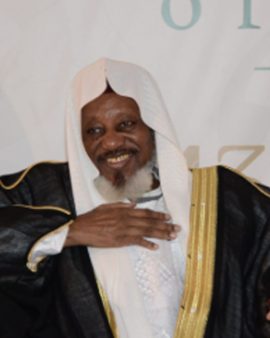
Yahya Cholil Staquf rose to national prominence through his active involvement in NU’s leadership and his contributions as a writer, public intellectual, and policy thinker. Before becoming Chairman, he served in several strategic roles within NU, including as General Secretary of the NU Executive Board (PBNU). He also worked closely with Indonesia’s political leadership and served as a presidential speechwriter during the administration of President Abdurrahman Wahid (Gus Dur), NU’s former chairman and Indonesia’s fourth president.

Elected as Chairman of Nahdlatul Ulama in December 2021, Gus Yahya assumed leadership at a time of rising global polarization, religious extremism, and identity-based conflicts. His tenure has been marked by a strong emphasis on NU’s concept of “Islam Nusantara”, which promotes Islam as a source of compassion (rahmah), social harmony, and coexistence in plural societies. He has consistently argued that outdated religious interpretations must be re-examined to address modern realities, especially in relation to democracy, human rights, and global peace.
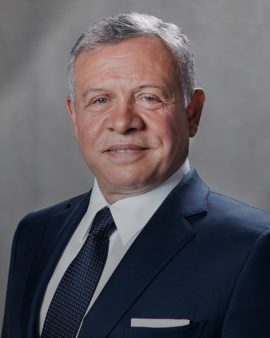
Internationally, Yahya Cholil Staquf is recognized for his bold engagement in interfaith and geopolitical dialogues. He has represented NU at global forums in Europe, the Middle East, and the United States, articulating a vision of Islam that rejects violence and theological exclusivism. His efforts to foster dialogue with Jewish, Christian, and other religious leaders have drawn both praise and controversy, reflecting his willingness to challenge taboos in pursuit of long-term peace and understanding.
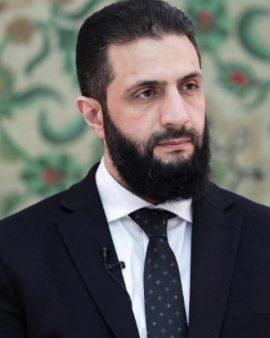
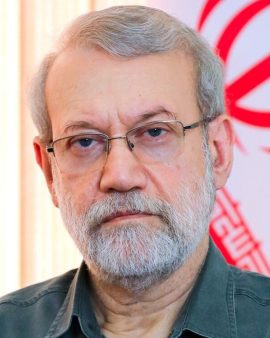
As Chairman of Nahdlatul Ulama, Yahya Cholil Staquf continues to shape the discourse of contemporary Islam, positioning NU as a moral force committed to moderation, social justice, and global harmony. His leadership underscores Indonesia’s unique contribution to the Muslim world—an Islam deeply rooted in tradition, yet fully engaged with the demands of the modern age.


Yasir Al Rumayyan - selected in the list of  The Most Influential Global Muslims  - 2026

Yasir Al Rumayyan

Yasir Al-Rumayyan: The Power Broker Behind Saudi Arabia’s Sovereign Wealth and Global Ambitions

Yasir bin Othman Al-Rumayyan (1970) is one of the most powerful businessmen in Saudi Arabia and a central figure in the Kingdom’s economic transformation. He serves as Governor of the Public Investment Fund (PIF), Saudi Arabia’s $900-billion sovereign wealth fund, and chairs some of the country’s most strategic enterprises, including Saudi Aramco, mining giant Ma’aden, and the newly launched Riyadh Air. Internationally, he is best known as chairman of English Premier League club Newcastle United and as a leading force behind LIV Golf, underscoring Saudi Arabia’s growing footprint in global sports and entertainment.

Born in Buraidah in the Al-Qassim Province, Al-Rumayyan moved to Riyadh as a child, where he received his early education. He earned a bachelor’s degree in accounting from King Faisal University in Al-Ahsa in 1993 and later completed an executive program at Harvard Business School in 2007. His academic background in finance and accounting laid the foundation for a career that would eventually place him at the heart of Saudi Arabia’s financial and political power structure.

Al-Rumayyan began his professional journey at Saudi Hollandi Bank, rising to head of international brokerage operations. He later joined the Capital Markets Authority (CMA), where he played a key role in regulating securities listings. Between 2011 and 2015, he served as chief executive officer of Saudi Fransi Capital, the investment banking arm of Banque Saudi Fransi, and also sat on the board of the Saudi Stock Exchange. These roles positioned him as a trusted technocrat with deep expertise in capital markets.

His rise accelerated following the consolidation of power by Crown Prince Mohammed bin Salman after 2015. Al-Rumayyan was appointed managing director—and later governor—of the Public Investment Fund, transforming PIF from a largely domestic vehicle into one of the world’s most aggressive global investors. Under his leadership, PIF made headline-grabbing investments, including $3.5 billion in Uber, $45 billion in SoftBank’s Vision Fund, and a $20-billion infrastructure partnership with Blackstone. He also joined the boards of major international firms such as SoftBank Group and Reliance Industries.
Al-Rumayyan has been a key architect of Vision 2030, Saudi Arabia’s ambitious plan to diversify its economy away from oil. He plays a central role in megaprojects such as NEOM, a futuristic city envisioned as a hub for technology, tourism, and renewable energy. In 2019, he was appointed chairman of Saudi Aramco following the removal of Energy Minister Khalid Al-Falih, reinforcing his status as a trusted lieutenant of the crown prince.

His influence expanded further after the 2017 purge of rival elites, during which assets seized by the state were transferred to PIF, strengthening the fund’s portfolio and political clout. Critics have linked this period to broader concerns about governance and accountability, but supporters credit Al-Rumayyan with professionalizing Saudi Arabia’s investment strategy.

On a personal level, Al-Rumayyan is known to be an avid golfer and maintains close ties with prominent international figures, including former U.S. President Donald Trump. He is married with at least one son and reportedly received a luxury residence near the royal court, symbolizing his proximity to power.

Today, Yasir Al-Rumayyan stands as one of the most influential figures shaping Saudi Arabia’s economic future—an emblem of the Kingdom’s drive to project financial, cultural, and strategic influence on a global scale.


Ziauddin Sardar - selected in the list of  The Most Influential Global Muslims  - 2026

Ziauddin Sardar

Ziauddin Sardar: Reimagining Islam, Knowledge, and the Future

Ziauddin Sardar is one of the most original and influential Muslim intellectuals of our time—a writer, cultural critic, futurist, and public thinker whose work has reshaped conversations on Islam, modernity, science, and identity. Known for his fearless questioning and deep ethical engagement, Sardar has spent decades challenging both Western intellectual dominance and internal stagnation within Muslim societies, urging a more humane, plural, and future-oriented worldview.

Born in Pakistan and raised in Britain, Sardar’s intellectual journey reflects the experience of living between cultures. This duality shaped his lifelong concern with questions of belonging, knowledge, and power. Educated in science and information studies, he soon moved beyond disciplinary boundaries, emerging as a leading voice in the critique of Eurocentrism and the politics of knowledge. His early work interrogated how modern science and technology, when divorced from ethics, can reinforce inequality and cultural erasure.

Sardar is perhaps best known for his pioneering contributions to Islamic futures studies. At a time when Islam was often portrayed either as a relic of the past or a source of conflict, he insisted on asking a radical question: What kind of future do Muslims want to build? Through books such as Islamic Futures, The Future of Muslim Civilisation, and Reading the Qur’an, he argued for an Islam rooted in justice, compassion, and reason—capable of engaging creatively with modern challenges without surrendering its moral core.

A prolific author, Sardar has written over 50 books, ranging from theology and cultural studies to science, postcolonial theory, and memoir. His works—including Orientalism, Desperately Seeking Paradise, and Why Do People Hate America?—are marked by clarity, moral urgency, and intellectual courage. He has also served as editor of influential journals such as Futures and Critical Muslim, creating platforms for critical, decolonial Muslim thought.

Beyond academia, Sardar has been a prominent public intellectual, writing regularly for international media including The Guardian and New Statesman, and advising institutions such as UNESCO and the British Council. His interventions consistently resist simplification, whether confronting Islamophobia in the West or authoritarianism and dogmatism within Muslim societies.

What sets Ziauddin Sardar apart is his refusal to accept easy answers. He calls for ijtihad—independent, ethical reasoning—as a living practice, not a historical slogan. In an age of polarization and intellectual complacency, Sardar’s work remains a vital reminder that faith, culture, and knowledge must always serve human dignity and the common good.

Ziauddin Sardar is not merely an interpreter of the world; he is a thinker committed to changing it—by imagination, conscience, and hope.


Zohran Mamdani - selected in the list of  The Most Influential Global Muslims  - 2026

Zohran Mamdani

Zohran Mamdani: Progressive New York Lawmaker and Rising Voice of Democratic Socialism

Zohran Kwame Mamdani is a New York State Assembly member and a prominent figure within the progressive and democratic socialist movement in the United States. Representing Assembly District 36 in Queens, Mamdani has gained national attention for his outspoken advocacy on housing justice, public transportation, workers’ rights, and immigrant protections, positioning himself as part of a new generation of grassroots-driven political leaders.

Born in 1991 in Kampala, Uganda, Zohran Mamdani comes from a family deeply rooted in intellectual and cultural life. He is the son of Mahmood Mamdani, a renowned political theorist and professor, and Mira Nair, an internationally acclaimed filmmaker. Raised largely in New York City, Mamdani grew up in a multicultural environment that shaped his views on inequality, colonial history, race, and global justice.

Mamdani attended Bowdoin College in Maine, where he studied Africana Studies. During his student years, he became actively involved in social justice organizing, focusing on issues such as racial equity, immigrant rights, and labor struggles. Before entering electoral politics, he worked as a housing counselor and foreclosure prevention advocate, assisting low-income families—many of them immigrants—in navigating New York City’s complex housing system. This ground-level experience strongly influenced his political priorities.

In 2020, Zohran Mamdani ran for the New York State Assembly as a member of the Democratic Socialists of America (DSA). Running a grassroots campaign powered largely by volunteers and small donations, he defeated a long-serving incumbent in the Democratic primary—an upset that reflected shifting political currents within New York politics. He went on to win the general election, becoming one of the first openly democratic socialist Muslim lawmakers in New York State.

As an Assembly member, Mamdani has been a vocal advocate for housing affordability, pushing for stronger rent regulations, expanded tenant protections, and increased public investment in social housing. He has also championed fare-free public transit, arguing that transportation should be treated as a public good rather than a privilege. His legislative agenda includes support for a higher minimum wage, protections for gig workers, climate justice initiatives, and expanded healthcare access.

Mamdani is also known for his strong pro-immigrant stance and his willingness to challenge established power structures within his own party. He has used social media and direct organizing to mobilize young voters, working-class communities, and marginalized groups who have traditionally been underrepresented in state politics. His approach blends legislative work with movement-building, reflecting his belief that meaningful change requires sustained public pressure beyond electoral victories.

While supporters praise Zohran Mamdani as a principled and fearless advocate for economic and social justice, critics argue that his democratic socialist positions are impractical or too radical. Mamdani has countered such criticism by emphasizing that inequality, housing insecurity, and climate change demand bold solutions rather than incremental reforms.

Zohran Mamdani’s rise reflects a broader transformation within American urban politics. As a lawmaker rooted in activism and community organizing, he represents a growing challenge to establishment politics and signals the increasing influence of progressive, youth-led movements in shaping the future of U.S. democracy.


The 100 Most Influential Muslims - 2026

Copyright © 2024 | All rights reserved. | Website Designed & Maintained by Aash App Developers