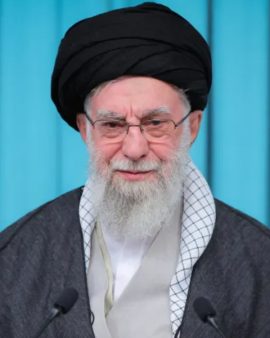
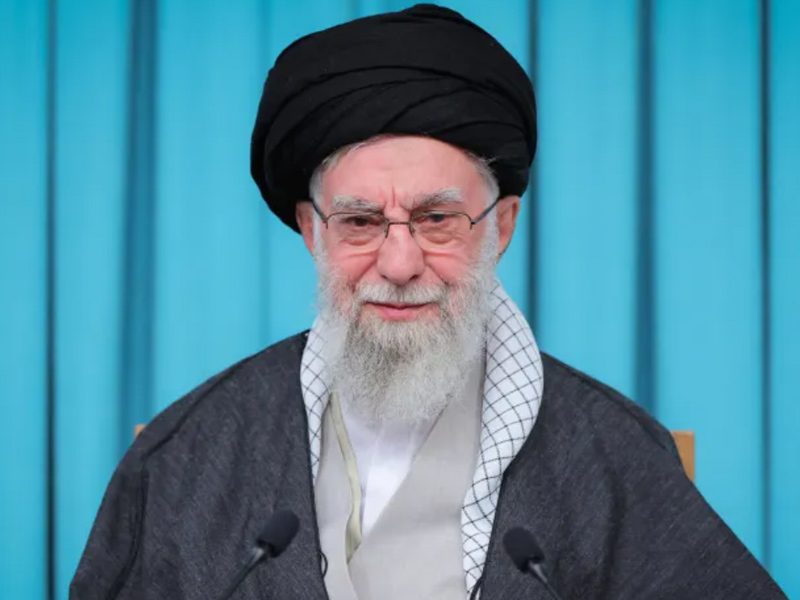

Grand Ayatollah Hajj Sayyid Ali Khamenei: The Ideologue and Guardian of Iran’s Islamic Revolution
Ayatollah Ali Khamenei (1939 –2026) as the Supreme Leader of the Islamic Republic of Iran since 1989, occupies a singular position as the principal ideologue and custodian of Iran's revolutionary system. His leadership, extending from the battlefields of the Iran-Iraq War to contemporary geopolitical struggles, is defined by a steadfast commitment to the foundational principles of Velayat-e Faqih (Guardianship of the Islamic Jurist) as articulated by his predecessor, Ayatollah Ruhollah Khomeini.
Khamenei’s intellectual and political life has been inseparable from the revolution. A close disciple of Khomeini, he was a key figure in establishing the Islamic Revolutionary Guard Corps (IRGC). His tenure as President during the 1980s war with Iraq forged a deep commitment to national resilience, self-sufficiency, and a "Resistance Economy" as counterweights to Western influence and sanctions. Upon assuming the role of Supreme Leader, his interpretation of Velayat-e Faqih evolved, emphasizing proactive governance. He is not merely a religious arbiter but the ultimate political authority, directing state policy across defence, the economy, and foreign affairs through his extensive network of loyalists in the judiciary, security services, and media.
His ideology champions the concept of the "Islamic Civilization" project, positioning Iran as the vanguard of Muslim unity against Western and Israeli "arrogance." This worldview frames international relations as a zero-sum struggle between the global "oppressed" (mostaz'afin) and "arrogant powers" (mostakbarin). Under this doctrine, support for regional "Resistance Axis" groups is a strategic imperative, not mere policy. Domestically, while he has overseen periods of technical and infrastructural development, his rule is characterized by a profound distrust of cultural liberalism and political pluralism. He views social movements, perceived "Western" cultural influence, and reformist political currents as existential threats to the Islamic order.
Khamenei’s legacy is thus one of consolidation and dogged preservation. He has successfully steered the republic through immense external pressures, internal dissent, and leadership transitions, ensuring the revolutionary institutions, particularly the IRGC, remain the bedrock of the state. For supporters, he is the unwavering rahbar (leader) protecting Iran's independence and Islamic identity. For critics, he is the paramount figure of an inflexible theocracy. Regardless of perspective, Khamenei remains the central architect of contemporary Iran, his singular vision continuing to define its trajectory at home and its posture abroad.