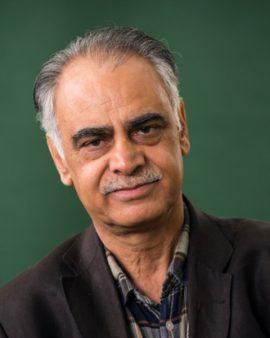
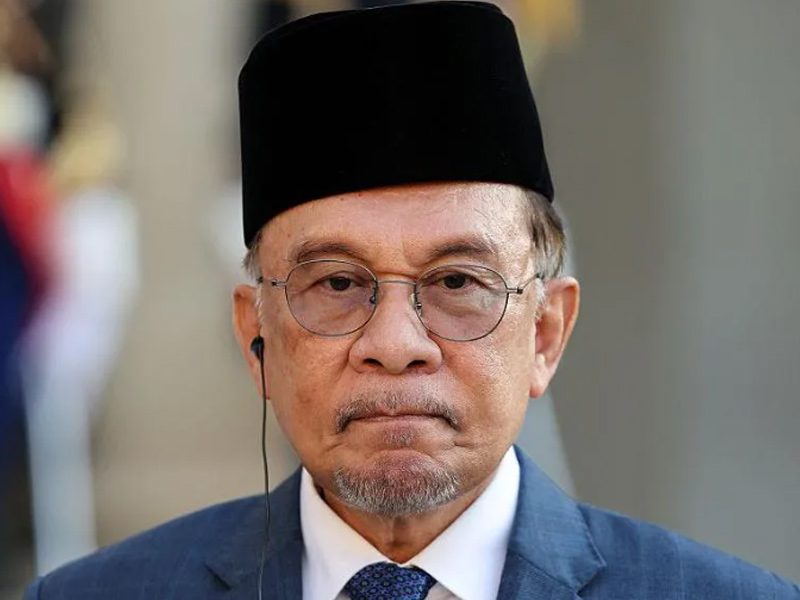

Anwar Ibrahim: Malaysia’s Reformist Leader and Symbol of Democratic Resilience
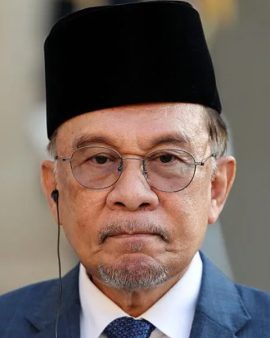
Anwar Ibrahim, the Prime Minister of Malaysia, is one of Southeast Asia’s most influential political figures—celebrated globally as a reformist, a champion of democratic governance, and a statesman whose political journey has been marked by struggle, resilience, and intellectual depth. Born on August 10, 1947, in Penang, Anwar grew up in a middle-class family rooted in public service. His father served as a hospital porter who later became a Member of Parliament, while his mother was a dedicated community activist, shaping Anwar’s early exposure to social justice, welfare, and grassroots engagement.
A brilliant student, Anwar studied Malay studies at the University of Malaya, where he emerged as a charismatic youth leader. His activism began in the 1970s, when he co-founded the Muslim Youth Movement of Malaysia (ABIM), promoting Islamic values, education, and social reform. His eloquence, leadership ability, and progressive religious outlook quickly drew national attention and paved his way into mainstream politics.
Anwar joined the United Malays National Organisation (UMNO) in 1982 at the invitation of then–Prime Minister Dr. Mahathir Mohamad. His rise was meteoric: he served in several key ministerial portfolios—Education, Finance, and Culture—before becoming Deputy Prime Minister in 1993. His tenure as Finance Minister earned him international praise, especially during the 1997 Asian Financial Crisis, when he advocated for transparency, accountability, and market reforms.
However, political differences with Mahathir led to Anwar’s dramatic ouster in 1998. His arrest and subsequent imprisonment on politically motivated charges sparked widespread protests and birthed the “Reformasi” movement—calling for democratic reforms, justice, and an end to corruption. Anwar’s imprisonment, followed by a second conviction in 2015, made him a global symbol of political persecution. International human rights organizations, Western governments, and regional allies condemned his trials as politically driven.
Despite years in prison, Anwar remained steadfast, emerging as an intellectual and moral force for democracy. His writings on governance, Islam, and multiculturalism shaped a generation of thinkers across the Muslim world. In 2018, after forming an unexpected alliance with Mahathir and other opposition parties, the Pakatan Harapan coalition achieved a historic victory, ending UMNO’s 61-year rule. Anwar was pardoned and released, with an agreement that he would eventually succeed Mahathir as prime minister—an arrangement that collapsed amid political turmoil.
The following years of instability, marked by changing coalitions and three different prime ministers, culminated in the 2022 general election. Anwar’s coalition won the largest share of seats but not an outright majority. After days of uncertainty, he was appointed Malaysia’s 10th Prime Minister on November 24, 2022, forming a “Unity Government” and finally achieving the leadership he had pursued for decades.
As Prime Minister, Anwar has emphasized good governance, anti-corruption measures, economic revival, and strengthening Malaysia’s multicultural harmony. On the global stage, he projects Malaysia as a principled voice on human rights, Palestine, and equitable development.
Today, Anwar Ibrahim stands as a testament to perseverance—an intellectual, reformist, and statesman who transformed political adversity into a lifelong mission to build a fairer and more democratic Malaysia.