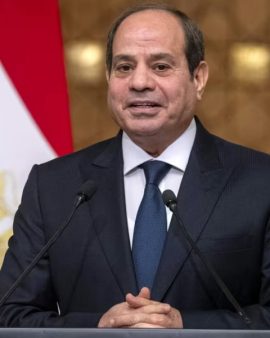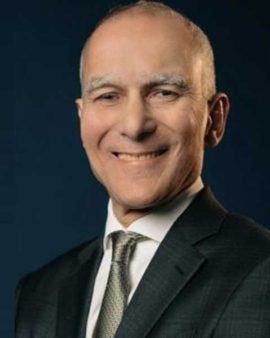
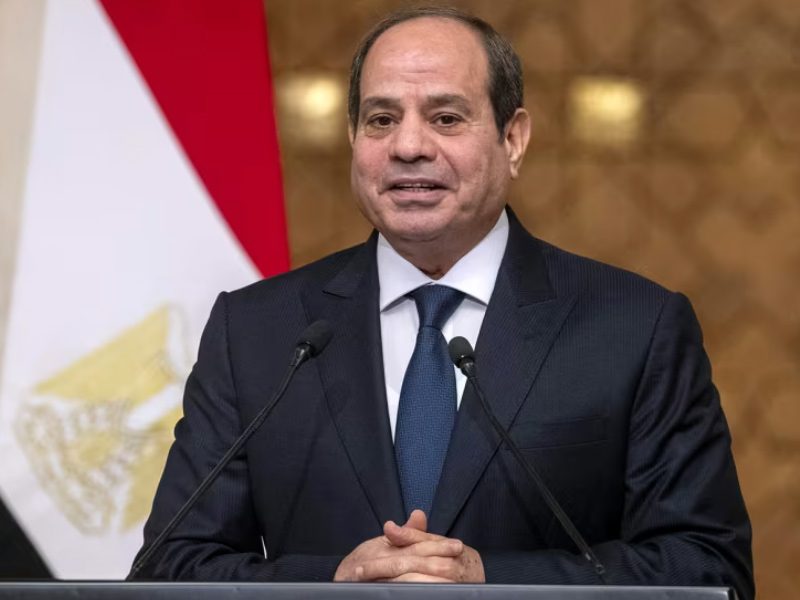

Abdel Fattah Saeed El-Sisi: Egypt’s De Facto Ruler and Architect of a Security-Centric State
Abdel Fattah Saeed El-Sisi, widely recognized as the de facto ruler of Egypt, has shaped the country’s political and security landscape with a firm and transformative—yet controversial—hand. Born on November 19, 1954, in Cairo’s historic Gamaleya district, Sisi grew up in a traditional and religious household where discipline, family values, and patriotism were deeply emphasized. His upbringing in a bustling yet close-knit neighborhood contributed to his image as a reserved, loyal, and duty-bound figure.
Sisi’s professional life began with his enrollment in the Egyptian Military Academy, from which he graduated in 1977. His military career spanned over three decades and saw him rise through key positions in infantry leadership, military attaché roles abroad, and later intelligence command. His time at the UK’s Joint Services Command and Staff College and the U.S. Army War College broadened his understanding of global military strategy and diplomacy, enhancing his stature within Egypt’s armed forces.
By 2010, Sisi had become Director of Military Intelligence, placing him at the nexus of Egypt’s security apparatus at a time of national upheaval. Following the 2011 revolution and the election of President Mohamed Morsi, Sisi was appointed Minister of Defense in 2012. His appointment at just 57 made him the youngest to hold the post, signaling his emergence as a rising power within the military establishment.
Sisi’s turning point came in 2013, when millions of Egyptians took to the streets demanding the removal of Morsi. On July 3, Sisi announced Morsi’s ouster, citing the need to prevent chaos and restore stability. This move—supported by significant segments of society—reshaped Egypt’s political trajectory and positioned Sisi as the central authority figure. While widely praised by his supporters as a protector of national security, the intervention was criticized by others as a military coup that undermined Egypt’s democratic experiment.
In 2014, Sisi resigned from the military and won the presidency by a landslide, solidifying his role as Egypt’s de facto ruler. He was re-elected in 2018 and again in 2024, ensuring his continued dominance over political institutions, security services, and policymaking.
Sisi’s governance is defined by a strong emphasis on security, state authority, and economic megaprojects. Under his leadership, Egypt has launched vast infrastructure initiatives, including the expansion of the Suez Canal, construction of the new administrative capital, nationwide road networks, and major energy projects. He has framed these initiatives as essential for development and national pride.
On the security front, Sisi has pursued aggressive measures against extremist groups, particularly in the Sinai Peninsula. His administration argues that stability is a prerequisite for progress in a volatile region. However, critics point to restrictions on political freedoms, tightened control over media, and limitations on civil society as defining characteristics of his rule.
Regionally, Sisi has positioned Egypt as a stabilizing force, strengthening ties with Gulf allies, engaging in African diplomacy, and asserting Cairo’s role in regional conflicts.
Today, Abdel Fattah El-Sisi remains the most powerful figure in Egypt—an assertive leader who, for supporters, restored order and development, and for critics, consolidated an unprecedented concentration of power. Regardless of perspective, his impact on Egypt’s contemporary history is profound and enduring.