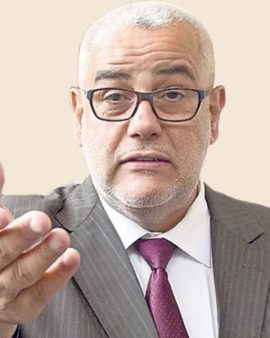
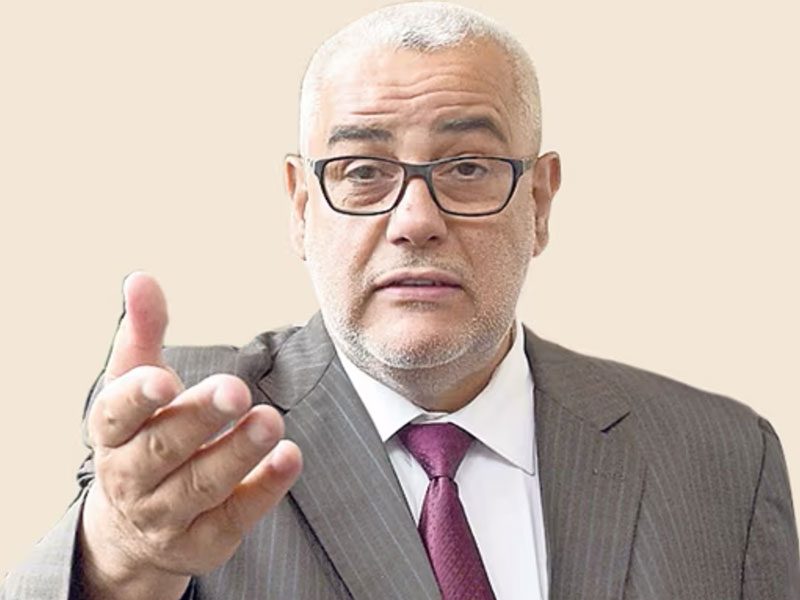

Abdelilah Benkirane is a leading Moroccan politician who served as Prime Minister of Morocco from 2011 to 2017, a period marked by regional upheaval following the Arab Spring and significant political reform within the kingdom. A central figure in Morocco’s moderate Islamist movement, Benkirane rose to prominence as the head of the Justice and Development Party (PJD), which emerged as the largest parliamentary force after the 2011 general election.
Born in Rabat to a family originally from Fes, Benkirane’s political and ideological outlook was shaped early by religion and activism. His father was drawn to Sufism and Islamic fundamentalism, while his mother was active in the women’s branch of the nationalist Istiqlal Party. During the 1970s, Benkirane himself was involved in leftist and Islamist political activism, reflecting the ideological ferment of the period. Over time, he gravitated toward a vision that sought to reconcile Islamic values with democratic governance.
Benkirane has represented the city of Salé in the Moroccan parliament since November 1997, making him one of the country’s most experienced legislators. In July 2008, he was elected secretary-general of the Justice and Development Party, succeeding Saadeddine Othmani. Under his leadership, the PJD refined its image as a party committed to constitutional politics, gradual reform, and participation within Morocco’s monarchical framework.
His political philosophy is often described as democratic Islamist. In a widely cited 2011 interview, Benkirane rejected moral authoritarianism, stating that if he entered government it would not be to police personal behavior or civil liberties. At the same time, he has expressed strong opposition to secularism, calling it “dangerous for Morocco,” and has taken conservative positions on social issues, including a failed 2010 campaign to block a concert by Elton John in Rabat on moral grounds. These positions reflected the tension in his politics between social conservatism and democratic commitments.
Following the 2011 parliamentary elections, held amid the Arab Spring, the PJD won a plurality of seats. King Mohammed VI appointed Benkirane as Prime Minister on 29 November 2011, tasking him with forming a coalition government. His administration set ambitious economic targets, including average annual growth of 5.5 percent and a reduction in unemployment to 8 percent by 2016. The government also sought to strengthen Morocco’s ties with the European Union, its largest trading partner, while deepening engagement with the Gulf Cooperation Council.
In October 2016, the PJD again emerged as the largest party, and Benkirane was reappointed prime minister. However, his second term never fully materialized. Prolonged coalition negotiations led to a five-month political deadlock, during which Benkirane was unable to assemble a functioning government. In March 2017, King Mohammed VI dismissed him and appointed Saadeddine Othmani to lead a new coalition, marking an abrupt end to Benkirane’s premiership.
After leaving office, Benkirane resigned from parliament in April 2017, citing incompatibility, though commentators suggested political calculations lay behind the decision. Despite setbacks, he remained influential within the PJD. In October 2021, following the party’s heavy defeat in national elections, Benkirane was reelected as secretary-general, signaling his continued relevance and appeal among party loyalists.
In his personal life, Benkirane is known for his plainspoken style and populist rhetoric. He enjoys chess and music, though he has expressed reservations about what he considers indecent art. Married to a fellow party activist, he is the father of six children; his youngest daughter lives with tetraplegia. Through his career, Benkirane has embodied the complexities of Morocco’s Islamist politics—balancing faith, democracy, and monarchy in a rapidly changing society.