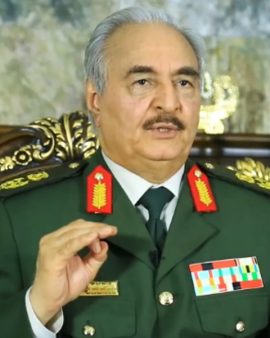
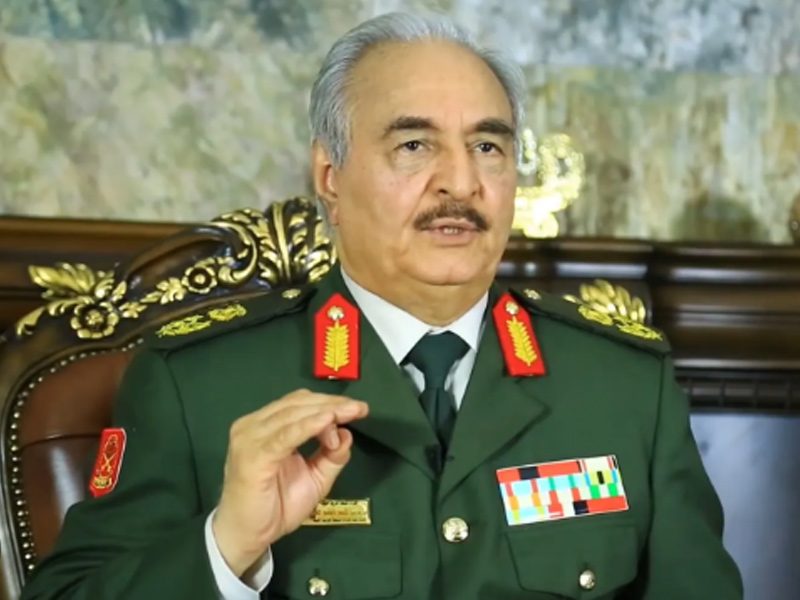

Khalifa Haftar: Libya’s Powerful Military Strongman and a Central Figure in the Country’s Prolonged Conflict
Field Marshal Khalifa Belqasim Haftar is one of the most polarizing and influential figures in contemporary Libya. A career military officer turned political-military leader, Haftar has played a central role in Libya’s fractured post-2011 landscape, commanding the self-styled Libyan National Army (LNA) and positioning himself as a key power broker in the country’s long-running conflict.
Born in 1943 in Ajdabiya, eastern Libya, Haftar joined the Libyan army as a young man and rose through the ranks under Muammar Gaddafi. He was part of the group of officers that helped bring Gaddafi to power in the 1969 coup. For years, Haftar was seen as a loyal officer within the regime, serving in various military roles and gaining battlefield experience.
His career took a dramatic turn in the late 1980s during Libya’s war with Chad. After Libyan forces were defeated and Haftar was captured, Gaddafi disowned him, a moment that marked a decisive break between the two men. Following his release, Haftar went into exile, spending many years in the United States. During this period, he became associated with Libyan opposition groups hostile to Gaddafi, though he remained largely outside the country’s political life.
Haftar returned to Libya after the 2011 uprising that toppled Gaddafi. In the chaotic aftermath of the revolution, as militias proliferated and state institutions weakened, he sought to reassert himself as a national military leader. In 2014, he launched “Operation Dignity,” presenting it as a campaign against Islamist militias and extremism. This move effectively deepened Libya’s internal divisions, contributing to the split between rival governments in the east and west of the country.
As commander of the Libyan National Army, Haftar consolidated control over much of eastern Libya, including Benghazi, and later expanded his influence into southern regions and key oil-producing areas. He cultivated an image as a secular strongman promising order, stability, and a unified army, a message that resonated with some Libyans weary of insecurity and militia rule.
Internationally, Haftar has received backing—political, military, or diplomatic—from several regional and global actors, while being opposed by others who support rival authorities based in Tripoli. His 2019–2020 military offensive on the capital was a turning point: initially gaining ground, it ultimately failed, leading to a ceasefire and renewed UN-led political efforts. The episode underscored both Haftar’s military reach and the limits of force in resolving Libya’s crisis.
Supporters view Haftar as a bulwark against extremism and chaos, arguing that Libya requires a strong centralized authority to restore order. Critics, however, accuse him of authoritarian ambitions, human rights abuses, and undermining democratic transition. Allegations against forces aligned with him have further fueled controversy around his leadership.
Today, Khalifa Haftar remains a decisive actor in Libya’s fragile political equation. Though no longer advancing militarily toward national control, he retains significant influence through territory, armed forces, and regional alliances. His future role—whether as kingmaker, military ruler, or negotiated stakeholder—will continue to shape Libya’s uncertain path toward stability and unity.