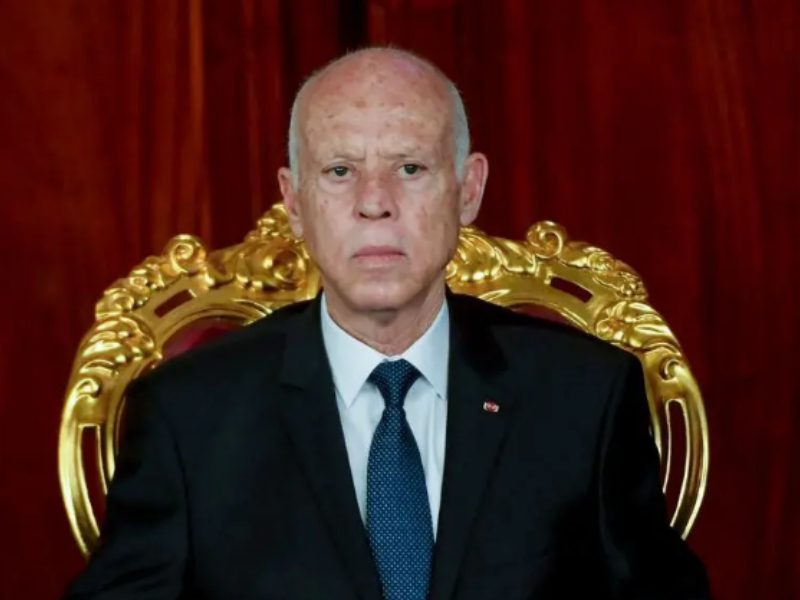

Kais Saied: From Constitutional Scholar to Tunisia’s Powerful and Polarizing President
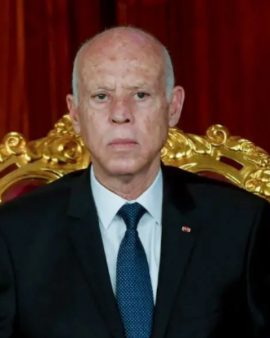
Kais Saied(born 22 February 1958) is a Tunisian politician, constitutional jurist, and former academic who has served as the fifth President of Tunisia since October 2019. Known for his austere personal style, legalistic worldview, and populist rhetoric, Saied rose from relative political obscurity to become one of the most consequential—and controversial—figures in Tunisia’s post-revolutionary history.
Born in BéniKhiar in the Cap Bon region, Saied is the son of Moncef Saied and ZakiaBellagha. He comes from an educated family; his paternal uncle, Hicham Saied, was Tunisia’s first pediatric surgeon and gained national recognition in the 1970s for separating conjoined twins. Saied completed his secondary education at the prestigious Sadiki College before pursuing higher studies in law. From an early stage, he demonstrated a strong interest in constitutional theory and public law.
A jurist by training, Saied built a long academic career as a specialist in constitutional law. He served as secretary-general of the Tunisian Association of Constitutional Law from 1990 to 1995 and later as its vice-president, eventually becoming its president in 1995—a position he held until 2019. He directed public law departments at the University of Sousse and later at the University of Carthage, where he taught until his retirement in 2018. Beyond academia, Saied worked as an expert for the Arab League, the Arab Institute for Human Rights, and played a role in revising Tunisia’s 2014 Constitution following the Arab Spring.
Saied’s political ascent began gradually after 2013, when he participated in youth-oriented political forums and public debates. In 2016, supporters established the Mouassissoun movement to promote his ideas, though he remained formally independent. In the 2019 presidential election, Saied ran as an outsider with a socially conservative, anti-corruption platform that resonated strongly with young voters frustrated by political elites. Backed by an unusually broad coalition—including Islamists, leftists, and independents—he won a landslide victory in the second round with 72.71 percent of the vote and was sworn in on 23 October 2019.
As president, Saied initially presented himself as a guardian of constitutional legality and national sovereignty. However, his tenure has been marked by severe democratic backsliding. Amid economic crisis, protests, and the COVID-19 pandemic, Saied dismissed parliament and Prime Minister HichemMechichi on 25 July 2021, consolidating power in what critics widely described as a self-coup. He subsequently ruled by decree, weakened judicial independence, and oversaw the arrest and prosecution of political opponents and critics.
In 2022, Saied pushed through a new constitution that significantly expanded presidential powers and reduced checks and balances. Legislative elections held under the new framework saw historically low turnout. Despite domestic and international criticism, Saied secured a second presidential term in October 2024, cementing his dominance over Tunisia’s political system.
Once celebrated as a symbol of democratic renewal, Kais Saied remains a polarizing figure—viewed by supporters as a principled reformer restoring state authority, and by critics as an authoritarian leader who has dismantled the democratic gains of Tunisia’s 2011 revolution.