
Samia Suluhu Hassan: Tanzania’s First Woman President and a Pragmatic Voice of Reform
Samia Suluhu Hassan is a historic and transformative figure in African politics, serving as the first woman President of Tanzania and one of the few female heads of state in the Muslim world. Since assuming office in March 2021, she has been widely recognized for steering Tanzania toward greater political openness, economic diplomacy, and international re-engagement, while maintaining stability in a country long known for continuity and cautious governance.
Born on 27 January 1960 in Zanzibar, Samia Suluhu Hassan grew up in a modest background that shaped her grounded and pragmatic leadership style. She pursued higher education later in life, earning a degree in public administration from the Institute of Development Management in Tanzania, followed by postgraduate qualifications in economics and community economic development from the University of Manchester and the Open University of Tanzania. Her academic journey reflected a strong focus on governance, development, and grassroots empowerment.
Samia began her public career in the early 2000s, working on development projects before entering politics through the ruling Chama Cha Mapinduzi (CCM). She steadily rose through party ranks, serving as a Member of Parliament, Minister of State for Union Affairs, and later as Vice President in 2015 under President John Magufuli. Her appointment as Vice President already marked a milestone, as she became the first woman to hold that office in Tanzania.
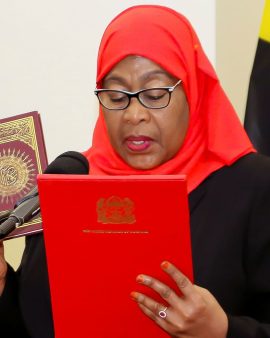
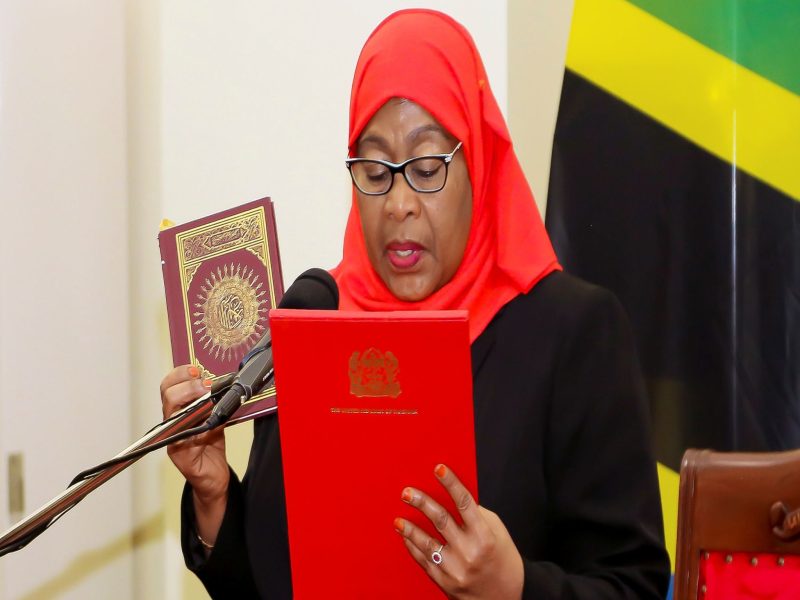
In March 2021, following the sudden death of President Magufuli, Samia Suluhu Hassan was constitutionally sworn in as President, becoming the first woman to lead Tanzania since independence. Her ascension was both historic and challenging, as she inherited a polarized political environment, economic pressures, and strained relations with sections of the international community.
As President, Samia quickly signaled a shift in tone and governance style. Without dramatic ruptures, she emphasized reconciliation, dialogue, and institutional trust. She eased restrictions on media and political activity, reopened engagement with opposition parties, and released several political detainees. Her leadership marked a departure from confrontational politics toward a more consultative and inclusive approach.
Economically, President Samia has focused on reviving investor confidence, expanding infrastructure, and strengthening Tanzania’s role in regional and global markets. She has actively pursued economic diplomacy, traveling widely to attract foreign investment and rebuild partnerships with international financial institutions. Under her leadership, Tanzania has emphasized tourism revival, energy development, and private-sector-led growth.
As a Muslim woman leading a predominantly Christian-majority nation, Samia Suluhu Hassan has also become a powerful symbol of pluralism and social cohesion. She consistently stresses national unity over identity politics, reinforcing Tanzania’s long-standing tradition of religious coexistence and ethnic harmony.
Internationally, she is seen as a calm, credible, and reform-oriented leader who balances continuity with gradual change. While critics urge faster political reforms, supporters credit her with restoring trust, stabilizing governance, and projecting Tanzania as a constructive global partner.
Samia Suluhu Hassan’s presidency represents a quiet but significant transformation—one rooted not in spectacle, but in steady leadership, inclusivity, and pragmatic reform. Her journey continues to inspire women across Africa and the Muslim world, redefining leadership through competence, restraint, and resilience.