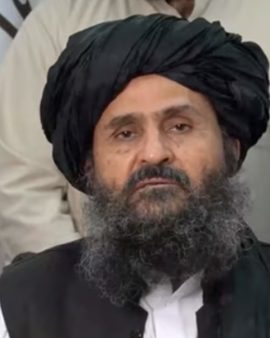
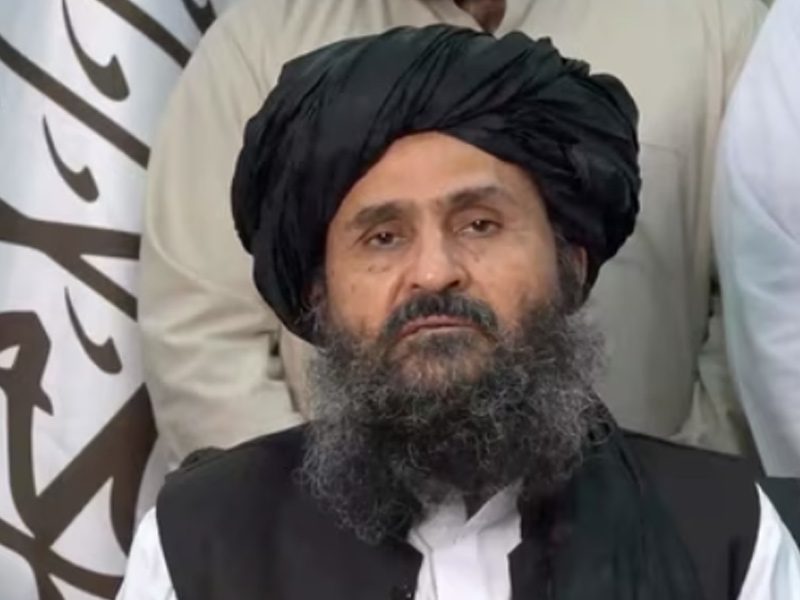

Mullah Haibatullah Akhundzada: Supreme Leader of the Taliban and the Power Behind Afghanistan’s Islamic Emirate
Mullah Haibatullah Akhundzada is the Supreme Leader (Amir al-Mu’minin) of the Taliban and the most powerful authority in Afghanistan since the group returned to power in August 2021. Unlike many militant leaders who rose through battlefield prominence, Akhundzada’s authority is rooted primarily in religious scholarship, judicial authority, and ideological legitimacy, making him a decisive—if largely unseen—figure in Afghanistan’s contemporary political order.
Born around 1961 in Kandahar province, Akhundzada belongs to the Noorzai Pashtun tribe, one of the influential tribal groupings in southern Afghanistan. He received traditional Islamic education in local madrasas and later deepened his studies in Islamic jurisprudence (fiqh), specializing in the Hanafi school of Sunni Islam. His reputation as a religious scholar rather than a military commander distinguished him early within Taliban ranks.
During the Taliban’s first regime (1996–2001), Akhundzada served in the judicial system, reportedly as a sharia court judge and later in senior religious roles. After the U.S.-led intervention in 2001 toppled the Taliban government, he remained active within the movement during the insurgency years, gradually rising as a key religious authority. His standing increased significantly after he became head of the Taliban’s Ulema Council and later served as chief justice under Taliban shadow governance.
In May 2016, following the killing of Taliban leader Mullah Akhtar Mansour in a U.S. drone strike, Haibatullah Akhundzada was appointed as the new supreme leader. His selection reflected the Taliban’s desire to unify competing factions under a figure seen as doctrinally authoritative and relatively neutral in internal power struggles. Two deputies—Sirajuddin Haqqani and Mullah Yaqoob—handled much of the military and operational command, while Akhundzada focused on religious guidance and strategic direction.
Since the Taliban’s return to power in August 2021, Akhundzada has ruled largely from Kandahar, issuing decrees that shape Afghanistan’s political, legal, and social life. Although rarely seen in public and seldom photographed, his edicts carry ultimate authority over the Taliban government in Kabul. He has emphasized strict enforcement of the Taliban’s interpretation of Islamic law, including policies that have drawn widespread international criticism—most notably severe restrictions on women’s education, employment, and public life.
Akhundzada has rejected Western models of governance and human rights frameworks, asserting that legitimacy flows from Islamic law rather than popular sovereignty. Under his leadership, Afghanistan has remained diplomatically isolated, with no country formally recognizing the Taliban government, largely due to concerns over human rights, inclusivity, and counterterrorism commitments.
Supporters within the Taliban view Mullah Haibatullah Akhundzada as a guardian of ideological purity and unity after decades of conflict. Critics, both inside and outside Afghanistan, argue that his rigid governance has deepened humanitarian suffering and stalled international engagement. As Afghanistan continues to face economic collapse, humanitarian crises, and global isolation, Akhundzada remains the central figure determining whether the Taliban’s rule evolves—or hardens further—under the banner of the Islamic Emirate.