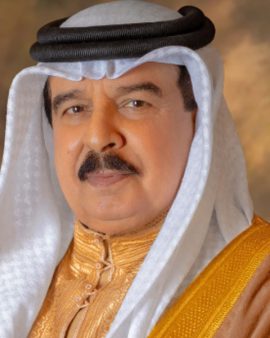
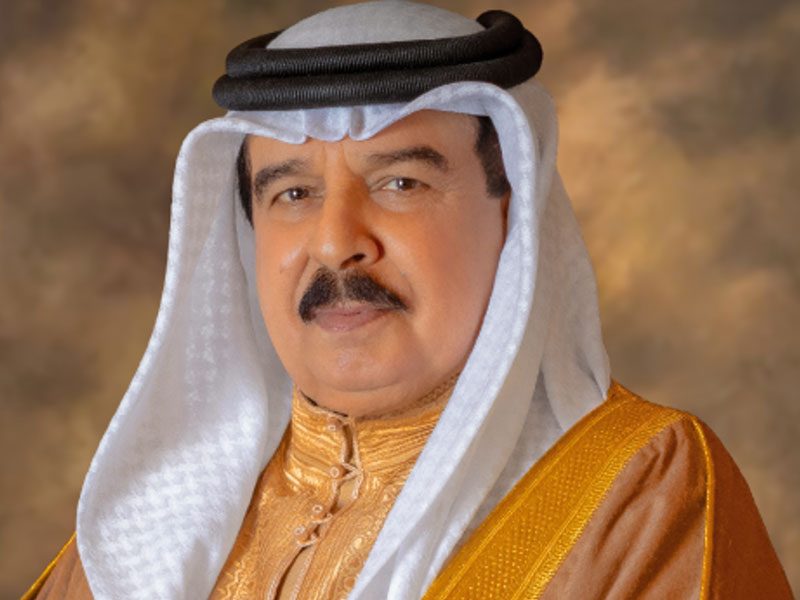

King Hamad bin Isa Al Khalifa: Reformist Monarch, Political Survivor, and Architect of Modern Bahrain
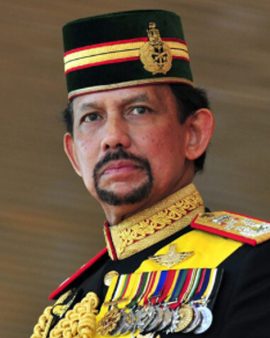
Hamad bin Isa bin Salman Al Khalifa (born 28 January 1950) has ruled Bahrain since 1999 and has reigned as its first king since 2002. A senior member of the Al Khalifa dynasty, which has governed Bahrain for over two centuries, King Hamad presided over a critical transition period in the country’s modern history—marked by early political liberalization, economic modernization, and later, deep political unrest and contested reforms.
Born in Riffa, Bahrain, Hamad is the son of Isa bin Salman Al Khalifa, who ruled Bahrain for nearly four decades, and Hessa bint Salman Al Khalifa. He received his early education in Bahrain before being sent to the United Kingdom, where he attended Applegarth College in Surrey and later The Leys School in Cambridge. His education emphasized discipline and leadership, themes that would later define his governing style. Hamad underwent military training at Britain’s Mons Officer Cadet School, graduating in 1968, and further enhanced his strategic credentials at the United States Army Command and General Staff College at Fort Leavenworth, where he completed a leadership degree in 1973.
Designated crown prince in 1964, Hamad assumed senior responsibilities at a young age. He held multiple security and defense roles, including commander of the Bahrain National Guard, commander-in-chief of the Bahrain Defence Force, and minister of state for defense from 1971 to 1988. He also played a key role in establishing the Bahrain Amiri Air Force, reflecting his strong focus on military modernization and national security.
Upon the death of his father in March 1999, Hamad became Emir of Bahrain. His early years in power were widely welcomed. He introduced political reforms that included releasing political prisoners, dissolving the State Security Court, abolishing restrictive security laws, and allowing exiled Bahrainis to return. These reforms culminated in the 2001 National Action Charter referendum, which passed overwhelmingly and paved the way for Bahrain’s transformation into a constitutional monarchy. In 2002, Hamad declared himself King of Bahrain, formalizing the new political order.
Despite these reforms, King Hamad retained extensive executive authority. He appoints the prime minister and cabinet, commands the armed forces, chairs the Higher Judicial Council, appoints members of the upper house of parliament, and holds the power to dissolve the elected lower chamber. While Bahrain developed into a regional financial hub under his rule, political tensions—particularly between the ruling elite and the Shi‘a majority—persisted, fueled by allegations of discrimination, unequal access to state resources, and limited political participation.
These tensions erupted during the 2011 Arab Spring, when mass protests demanding democratic reforms shook the country. The government responded with a heavy security crackdown, drawing international criticism and damaging Bahrain’s human rights record. In response, King Hamad declared a state of emergency and requested military assistance from Gulf Cooperation Council allies. Seeking to restore credibility, he established the Bahrain Independent Commission of Inquiry (BICI), whose findings acknowledged serious abuses and recommended reforms. While the initiative was praised internationally, human rights groups later argued that implementation remained limited.
In foreign affairs, King Hamad has pursued close ties with Western allies while aligning Bahrain firmly within the Gulf bloc. In a significant diplomatic shift, Bahrain normalized relations with Israel in 2020 under the Abraham Accords, though relations were later downgraded amid the Gaza conflict in 2023.
Today, King Hamad remains a pivotal yet polarizing figure—credited by supporters for stability and modernization, and criticized by opponents for authoritarian governance. His reign reflects the complex balance between reform, control, and survival in a deeply divided Gulf monarchy.