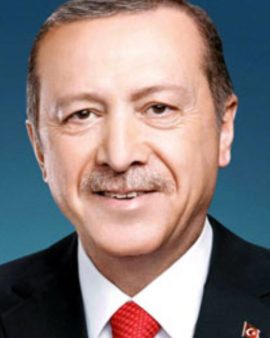
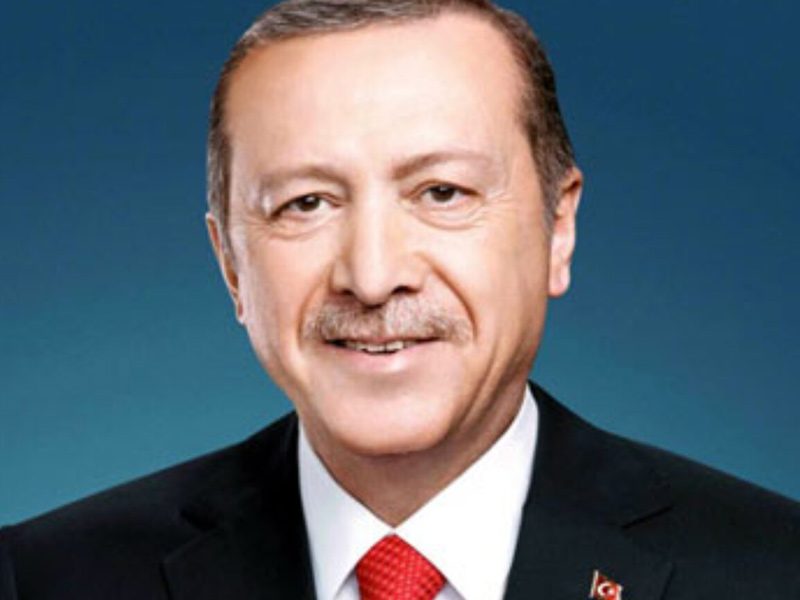

Recep Tayyip Erdoğan: The Architect of Modern Türkiye
Recep Tayyip Erdoğan, the President of Türkiye, is one of the most influential and polarizing leaders in contemporary global politics. Born on February 26, 1954, in the Kasimpasa district of Istanbul, Erdoğan grew up in a modest family with deep cultural and religious values. His early life, shaped by working-class sensibilities and the vibrant political atmosphere of Istanbul, played a crucial role in developing his strong sense of identity, perseverance, and political vision. He studied at the İmam Hatip school and later graduated from Marmara University’s Faculty of Economics and Administrative Sciences, marking the beginning of his lifelong engagement with public service.
Erdoğan first gained national recognition as the Mayor of Istanbul, elected in 1994. His tenure is widely remembered for effective governance—improving infrastructure, modernizing water and waste management systems, reducing pollution, and tackling chronic traffic problems. His administration’s success transformed him into a popular figure and demonstrated his ability to pair pragmatic solutions with charismatic leadership. However, in 1998 he faced imprisonment for reciting a poem deemed provocative by the secular establishment, an event that elevated him as a symbol of political repression and galvanized his supporters.
In 2001, Erdoğan co-founded the Justice and Development Party (AKP), a movement blending conservative social values with economic liberalism and democratic reform. The AKP’s sweeping victory in the 2002 elections propelled Erdoğan to the forefront of Turkish politics. He became Prime Minister in 2003, ushering in a period of rapid economic growth, political stability, and ambitious reform. His early tenure saw advancements in healthcare, infrastructure, foreign investment, and EU accession negotiations, contributing to a new era of confidence and modernization.
Erdoğan's leadership began to take on a more centralized and assertive character in the 2010s. The Gezi Park protests of 2013, the fallout from regional conflicts, and the 2016 coup attempt significantly shaped his political trajectory. After surviving the coup attempt, he initiated extensive security and institutional changes, arguing that they were necessary to protect national sovereignty. The 2017 constitutional referendum, which transformed Türkiye from a parliamentary to a presidential system, further consolidated his authority. In 2018, he became the first Executive President of Türkiye and was re-elected in 2023.
On the international stage, Erdoğan has positioned Türkiye as an independent geopolitical actor with a distinct foreign policy vision. Balancing relations with the West, Russia, and regional powers, he has sought to elevate Türkiye’s role as a mediator, military power, and economic bridge between continents. His assertive policies in Syria, the Eastern Mediterranean, and the South Caucasus, alongside humanitarian initiatives and advocacy for Muslim causes globally—especially Palestine and Rohingya rights—reflect his ambition for Türkiye to be a major global player.
Domestically, Erdoğan continues to command a strong support base, particularly among conservative, religious, and rural constituencies. His emphasis on national pride, infrastructure megaprojects, cultural identity, and social welfare keeps him at the center of Turkish political life.
Today, Recep Tayyip Erdoğan remains an enduring and transformative figure—celebrated by supporters as a visionary leader who elevated Türkiye’s global stature and criticized by opponents for centralizing power. Regardless of perspective, his impact on Türkiye’s modern political and social landscape is indisputable.